KARACHI: A Saudi prince’s plans to acquire privately-owned air carrier, Shaheen Air International is akin to “breathing new life into Pakistan’s dying aviation industry”, experts said on Friday.
“Shaheen Air International has finalized its acquisition deal with a Saudi prince. The takeover is likely to happen over the course of the next two months,” Zohaib Hassan, spokesman of Shaheen Air International (SAI), told Arab News, without naming the investor.
He added that more details would be unveiled in a joint news conference next week.
“We will be conducting a press conference very soon to announce the name of the investor and share details of the acquisition. This will be a breakthrough deal for the airline as well as for Pakistan’s aviation industry,” Javed Sehbai, acting CEO of SAI, said in a statement released on Thursday.
“It’s a matter of a few weeks before Shaheen Air takes to the skies again and shines brighter than before. Due payments of government regulatory bodies and our employees’ salaries are our first priority and will be cleared during the first stage of our investment plans,” he added.
Shaheen Air commenced its operations as Pakistan’s first private airline in December 1993. “It operates on various domestic and international routes and in 2015, it became the only private airline from Pakistan to fly east with non-stop flights from Lahore to Guangzhou, China,” Sehbai said.
However, the airline’s domestic and international operations were suspended due to a dispute with Pakistan’s Civil Aviation Authority over non-payment of arrears amounting to more than Rs1.5 billion.
“Once Shaheen Air was the top private airline of Pakistan but the past several months have been difficult for us. Our offices are sealed and our operations suspended. In such a scenario, the Saudi investment is like a new life for the airline,” Sehbai said.
Tariq Abul Hasan, an expert in civil aviation for more than two decades, recalls a time when Pakistan’s aviation industry was flourishing, specifically until the mid-80s when Pakistan’s national carrier, the PIA, was one of the 10 best airlines in the world.
In the private sector, however, Shaheen Air was the country’s top private airline with its own hanger and best engineering staff. “PIA was the first Asian airline which started direct flights for Europe. Pakistan’s civil aviation industry was once the fastest growing, with more than 40 airlines, including the world’s top airline, flying from Karachi,” he said, adding that in the current situation, the Saudi investment is a major relief for the sector.
Shaheen Air, besides ensuring profitable routes for Europe and Gulf, also has a permit for operating Hajj flights, Hasan said, adding that in order to fly higher, “all it needed was this deal.”


Saudi prince to be the wind beneath Shaheen Air’s wings

Saudi prince to be the wind beneath Shaheen Air’s wings
- Officials say airline to be taken over by a member of the royal family in two months
- Move could help revive Pakistan’s dying aviation industry, experts say

No casualties as blast derails Jaffar Express train in Pakistan’s south
- Passengers were stranded and railway staffers were clearing the track after blast, official says
- In March 2025, separatist militants hijacked the same train with hundreds of passengers aboard
QUETTA: A blast hit Jaffar Express and derailed four carriages of the passenger train in Pakistan’s southern Sindh province on Monday, officials said, with no casualties reported.
The blast occurred at the Abad railway station when the Peshawar-bound train was on its way to Sindh’s Sukkur city from Quetta, according to Pakistan Railways’ Quetta Division controller Muhammad Kashif.
No group immediately claimed responsibility for the bomb attack, but passenger trains have often been targeted by Baloch separatist outfits in the restive Balochistan province that borders Sindh.
“Four bogies of the train were derailed due to the intensity of the explosion,” Kashif told Arab News. “No casualty was reported in the latest attack on passenger train.”
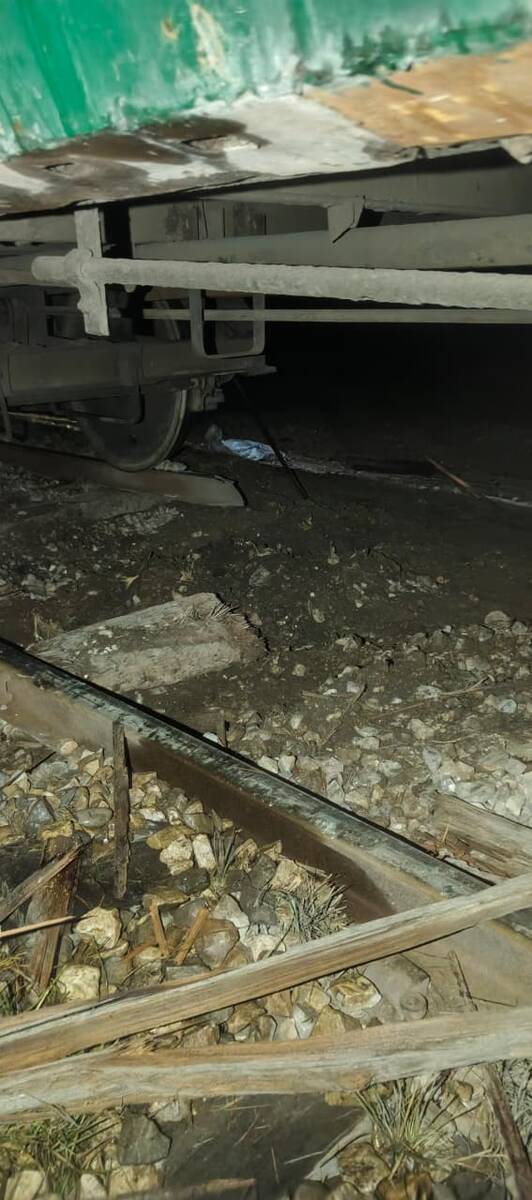
Another railway employee, who was aboard the train and requested anonymity, said the train was heading toward Sukkur from Jacobabad when they heard the powerful explosion, which derailed power van among four bogies.
“A small piece of the railway track has been destroyed,” he said, adding that passengers were now standing outside the train and railway staffers were busy clearing the track.
In March last year, fighters belonging to the Balochistan Liberation Army (BLA) separatist group had stormed Jaffar Express with hundreds of passengers on board and took them hostage. The military had rescued them after an hours-long operation that left 33 militants, 23 soldiers, three railway staff and five passengers dead.
The passenger train, which runs between Balochistan’s provincial capital of Quetta and Peshawar in the country’s northwest, had been targeted in at least four bomb attacks last year since the March hijacking, according to an Arab News tally.

Pakistan Railways says it has beefed up security arrangements for passenger trains in the province and increased the number of paramilitary troops on Jaffar Express since the hijacking in March, but militants have continued to target them in the restive region.
Balochistan, Pakistan’s southwestern province that borders Iran and Afghanistan, is the site of a decades-long insurgency waged by Baloch separatist groups who often attack security forces and foreigners, and kidnap government officials.
The separatists accuse the central government of stealing the region’s resources to fund development elsewhere in the country. The Pakistani government denies the allegations and says it is working for the uplift of local communities in Balochistan.


