

Crown Prince launches project to build Saudi Arabia’s first nuclear research reactor

1 / 16
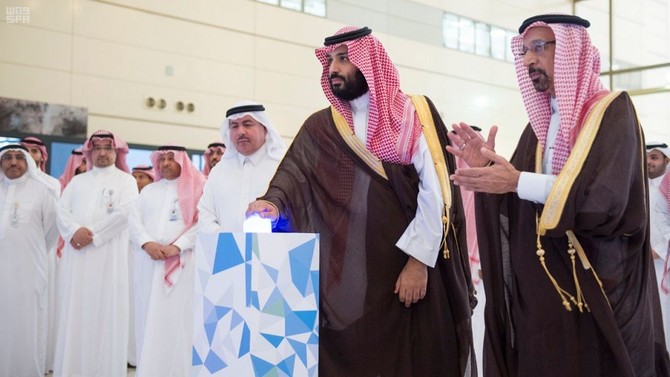
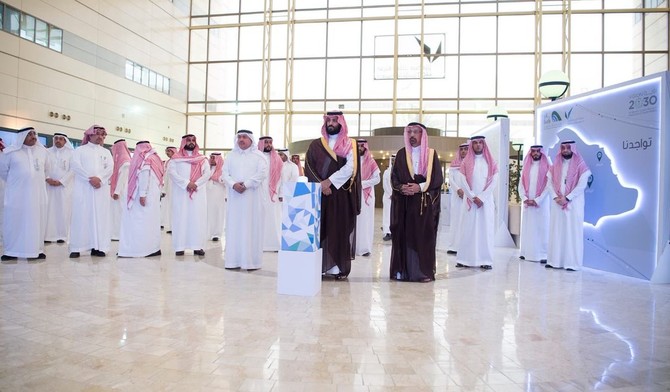
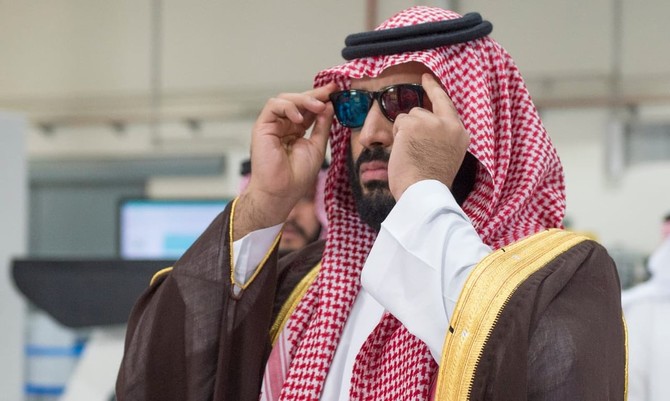
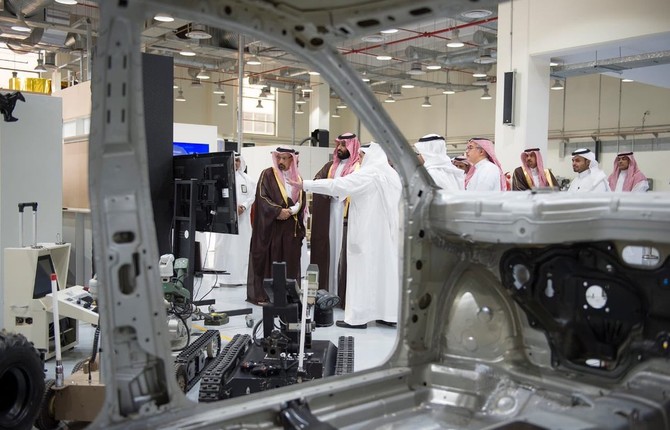
Crown prince Mohammed bin Salman and Energy Minister Khalid Al-Falih, during a tour of KACST. (SPA)
2 / 16
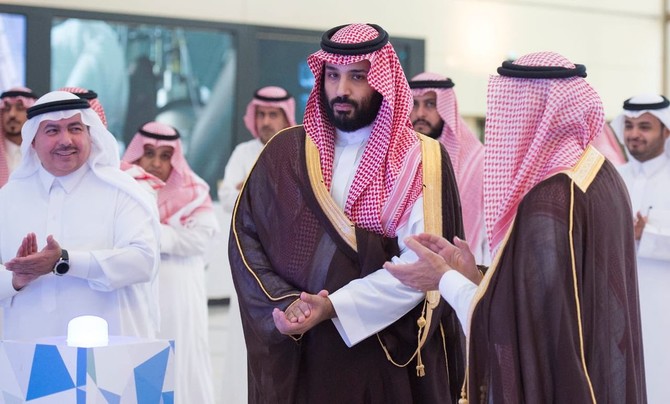
Crown prince Mohammed bin Salman and Energy Minister Khalid Al-Falih, during a tour of KACST. (SPA)
3 / 16
Crown prince Mohammed bin Salman and Energy Minister Khalid Al-Falih, during a tour of KACST. (SPA)
4 / 16
Crown prince Mohammed bin Salman and Energy Minister Khalid Al-Falih, during a tour of KACST. (SPA)
5 / 16
Crown prince Mohammed bin Salman and Energy Minister Khalid Al-Falih, during a tour of KACST. (SPA)
6 / 16
Crown prince Mohammed bin Salman and Energy Minister Khalid Al-Falih, during a tour of KACST. (SPA)
7 / 16
Crown prince Mohammed bin Salman and Energy Minister Khalid Al-Falih, during a tour of KACST. (SPA)
8 / 16
Crown prince Mohammed bin Salman and Energy Minister Khalid Al-Falih, during a tour of KACST. (SPA)
9 / 16
Crown prince Mohammed bin Salman and Energy Minister Khalid Al-Falih, during a tour of KACST. (SPA)
10 / 16
Crown prince Mohammed bin Salman and Energy Minister Khalid Al-Falih, during a tour of KACST. (SPA)
11 / 16
Crown prince Mohammed bin Salman and Energy Minister Khalid Al-Falih, during a tour of KACST. (SPA)
12 / 16
Crown prince Mohammed bin Salman and Energy Minister Khalid Al-Falih, during a tour of KACST. (SPA)
13 / 16
Crown prince Mohammed bin Salman and Energy Minister Khalid Al-Falih, during a tour of KACST. (SPA)
14 / 16
Crown prince Mohammed bin Salman and Energy Minister Khalid Al-Falih, during a tour of KACST. (SPA)
15 / 16
Crown prince Mohammed bin Salman and Energy Minister Khalid Al-Falih, during a tour of KACST. (SPA)
16 / 16
Crown prince Mohammed bin Salman and Energy Minister Khalid Al-Falih, during a tour of KACST. (SPA)
Updated 11 November 2018
Follow

Crown Prince launches project to build Saudi Arabia’s first nuclear research reactor

  • Seven projects were announced during his visit to King Abdulaziz City for Science and Technology
  • Cutting edge ventures are in the fields of renewable energy, atomic energy, water desalination, genetic medicine and aircraft design

JEDDAH: Crown Prince Mohammed bin Salman launched a project to build Saudi Arabia’s first nuclear research reactor on Monday.

The project is one of seven cutting edge ventures in the fields of renewable energy, atomic energy, water desalination, genetic medicine and aircraft design that were inaugurated by the crown prince, Saudi Press Agency reported.

The projects were discussed during his visit to King Abdulaziz City for Science and Technology (KACST).

The new reactor will help Saudi Arabia conduct research develop technology for the country’s burgeoning nuclear industry. 

The Kingdom plans to build two full nuclear power reactors for energy and as many as 16 over the next 25 years.

The design of the reactor has been developed by KACST scientists with the help of international experts. Construction of the reactor is already underway and expected to be completed by the end of next year.

It will follow all the safety standards of the International Atomic Energy Agency. The reactor is designed to use uranium oxide fuel with 2.1 percent enrichment.

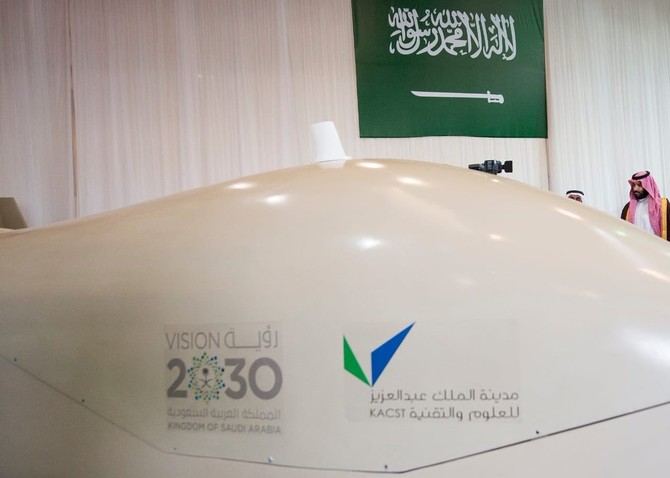
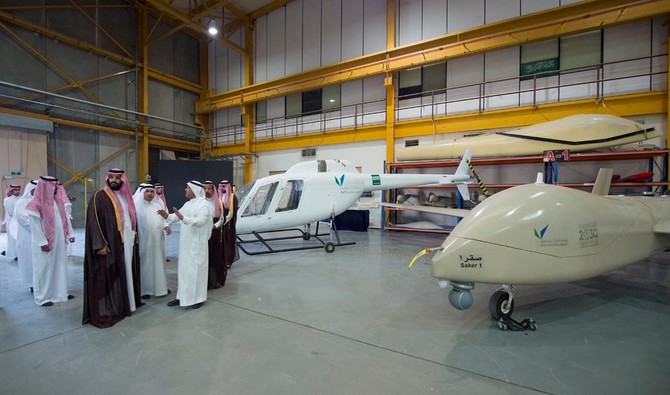
One of the other projects reviewed by the Crown Prince is a center for the development of aircraft structures to be based at King Khalid International Airport.

The center is one of the largest buildings for developing aircrafts in the Middle East with an area of 27,000 square meters with plans to expand it to 92,000 square meters. The center has the capacity to manufacture most aircraft structures, whether civilian or military. 

Another project is a genome laboratory for tackling genetic disease in the Kingdom. The National Laboratory of the Saudi Human Genome contains the latest technologies in the study of genetic code, and 100,000 samples which are being examined to create a medical database. 

The laboratory is equipped to diagnose a large number of genetic diseases, which cost more than SR4 billion a year to treat.

During his tour of the KACST headquarters, Crown Prince Mohammed also reviewed two solar-powered water desalination plants. A plant in Al-Khafji will have a capacity of 60,000 cubic meters per day, while another in Yanbu will have a capacity of 5,200 cubic meters per day.

He was also briefed on satellite projects, including the SaudiSat 5A and SaudiSat 5B satellites.

Khalid Al-Falih, the energy minister and chairman of the KACST board, expressed his appreciation to the crown prince for his support and interest in the city.

KACST targets investment and development in research, through the coordination of national scientific, technological and innovative policies and strategies.


WHO to accredit Asir region for governance and public services

The WHO will accredit several areas in Asir region for the quality of their governance and integrated services. (SPA)
Updated 16 sec ago
Follow

WHO to accredit Asir region for governance and public services

  • Praise for community participation, education, health
  • Asir can be used as model for other areas, says WHO

RIYADH: The World Health Organization will accredit several areas in Asir region for the quality of their governance and integrated services, the Saudi Press Agency reported on Wednesday.

During a recent visit, the WHO delegation rated the cities of Abha, Tareeb, and Muhayil Asir, as well as King Khalid University.

The delegation praised the level of institutional performance of the Healthy Cities and Quality of Life Program Office at Asir principality, describing it as an advanced national model in governance and cross-sectoral integration.

The assessment was part of a field visit by the delegation from Dec. 14 to 22. The WHO officials were accompanied by a team from the Ministry of Health.

The delegation recorded positive impressions regarding the level of community participation, the integration of health with quality of life, and pride in local identity.

The delegation recommended continued support of Asir’s Healthy Cities and Quality of Life Program Office as a national center of expertise, completion of the accreditation procedures for the cities, and building on developmental observations.

It also called for Asir region to be used as a model for other areas.

The visit included a review of health, education and community initiatives and tours of government entities and municipalities.