RIYADH: The “green room” at the Future Investment Initiative in Riyadh is an inappropriate name.
Like the rest of the King Abdulaziz International Conference Center, next to the five-star Ritz Carlton Hotel, the areas reserved for the elite speakers at the adjacent plenary hall is a melange of white marble, gold and the rich browns of teak and mahogany, with plenty of sparkling crystal in evidence too. Anything but green, really.
Last Thursday morning, Mohammed Al-Tuwaijri entered the room with weighty matters on his mind. The minister of economy and planning for Saudi Arabia was the top billing on a panel of luminaries from Jordan, Russia and Britain, considering the question: “Which model for privatization will prevail?”
Al-Tuwaijri, who got the top job in the Kingdom’s economic policy-making apparatus last year in a government reshuffle, is well able to give an expert view on that issue. A lifetime investment banker with experience at some of the biggest global banks in the world, he has been privy to many of the biggest corporate deals in the Middle East and elsewhere. Privatization is, and always has been, a subject on which the investment bankers have particular expertise.
In the green room, he was confident and composed, and declared himself willing to answer virtually any question on a subject crucial to the success of the Kingdom’s Vision 2030 strategy.
You might argue that privatization is at the heart of the strategy. The Vision’s architects recognized that the Kingdom’s essential challenge was to move away from dependence on the government-owned energy sector, and to increase the portion of the economy driven by the private sector. For an economy like Saudi Arabia, with its history of reliance on the public sector to spur economic growth, that is a big challenge.
As an economic policy, privatization has a fairly recent origin. The British prime minister Margaret Thatcher kicked off the modern version in the 1980s with a strategy to sell shares in government-owned companies, including the telecommunications, aviation and energy sectors, and found imitators around the world.
After the end of Communism in 1990, a tsunami of privatization washed over the former Soviet economies. The post-Soviet privatization model certainly ended state ownership of the economy, but also led to abuses and a concentration of economic power in a few hands — the beginning of the Russian “oligarchy.”
China, meanwhile, was undergoing a form of privatization that provided another possible model for encouragement of private enterprise, but all within the context of a centrally commanded structure that ultimately retained state control of business.
On the plenary stage, Al-Tuwaijri showed that he was acutely aware of the variety of models on offer for a would-be privatizer, but also conscious of the need to fit them to the Saudi context. “We look for our own model. We literally mapped the world, historically and geographically. So there is the good, the bad and the ugly experiences of the past.
“Ultimately we look at it from the point of view of what investors really want. They like to see a stable macro economy, growth, developing labor markets, accessible capital markets, transparency, firmness and quality assets. The government is committed to do these things, which are the big guidelines we are adopting here in Saudi Arabia. We also checked with all government entities and Vision 2030 programs, to make sure that in terms of execution and the time to come to market we are also aligned,” he added.
Alignment means ensuring that the interests of government, citizens and investors are synchronized and coordinated, he said, and gave the example of the housing industry, where Saudi Arabia has big plans to build more units for citizens under private auspices, but which also has implications for power and water generation businesses, as well as the financial investors in the projects. A “center of excellence” has been established in the Kingdom to co-ordinate these policies.
So, the broad principles of the privatization plan have been mapped out. But privatization means different things to different people, and can take a variety of forms.
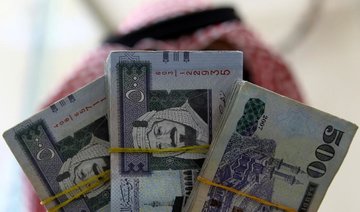
It can occur in the form of the sale of shares to the general public and investing institutions via initial public offering (IPO) on stock markets; or via partnerships between the public sector and private enterprises on the provision of services previously run by the government, the so-called PPP option; or it can take the form of asset sales to private companies, domestic or foreign, by state-owned organizations.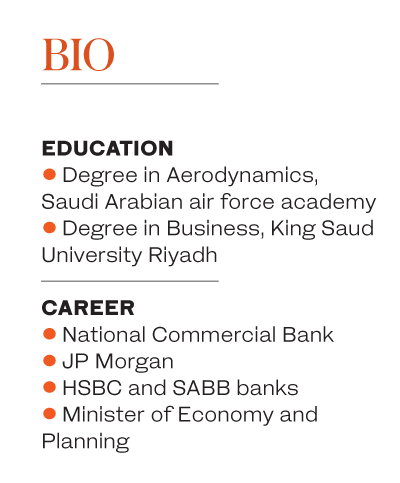
These are complex concepts. Does Al-Tuwaijri believe that Saudi investors are capable of understanding the processes involved?
“A lot of effort has been dedicated to educating the people about privatization — what are the benefits, what it means, what are the processes, the levels of expectations and engagement. Generally, we agreed that the more governance, transparency and top advisers, the better,” he said.
“I think Saudi investors are ready for privatization. We have a history of privatizing state companies going back to the 1970s, in telecommunications, banking and mining. Our private sector is mature enough, strong enough, to understand privatization, but it is not just the domestic market we need to address. The whole world is interested in Saudi Arabia, and we have many potential investors from Asia and Europe interested in our privatizations,” he added.
Some international observers have expressed their frustration that the program of state sales has not yet got underway, more than two years after the Vision 2030 strategy was announced. Al-Tuwaijri was cautious in his response.
“We spoke about market conditions, and in Saudi Arabia we needed to bring the economy back into sustainable growth. That has been achieved now. There was also a need to have a legal structure for privatization, and to develop labor policies. Privatization has a great many implications for labor practices.
And of course the capital markets had to be ready, with the emerging markets status in prospect.
“Could we press a button on some of these assets today? The answer is yes. Are we being optimal if we pressed the button today? Maybe not,” he said.
Nonetheless, there is a shortlist of assets that are at the head of the pipeline for sale between now and the end of the first quarter of 2019. Al-Tuwaijri identified assets in the grain and silo business, in education, health care and in the desalinization industry that were all ready to come to market in that time frame.
Some time ago, Al-Tuwaijri gave an estimate of $200 billion of the total value of the Saudi privatization plan, excluding the $100 billion target from an IPO of Saudi Aramco. He said that was still achievable, depending on what is included in the sell-off portfolio and the state of global markets.
“You have to look at whether you include the Public Investment Fund assets within that or not. Do we include the ‘opportunity discovery,’ which is not today immediately in the program? We’re talking to some of the government entities, the payments systems in the Saudi Arabian Monetary Authority, some of the assets the Ministry of Finance hold. These are also ongoing opportunities that may be very attractive to the private sector,” he said.
So far in the panel discussion the biggest issue in the privatization universe had not been approached: The IPO of Saudi Aramco.
“The company (Aramco) is absolutely ready, in terms of financial statements, to the best global standards and requirements of global listing venues,” Al-Tuwaijri said, adding that the forthcoming acquisition of Saudi Basic Industries Corporation (SABIC) and “potentially other” deals would enhance the Aramco growth strategy.
“But it goes back to the question of alignment. The government has all the right in the world to time that IPO so that it is optimal in terms of value and shareholder benefit,” he said.


![]()

Saudi Minister of Economy and Planning Mohammed Al-Tuwaijri: ‘The whole world is interested in Saudi Arabia’

Saudi Minister of Economy and Planning Mohammed Al-Tuwaijri: ‘The whole world is interested in Saudi Arabia’
- For an economy like Saudi Arabia, with its history of reliance on the public sector to spur economic growth, that is a big challenge
- Saudi investors are ready for privatization

Latest updates






© 2026 SAUDI RESEARCH & PUBLISHING COMPANY, All Rights Reserved And subject to Terms of Use Agreement.