





JEDDAH: You love cats. You love coffee. How can you make these things even more enjoyable? By combining them, of course. That is the idea behind Cat Lounge, which offers customers something they probably never knew they needed: A chance to sip coffee in the company of cuddly, fuzzy cats.
The two-story café is in Al-Shatea district of Jeddah, overlooking the sea, which is the perfect location. The coffee is ordered and made on the ground floor, which is decorated with adorable feline figurines and paintings.
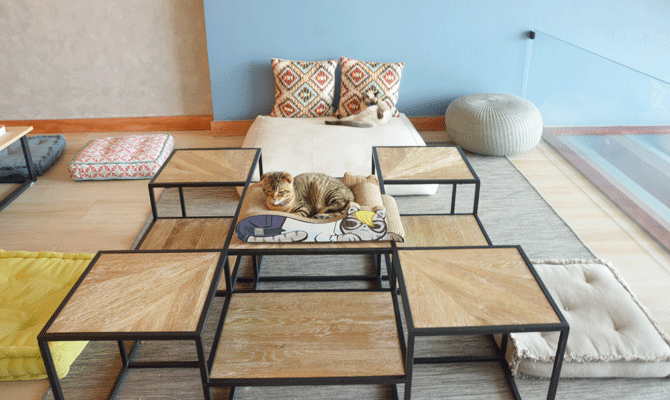
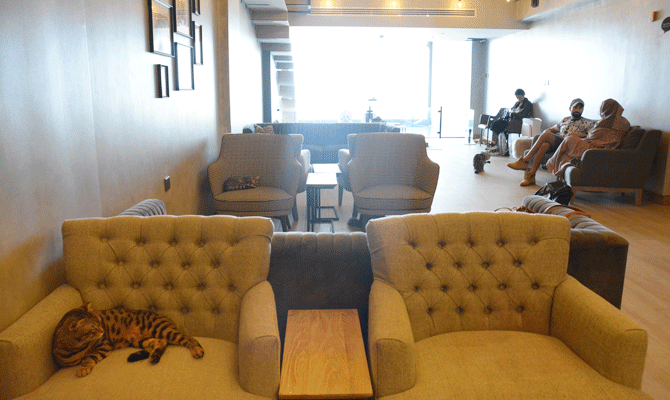
There is also a cozy and relaxing lounge, in every nook and cranny of which you will find more cat-related decorations and trinkets, such as paw prints on the floor and cat silhouettes on the light switches, which show how much thought and effort went into the design and decor of the place.
As cute as the kitty-themed artwork and decorations are, they are no substitute for the real thing. When it is your turn to meet the cats, you climb the stairs and walk through a door that keeps the cats in and allows the number of visitors to be controlled.
The crowd is controlled by giving numbered tokens when the visitors place their coffee orders; when the number comes they are escorted upstairs to where the cats are; the workers check their time on the token and each visitor has half an hour to spend time with the cats.
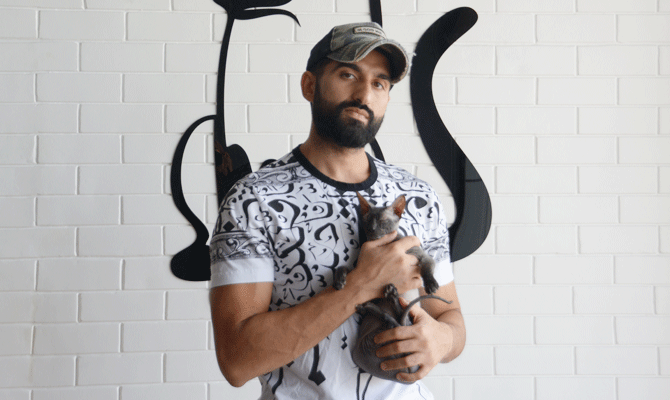
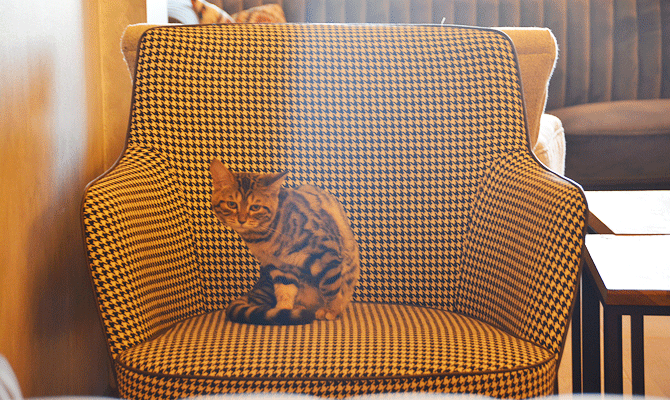
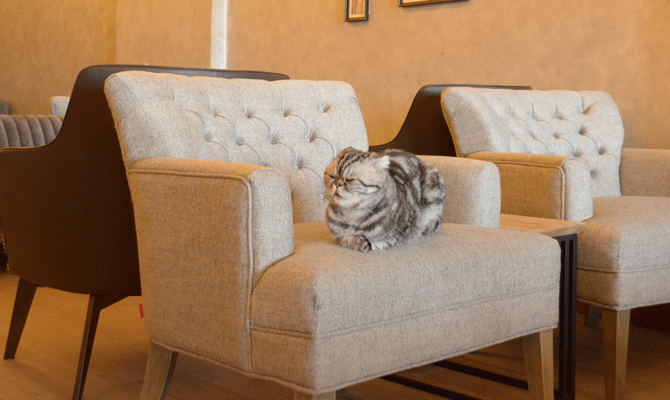
And that is when the real fun begins. You are greeted by cats of many breeds, colors and ages. Some quite rare breeds are included, including the Sphinx, the Bengal, and the exotic Scottish Fold.
Growing with cats
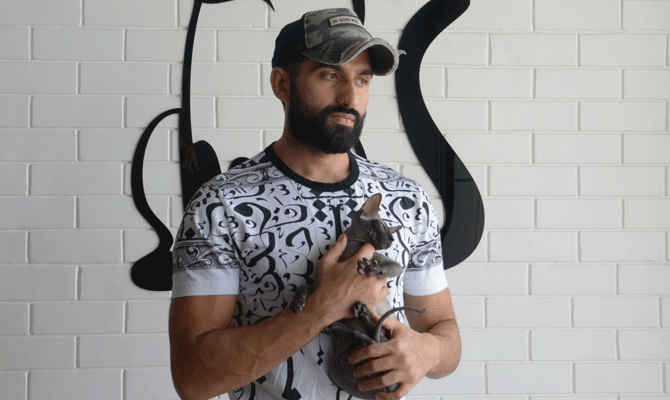
The cafe is the brainchild of Dr. Waheed Mohammed, a 30-year-old dentist, who has cared for his cats since they were kittens. “They grew up in my bedroom,” he said.
Dr. Waheed has been interested in animals ever since he was a child, and it is not just domestic cats he is passionate about; he has also cared for big cats, including lions, leopards, and elephants, he said.
This helps to explain why the cats in the café come running when he calls them and seem unperturbed by visitors, with each of them very well-behaved and affectionate.
The number of the cats is not limited; Waheed has a total of 16 cats but the ones in the cat lounge come and go. “My favorite cat is Bluereen,” said Dr. Wahid. “She is a white Maine Coon and she has heterochromia iridis, which is a condition where a cat has different-colored eyes.” Maine Coons are also one of the largest breeds of domestic cat.
“To get the Sphynx cat, I traveled to Ukraine,” he adds. This breed is known for its lack of fur and is a sign of prestige and luxury as it is extremely rare and expensive.
Some people might be concerned about the presence of so many cats in a cafe, where food and drink is prepared and served, but Mohammed and his employees go to great lengths to maintain high standards of hygiene.
“Of course, I am a doctor so I am very keen on hygiene,” he said. “We have air filters all around the place and they are connected to the roof. We have air purifiers to keep the air clean and healthy.”
Inspiration
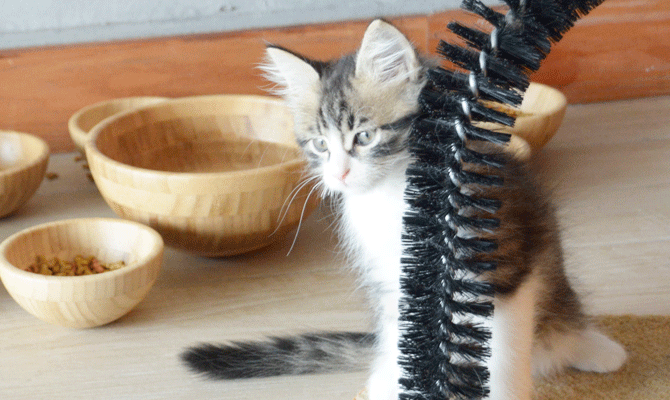
The room where the animals live is perfectly suited to them, with cat trees, scratching posts and panels on the wall for them to climb and clamber on. One end of the lounge has floor-to-ceiling glass windows and hammocks in which the cats can relax and enjoy the sea view. What inspired Mohammed to open such an unusual cafe?
“When I was studying at the Tokyo Medical and Dental University I saw one there, as Tokyo had one of the first cat cafes in the world,” he said.
Although cat cafes have since grown in popularity around the world, Wahid however faced many challenges and a lot of skepticism when he announced his plan to open one in Jeddah.
“Nobody believed in the idea of a cat cafe,” he said. “They kept telling me, ‘Focus on your career and forget about this because society is never going to accept it.’ But from when I had this idea, in 2012, I kept trying to accomplish it.”
He gave the perfect response to his critics when Cat Lounge became the No. 1 venue in Jeddah.
Its soft opening was done roughly a month ago on Sept. 20. Cat Lounge trended on Facebook as the No. 1 hottest destination in Jeddah and the week its soft opening was done. The purpose behind it, explained Mohammed, was to promote a cultural shift toward animal care and welfare in a part of the world where so many cats are abandoned, live on the streets and struggle to find food, and to teach people how to properly treat animals.
“People need to understand that animals have the right to live and be loved,” he said. “The streets are not the right place for them to live. I want to get this message across desperately that cats do not deserve to live in the garbage and struggle for food.”
To help improve the situation, he added, there is a need to change local attitudes about animals and enlist the help of the government.


