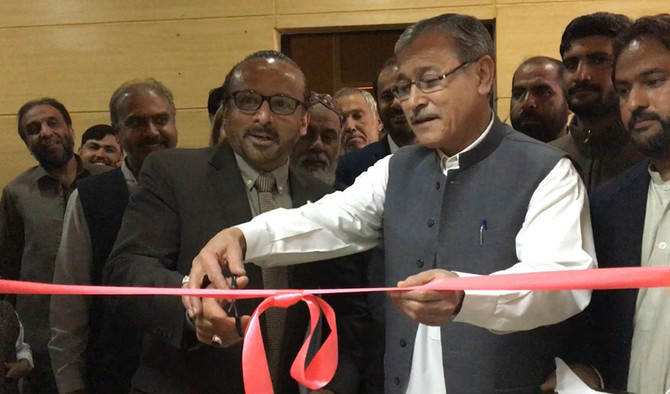
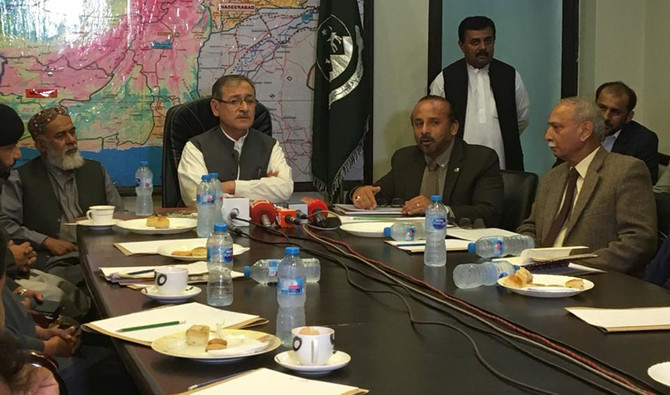
ISLAMABAD: With an aim to improve the law and order situation in the province and ensure timely justice to citizens, the Balochistan government on Wednesday launched a new Delivery Unit, in collaboration with the United Nations Office on Drugs and Crime (UNODC).
The initiative is part of the Rule of Law Roadmap (RLR) that was approved by the Balochistan provincial cabinet, earlier this year.
The RLR is detailed in a document that encompasses significant reforms, specifically aimed at inclusivity and provision of justice to citizens in the province.
The reforms highlighted are expected to be implemented over the next five years. The document was developed by the UNODC with the support of two other UN bodies and the British High Commission.
Speaking on the occasion, Haider Ali Shikoh, Home and Tribal Affairs Department Secretary of Balochistan, said: “Rule of Law is the most important priority of the government of Balochistan and today we have taken a concrete step toward its implementation… by inaugurating the Delivery Unit with the support of the UNODC which has been an instrumental partner in improving the law and order in Balochistan from last eight years.”
Balochistan has consistently ranked extremely low in the law and order indexes and is considered the worst performing province in the country. Among the many security challenges faced by the province, some of the most pressing include the alleged enforced disappearances of thousands, targeting of minority groups such as the Hazaras and the Punjabis, Baloch separatist movements and religious extremism.
Shikoh said that the government is leading the implementation of RLR across all the provinces despite the challenges on the ground. “Launching the Delivery Unit is a witness of that and the government’s ownership and commitment throughout the process, translating their strategic vision into action and becoming a role model for other provinces to follow,” he said.

Balochistan hopes to lead law and order reforms in Pakistan
- Launches Delivery Unit to ensure justice to citizens
- Province has consistently ranked low in law and order indexes
Government hails joining Gaza peace board as ‘diplomatic success’ amid opposition criticism
- Ahsan Iqbal says Pakistan took the decision after consulting other Muslim nations
- Opposition objects to joining Trump-chaired forum without parliamentary consensus
ISLAMABAD: Pakistan on Friday described its decision to join a newly formed international body aimed at supporting peace efforts in Gaza as a “diplomatic success,” dismissing opposition criticism that the move was taken without parliamentary consensus.
The Gaza Board of Peace brings together participating states and international stakeholders seeking to support dialogue, stability and peace-related initiatives linked to the conflict in the Palestinian enclave.
Prime Minister Shehbaz Sharif signed the forum’s charter a day earlier on the sidelines of the World Economic Forum’s annual meeting in Davos.
Opposition lawmakers objected to the decision in parliament, saying the government joined the initiative without taking them into confidence or disclosing its terms.
“If Pakistan had not gone to the Board of Peace today, these honorable members would have been making the same forceful speeches that Pakistan has been isolated, that no one is engaging with Pakistan and asking why Pakistan was not included in such a major peace initiative,” Federal Minister for Planning Ahsan Iqbal said in a parliamentary address.
“If Pakistan has been given center stage today, enabling us to contribute to peace in Palestine and Gaza alongside our brotherly Islamic countries, then this is a major diplomatic success for Pakistan, one that we should welcome rather than standing aside,” he added.
Iqbal said Islamabad had taken the decision after consulting other Muslim nations and described the forum as part of an international initiative aimed at ending bloodshed in Gaza.
He added that the initiative had been welcomed by Palestinians, even as Pakistan’s decision to pursue it with other nations faced criticism at home.
Representatives of 19 countries signed the charter on Thursday alongside US President Donald Trump, who addressed the gathering but offered few details about the body’s mandate, how it would operate or how it might pursue conflict resolution efforts.
Pakistan and seven other Muslim countries said in a joint statement on Wednesday that they had accepted Trump’s invitation to join the board, expressing hope that it could contribute to a permanent ceasefire in Gaza.
Chaired by Trump, the board is expected to include US Secretary of State Marco Rubio, Trump’s special envoy Steve Witkoff, former British prime minister Tony Blair and Trump’s son-in-law Jared Kushner.
Israel announced on Wednesday that Prime Minister Benjamin Netanyahu would also be a member of the board.


