TEHRAN: Militants in Iran abducted 14 members of a border security force near the Pakistan border on Tuesday, Iranian media reported, in the latest blow to the country’s powerful Revolutionary Guard.
The reports quoted an unnamed but informed source as saying two of the abducted are members of the powerful Revolutionary Guard’s intelligence department. The rest include seven members of the Basij force, a volunteer wing of the Guard, as well as regular Iranian border guards.
The abduction took place under the cover of darkness, before dawn, near the Loukdan border crossing point in southeastern Sistan and Baluchistan province. The area, which lies on a major opium trafficking route, has seen occasional clashes between Iranian forces and Baluch separatists, as well as drug traffickers.
There was no immediate claim of responsibility.
The Guard confirmed the abductions in a statement on its website, saying the attack was the work of “treason committed by infiltrators.”
The statement further blamed the abductions on a “terrorist group guided and supported by foreign intelligence services” and added that the Iranian security will “seriously pursue the bandits, terrorists and infiltrators.”
The Guard also asked Pakistan to take action to secure its side of the border.
“It is expected from the Pakistan government to take a serious attitude toward bandits and terrorists that have taken shelter near the border,” the Guard said, repeating calls for Islamabad to “quickly release and repatriate kidnapped Iranian border guards” — a reference to Iranian troops abducted in earlier incidents and taken into Pakistan.
The statement claimed the perpetrators were “hired by some evil, reactionary and terrorist- training regional countries,” a reference to Iran’s regional rival Saudi Arabia and its Gulf Arab allies.
Later Tuesday, Gen. Mohammad Pakpour, commander of the Guard’s ground forces, called for a joint Iran-Pakistan operation against those behind the abductions.
He said Pakistani side needs “to assume more responsibility in this regard” while Iranian state TV said the site of the attack was close to a Pakistani border guard station.
Tuesday’s abductions were the second major blow in as many months to the paramilitary Guard, which answers directly to Iran’s Supreme Leader Ayatollah Ali Khamenei.
In September, militants disguised as soldiers opened fire on a military parade in Iran’s oil-rich southwestern city of Ahvaz, killing 24 people and wounding over 60.
Arab separatists in the region, who say the Persian-dominated government is discriminating against Iran’s Arab minority, claimed responsibility for the Ahvaz attack and Iranian officials blamed them for the assault. But Daesh also claimed responsibility, initially offering incorrect information about it and later publishing a video of three men it identified as the attackers. The men in the video, however, did not pledge allegiance or otherwise identify themselves as Daesh followers.


![]()

Militants abduct 14 Iranian border guards on border with Pakistan
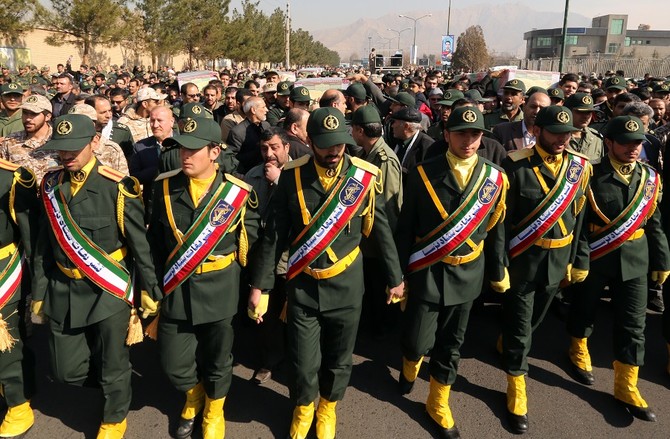
Militants abduct 14 Iranian border guards on border with Pakistan
- The official said the kidnappers were members of a terrorist group, but gave no more details
- Lulakdan is in Sistan and Baluchestan Province

Latest updates


© 2026 SAUDI RESEARCH & PUBLISHING COMPANY, All Rights Reserved And subject to Terms of Use Agreement.