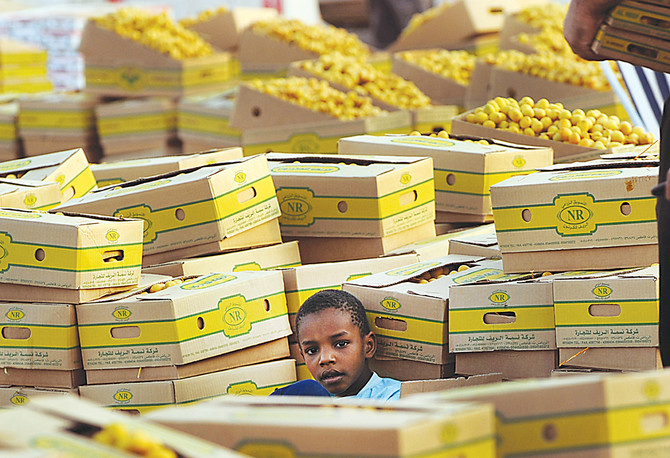
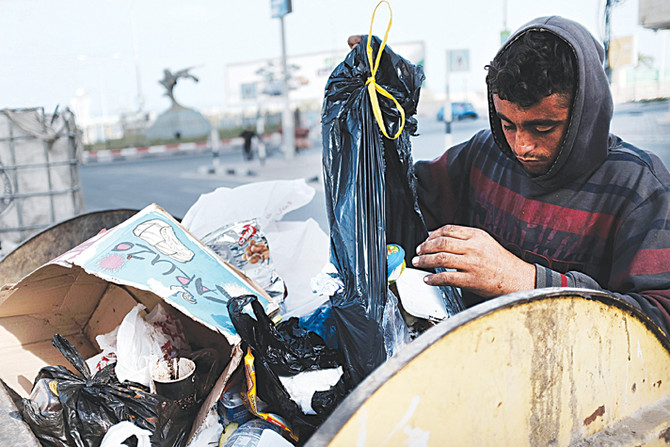

DUBAI: With food loss and waste in the Near East and North Africa (NENA) estimated at up to 250kg per person and more than $60 billion annually, a number of initiatives are aiming to tackle the issue across the region, which relies heavily on global food imports, has limited potential to increase production and faces a scarcity of water and arable land.
They’re not alone, as food security institutions around the world mark World Food Day on Tuesday, to honor the founding date of the United Nations’ Food and Agriculture Organization (FAO) in 1945.
“If, on a global level, we could recover one third of food wasted, it could feed 870 million people,” said Colin Kampschoer, communications officer at the UN’s World Food Program. “In 2017, one in nine people didn’t have enough to eat — this equals 821 million people. Globally, a third of the food produced for human consumption is lost or wasted, amounting to about 1.3 billion tons per year. For example, at the moment we waste almost half of the fruit and vegetables we produce in the world, while we waste 24 million slices of bread each day.”
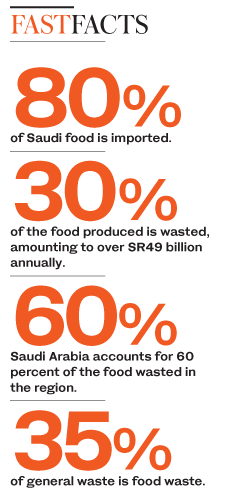 Saudi Arabia ranks first in the world in food waste per capita. According to the FAO, reducing food loss and waste is vital for sustainable food systems and regional food security. “The high percentage of imported food into the region, combined with the Middle East being a major contributor to food waste, means that it places a heavy burden on the earth’s resources, including water, energy and fossil fuels, that are required to produce and distribute food,” said Ryan Ingram, founder of TerraLoop, a food loss and waste consulting company in the UAE.
“Greenhouse gas emissions associated with food waste are 25 times more harmful to the environment and accelerate climate change. If food waste were a country, it would rank as the third highest emitter of greenhouse gases behind China and the US.”
The region loses and wastes up to 20 percent of cereals, 50 percent of fruits and vegetables, 16 percent of meat and 27 percent of fish and seafood.
The FAO estimates that food waste at the consumption stage in the region is 34 percent, and is found mostly in urban areas. Significant wastage is also said to take place during religious holidays, wedding ceremonies and family gatherings, and in the hospitality industry such as in restaurants and hotels. “Major weaknesses for the region include a significant lack of arable land, water scarcity, a hot climate, insufficient investment in agricultural research and high dependence on global and regional markets,” Ingram said. “This is in addition to population growth and increasing local food consumption each year, which also place increased pressure on already-strained food and water resources.”
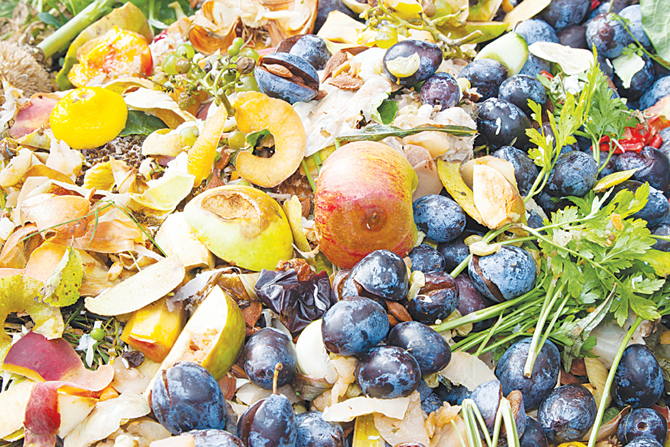
Food consumption in the GCC has grown from 48.1 million metric tons in 2016, with estimates that it will reach 59.2 million metric tons in the GCC by 2021. And with a compound annual growth rate of 4.2 percent and 800 million undernourished people in the world, much work needs to be done.
“The Middle East, like most prosperous societies, has access to plentiful food supplies,” said Jeffrey Culpepper, chairman of Agrisecura in the UAE, which provides sustainable solutions for food security purposes. “That excess promotes waste, especially in high-end hotels and restaurants. Many times, portions are valued in quantity, not quality, so too much is put on your plate.”
He said hot climates add to difficulties in storing surpluses. “Mandatory management of food waste by governments is required,” he added. “As opposed to dumping in landfills, it can be digested into bio-fuel or composted. By having smaller portions on the plate, savings can be used to offset storage cost of waste for collection.”
Landfills are also quickly reaching capacity. “By recycling food waste, it will take pressure off landfills and create useful byproducts like bio-fuel and compost,” Culpepper said. “Also, in a world where food shortages and hunger are a major problem in many countries, wasting food has become a moral issue.”
Others called for implementing a law to combat food waste, such as enforcing a fee on restaurant-goers who leave unfinished plates. “Monitoring large food-waste producers, like catering companies, hotels, markets, malls and airlines, is vital,” Ingram said. “There is also a need for national and regional guidance and awareness campaigns in all sectors, including residential, commercial and government, as well as pre-Ramadan.”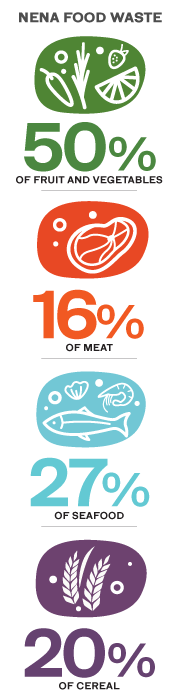
He suggested measuring waste at the source and creating a feedback loop to the supply chain so that procurement is reduced. “What gets measured, gets managed,” Ingram added. “Developing community projects that tackle food waste at the source and educating the producers and public about the issue and how to be a part of the solution, can also help. Developing policies that help overcome future food security challenges requires further research, and development and future strategies need to be aligned with research and development to ensure resilience and sustainability.”
Many initiatives are starting to emerge across the region to tackle the issue. The UAE Food Bank collects food from hotels, restaurants, supermarkets and farms to distribute to people in need, such as laborers.
Terra Loop sees itself as the Middle East and Indian Ocean’s first food waste auditing consultancy, helping people to understand their food waste, from five-star hotels and resorts to shopping malls and restaurants. Its objective is to guide them to solutions that reduce their “FoodPrint,” taking responsibility and improving their bottom line.
In Saudi Arabia, the Eta’am Food Bank, launched in 2010, helps to feed the underprivileged by distributing excess food from hotels, banquets and weddings to the poor and needy. “Other corporates in the Eastern Province now also participate in the scheme,” Ingram added. “Eta’am also promotes food-related culture and provides hands-on experience in the safe preparation of food through the Food Academy Initiative.”
Moreover, the Kingdom’s consultative Shoura Council is looking into a food waste law that could see individuals and organizations fined for excessive waste. It also proposed the establishment of a national center to offer guidance and awareness on food waste.
“There is a growing awareness in local communities on the problem of excess food waste with several local initiatives having been started to recycle residential food waste,” Culpepper said. “These efforts are important but still too small to make a significant difference. The big generators of food waste are hotels, restaurants, schools, hospitals and government institutions, as opposed to residential, so it will require a government policy to force commercial food-waste producers to recycle.”