KARACHI: Amid the new Pakistan government ‘s indecision about the International Monetary Fund’s bailout program and prevailing discourse about the program’s pros and cons, experts have warned against the economic consequences of the program, terming it “a disaster for the country.”
On Sunday Pakistan’s Prime Minister Imran Khan hinted at approaching the IMF, saying: “We may approach the IMF for support to the country’s financial problems,” but he insisted on looking toward other countries: “We have requested three countries to deposit funds in the State Bank of Pakistan that would boost the country’s foreign exchange reserves.”
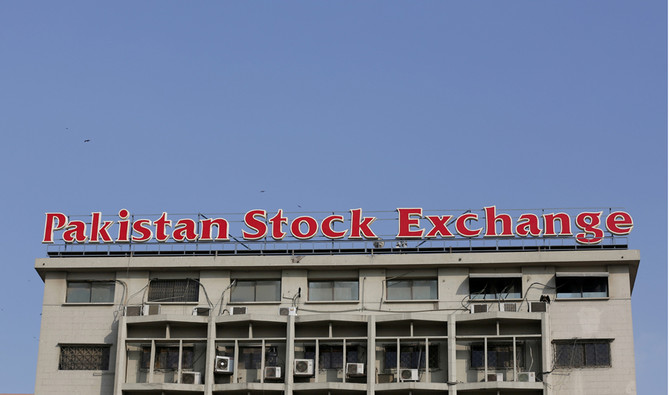
As stakeholders look for a categorical position of Khan’s administration in going or not going to the IMF for financial assistance or the arrangement of funds from alternative resources, the country’s stock market remains in a tight spot due to uncertainty.
The Pakistan Stock market PSX on Monday recorded a decline of 1,328 or 3.39 percent, the biggest in five months. “The Pakistan market was down by more than 3 percent due to margin calls and lack of clarity on the IMF or other funding,” Muhammad Sohail, CEO of Topline Securities, told Arab News.
Ahsan Mehanti, chief executive of Arif Habib Group, said: “Reports of record PKR1.55 trillion pending circular debt, foreign outflows, uncertainty over the outcome of FATF compliance review meetings on action plans, a record fall in foreign reserves, fears over likely IMF policy measures on a further hike in gas and power tariffs, a surge in interest rates and rupee depreciation have played a catalyst role in the record fall.”
Sohail added: “On May 29, 2017 market capitalization of the country’s stock market was $99 billion, which has come down to $63 billion.”
The country’s stock market’s losing streak is due to the lack of clarity from the government’s indecision, but economists fear a worse economic scenario if the country avails itself of the IMF program.
“In the case of taking advantage of the program, a big disaster would be knocking at our doors,” Dr. Shahida Wizarat, a senior economist, told Arab News.
During the recent visit of IMF’s staff mission, the fund had proposed Pakistan adopt policy measures including: 1. A flexible exchange rate 2. Monetary policy tightening 3. Gas and power tariff hikes.
Experts believe the IMF program will come up with harsh conditions that will largely impair the country’s growth. “In the case of a flexible exchange rate regime and a further utility price hike, the country would have to face massive inflationary pressure that would trigger unemployment and poverty,” Wizarat said.
“In the case of a flexible exchange regime the national currency, the Pak rupee, would further depreciate to around PKR140 against the US dollar from the current PKR127. That would trigger inflation,” said Muzamil Aslam, senior economist and CEO of EFG-Hermes Pakistan.
Dr. Ikram ul-Haq, an expert on legal and economic matters, said: “The impact will be negative. Rupee devaluation will make imported goods expensive and increase inflation, which will erode purchasing power. Not only will investment and growth suffer but exports will become more competitive due to the enhanced cost of imported ingredients. More expensive energy will have disastrous effects for industries as well as for domestic consumers.”
Pakistan’s previous government had set a growth rate target of 6.2 percent for the current fiscal year but international and local institutions predict that the country will not be able to achieve this. The Asian Development Bank has forecast 4.8 percent and the State Bank of Pakistan expects 5 percent GDP growth.
“Historically, Pakistan has achieved 3 to 3.5 percent growth rate in the first two to three years whenever we availed the IMF program,” Aslam said, adding: “It would be a big achievement if we maintain growth at 3.5 percent.”
However, some economists still believe that the country would be able to maintain the current growth rate. “As the government is expecting inflows from friendly countries, Saudi Arabia and China, and inflow of investment in the CPEC project, the country may achieve 5 percent growth rate,” Dr. Bilal Ahmed, an economic analyst, said.
Pakistan’s industrialists are also wary of the current economic trends over the unclear stand of country’s leadership. “In this situation our problems are increasing. We see the future of industry as being bleak as investors are trying hard to sustain growth momentum,” Syed Mazhar Ali Nasir, senior vice president of the Pakistan Chambers of Commerce and Industry, told Arab News.
Experts believe that the devaluation of currency and a gas and power tariff hike will lead to the closure of industries and ultimately would result in mass unemployment. “Poverty will lead to an increasing crime rate and the tall claims of 10 million jobs and five million house would not materialize,” Wizarat warned.