

Pakistan raises key policy rate by 100bps

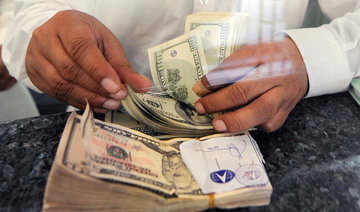
Pakistan’s central bank on Saturday increased the key policy rate by 100 basis points (bps), bringing it up to 8.5 percent and making the decision effective from the beginning of the next month. (REUTERS/photo)
Updated 29 September 2018
Follow

Pakistan raises key policy rate by 100bps

  • The State Bank of Pakistan believes the real GDP growth for FY19 will be around 5 percent
  • Despite some growth in workers’ remittances, the current account deficit stands at $2.7 billion

KARACHI: Pakistan’s central bank on Saturday increased the key policy rate by 100 basis points (bps), bringing it up to 8.5 percent and making the decision effective from the beginning of the next month. The bank cited inflationary pressure in the economy, along with expanding external deficit and vulnerability to external shocks as key reasons for its decision.

“This assessment takes stock of the factors including higher-than-anticipated increase in international oil prices, an upward revision in domestic gas prices, further increase in regulatory duties on imports, and the continuing second-round impact of previous exchange-rate depreciations,” the State Bank of Pakistan (SBP) said in its statement.
The central bank maintained that the average headline inflation was expected to fall in the revised forecast range of 6.5 to 7.5 percent for the current fiscal year, FY19. “Inflation is inching up, particularly from March 2018 onwards. So far, in the first two months of FY19, headline CPI inflation has averaged 5.8 percent, as compared to 3.2 percent for the corresponding months of FY18, and an average of 3.9 for all of FY18. The jump is even more pronounced in core inflation -- a key measure reflecting the underlying inflationary pressures in the economy,” the SBP said.
The Asian Development Bank, in its recently released report, had also raised the inflation forecast to 6.5 percent in FY19 because of the currency depreciation and elevated international oil prices.
The SBP added: “Following a healthy growth of 5.8 percent in FY18, economic activity is likely to slow down in FY19 as the general macroeconomic policy mix is focusing toward stabilization. Specifically, the transmission of SBP’s policy rate hikes by 175 bps since January 2018 is still unfolding. The government is also now pursuing a fiscal consolidation program and has further announced regulatory measures to slow down the growing pressures on the external front. As a result, domestic demand is projected to decelerate in the coming months of FY19.”
The SBP projects the real GDP growth for FY19 to be around 5 percent. “The recent monetary and fiscal measures are likely to affect large-scale manufacturing. The latest information shows that cotton production is expected to miss its FY19 target of 14.4 million bales, with downside implications for agriculture sector growth. The ancillary services sector is expected to miss its FY19 target as well. Some positive impact is expected from the contribution of exports-led production and higher fertilizer production amidst depleting stocks and better availability of energy,” the statement added.
The central bank also noted that the current account deficit continues to pose a challenge. “Despite some growth in workers’ remittances and exports in the first two months of FY19, a notable increase in the value of oil imports has kept the current account deficit at $2.7 billion, as compared to $2.5 billion, in the corresponding period last year despite non-oil imports declining during the period. Owing to these developments SBP’s net liquid foreign exchange reserves have declined to $9 billion as of Sept. 19, 2018, compared to $9.8 billion at the end of FY18,” the central bank added.
The SBP noted: “Non-oil imports are responding to the contraction measures, a surge in oil prices is masking this improvement, and as a result the current account deficit remains high; rising trends in inflation mean that real interest rates have fallen and further, the unfolding global developments, whether in terms of oil-price shocks, protectionist trade policies and falling flows to the emerging markets, are the factors that all pose challenges to macroeconomic management in Pakistan.”
The SBP has aggressively raised interest rates during the calendar year. “We believe this will partially help in containing demand and import growth. But more measures need to be taken on the fiscal side to control external account issues,” Muhammad Sohail, financial expert and CEO of Topline Securities, commented.
However, some expert negate the notion that the interest rate hike will play an effective role in containing inflation. “Empirical evidence suggests that the interest or currency rate changes do not play an effective role in subduing inflation and increase the cost of capital in the economy. The rates should be kept stable at the lower side so that the economy can grow,” said Khurram Schehzad, senior financial analyst at JS Global Capital.
Saudi Maaden reports 156% surge in annual net profit to $2bn on strong commodity prices and record production

Updated 8 sec ago
Follow

Saudi Maaden reports 156% surge in annual net profit to $2bn on strong commodity prices and record production

RIYADH: Saudi mining and metals company Maaden has reported a 156 percent jump in its net profit attributable to shareholders for 2025, driven by higher commodity prices, record production volumes, and a one-off bargain purchase gain.

The state-backed giant posted a net profit of SR7.35 billion ($1.95 billion) for the full year 2025, an increase from SR2.87 billion in the previous year. The firm’s revenue surged by 19 percent to SR38.58 billion, up from SR32.55 billion in 2024.

This comes as Saudi Arabia steps up efforts to expand its mining sector as a pillar of economic diversification, encouraging international participation and private investment to unlock the Kingdom’s estimated $2.5 trillion in untapped mineral resources under Vision 2030.    

In a statement on Tadawul, the company said: “Performance was led by record phosphate production, near record aluminum production, an increase in all three of Maaden’s main output commodity prices.”

The performance was also fueled by a 60 percent increase in gross profit, which reached SR14.79 billion. In its annual results announcement, Maaden attributed the top-line growth to “higher commodity market prices for phosphate, aluminum and gold business units,” as well as increased sales volumes in its phosphate and aluminum segments. This was partially offset by slightly lower sales volume in the gold unit.

Maaden’s CEO, Bob Wilt, hailed 2025 as a transformative year for the company, marked by strategic growth and operational excellence. “This was a great year for Maaden’s strategic growth. We delivered strong financial results and sustained operational excellence across the business,” he said in a statement.

“This was driven by growth in production across all businesses, including record-breaking DAP (di-ammonium phosphatevolumes), disciplined cost control across and a clear commitment to our role as a cornerstone of the Saudi economy,” Wilt added.

Profitability was further bolstered by an increased share of net profit from joint ventures and an associate. This included a one-off bargain purchase gain of SR768 million related to Maaden’s investment in Aluminium Bahrain B.S.C. The company also benefited from lower finance costs.

The fourth quarter of 2025 was strong, with Maaden swinging to a net profit of SR1.67 billion, compared to a loss of SR106 million in the same period of the prior year. Quarterly revenue rose 7 percent to SR10.64 billion.

The firm achieved record production of di-ammonium phosphate, reaching 6.72 million tonnes for the year, a 9 percent increase. Aluminum production remained near-record levels, while the company added a net 7.8 million ounces to its reportable gold mineral resources through discovery and resource development.

The phosphate division saw sales jump 17 percent to SR20.77 billion, with the earnings before interest, taxes, depreciation, and amortization margin expanding to 47 percent. The aluminum business reported a 9 percent increase in sales to SR10.99 billion, with EBITDA more than doubling in the fourth quarter.

Looking ahead, Wilt emphasized that the pace of growth will accelerate as the company advances key initiatives, including the Phosphate 3 Phase 1 and Ar Rjum projects, which remain on budget and schedule. Maaden has also secured a gas supply for its future Phosphate 4 project.

“This pace of growth will only accelerate. Not only as we advance projects and increase the scale of our exploration program, but as we continue to grow production and implement technology that will further modernize, streamline and unlock value,” Wilt added.

Earnings per share for the year rose sharply to SR1.91, up from SR0.78 in 2024. Total shareholders’ equity increased by 18.7 percent to SR61.59 billion.