We need more support, says famous Pakistani artist

1 / 4
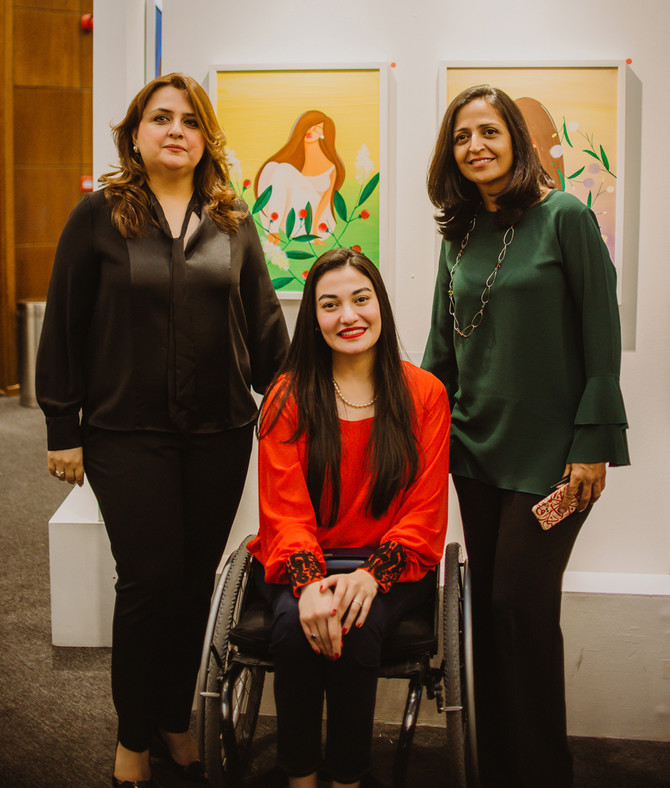
Muniba Mazari is in Dubai for her first international exhibition. (Photos by Muniba Mazari)
2 / 4
Muniba Mazari is in Dubai for her first international exhibition. (Photos by Muniba Mazari)
3 / 4
Muniba Mazari is in Dubai for her first international exhibition. (Photos by Muniba Mazari)
4 / 4
Muniba Mazari is in Dubai for her first international exhibition. (Photos by Muiba Mazari)
Updated 25 September 2018
Follow

We need more support, says famous Pakistani artist

  • Art should be accessible to the masses
  • The state has a responsibility to take care of its artists

DUBAI: Muniba Mazari is a famous Pakistani artist, model, activist, and motivational speaker. She uses a wheelchair because of injuries sustained in a car accident at the age of 21. She is also the National Ambassador for UN Women Pakistan.
She is in Dubai for her first international exhibition. Titled as “And I chose to live,” the exhibition was organized in Pakistan Association Dubai and hundreds of Pakistani community members attended and appreciated her work.
While speaking on the sideline of the exhibition, Mazari told Arab News that Pakistan is a very creative nation but a little more encouragement and a lot more exposure is all we need.
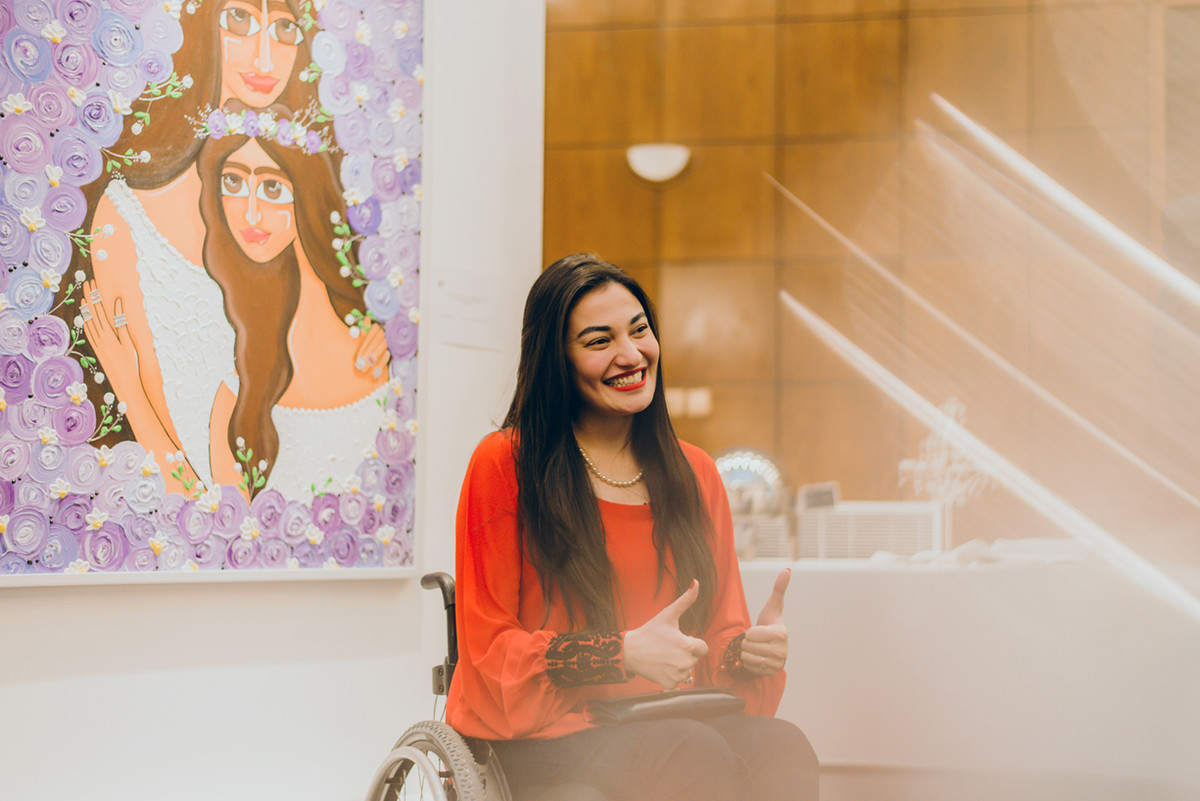


Mazari said creative expression needs a lot of courage. “Pakistani artists are very courageous because they choose challenging topics and depict social change in their artwork. (However) there are people on our society who don’t appreciate such art, but then there are those who understand and support those artists and their vision.” (Photo courtesy: Muniba Mazari)

She denied the notion that Pakistan has few women artists. On the contrary, she said: “There are a lot of women artists in Pakistan but unfortunately they don’t get a chance to exhibit their work at bigger level. That’s why you don’t see them in the mainstream. We need to encourage and promote their work or they’ll always be left behind.”
When asked about her most favorite artist, she said: “In Pakistan my most favorite artist is Saeed Akhtar and globally I love the works of Thomas Fedro and Frida Kahlo.”

Mazari said the state should take care of its artists. “It’s heartbreaking to see artists struggling for their basic rights. You cannot make a living as an artist and that’s one of the major reasons why people don’t want to pursue art as their main career. It comes with a lot of financial challenges. It is the responsibility of the state as well as our society to support the artists, especially the ones who are in need.”
She said Lahore was the most artistic city, rich with cultural diversity. Karachi comes second, whereas the rest of the cities were slowly evolving. “I wish we have more art galleries in all the cities of Pakistan where people can go and experience art.”
Mazari believes that art can fight extremism. “Art is the most powerful way of highlighting social issues and fighting taboos. But for that we need to make art more accessible to the masses.”

Pakistan says responding to Afghan ‘offensive operations’ after border fire as tensions escalate

Updated 5 sec ago
Follow

Pakistan says responding to Afghan ‘offensive operations’ after border fire as tensions escalate

  • Afghan Taliban spokesperson says “large-scale offensive operations” launched against Pakistani military bases
  • Pakistan says Afghan forces opened “unprovoked” fire across multiple sectors along shared border

ISLAMABAD: Afghanistan’s Taliban authorities said on Thursday they had launched “large-scale offensive operations” against Pakistani military bases and installations, prompting Pakistan to say its forces were responding to what it described as unprovoked fire along the shared border.

The escalation follows Islamabad’s weekend airstrikes targeting what it said were Tehreek-e-Taliban Pakistan (TTP) and Daesh militant camps inside Afghanistan in response to a wave of recent bombings and attacks in Pakistan. Islamabad said the strikes killed over 100 militants, while Kabul said dozens of civilians were killed and condemned the attacks as a violation of its sovereignty.

In a post on social media platform X, Afghan government spokesperson Zabihullah Mujahid said Afghanistan had launched “large-scale offensive operations” in response to repeated violations by the Pakistani military.

Pakistan’s Ministry of Information said Afghan forces had initiated hostilities along multiple points of the frontier.

“Afghan Taliban regime unprovoked action along the Pakistan–Afghanistan border given an immediate, and effective response,” the ministry said in a statement.

The statement said Pakistani forces were targeting Taliban positions in the Chitral, Khyber, Mohmand, Kurram and Bajaur sectors, claiming heavy Afghan casualties and the destruction of multiple posts and equipment. It added that Pakistan would take all necessary measures to safeguard its territorial integrity and the security of its citizens.

Separately, security officials said Pakistani forces had carried out counterattacks in several border sectors.

“Pakistan’s security forces are giving a befitting reply to the unprovoked Afghan aggression with full force,” a security official said, declining to be named. 

“The Pakistani security forces’ counter-attack destroyed Taliban’s hideouts and the Khawarij fled,” they added, referring to TTP militants. 

The claims from both sides could not be independently verified.

Cross-border violence has intensified in recent weeks, with Pakistan blaming a surge in suicide bombings and militant attacks on militants it says are based in Afghanistan. Kabul denies providing safe havens to anti-Pakistan militant groups.

The clashes mark the third major escalation between the neighbors in less than a year. Similar Pakistani strikes last year triggered weeklong clashes before Qatar, Türkiye and other regional actors mediated a ceasefire in October.

The 2,600-kilometer (1,600-mile) frontier, a key trade and transit corridor linking Pakistan to landlocked Afghanistan and onward to Central Asia, has faced repeated closures amid tensions, disrupting commerce and humanitarian movement. Trade between the two nations has remained closed since October 2025.