


KARACHI: Pakistan has put under the hammer 102 luxury vehicles, including seven bullet-proof cars used by the Prime Minister House on Monday.
Prime Minister Imran Khan had announced the auctioning of the luxury vehicles as part of his austerity drive of jettisoning extra financial burden on the national exchequer.
The vehicles included eight BMWs, 28 Mercedes cars, 40 Toyotas, five Mitsubishis, two Land Cruisers, and two jeeps. The models of the vehicles ranged from 1994 to 2016.
The public response was overwhelming: Within the first few hours of the auction some 10 vehicles had sold, given the government’s condition that the successful bidder would have to submit all taxes while 10 percent of the price and remaining payments would be made within seven days.
“So far 70 vehicles have been auctioned at higher prices,” Information Minister Fawad Chaudhry announced at a news conference Monday evening. The process will continue till late night.
During the auction, four bullet-proof Mercedes jeeps were auctioned for the prices ranging between PKR9.38 million ($75,779), and PKR14.5 million. “Some vehicles could not be auctioned yet due to high duty and taxes levied on them. However, duties and taxes of such vehicles will be reviewed,” said Major Asif, administrator of the PM House.
“Though the auction of these vehicles is not the only solution to the country’s economic problems, it is the first step as this is expected to be followed by many similar gestures,” the senior economist Professor Dr. Athar Ahmed told Arab News.
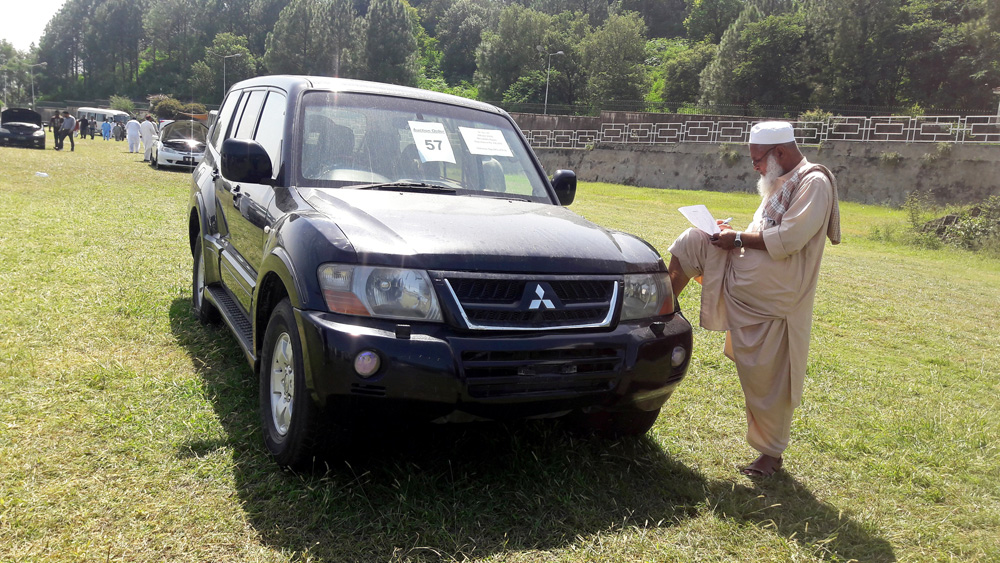
A man writes down the details of a government-owned car on sale during an auction at the premises of Prime Minister's House in Islamabad. (REUTERS)
Ahmed believes that the auction of the luxury vehicles is a message to the bureaucracy and the future government that the austerity is the only way out of chronic economic ills. “We understand that this move is just the act of transfer of assets but it leaves a strong message,” he added.
Pakistan, which depends on foreign assistance and loans to a large extent, is known for its officials’ high expenditures and ruthless use of state machinery for their own good. The presence of luxury vehicles is the prime example. “When we seek loans from other countries and invite them to our palaces, their impressions are always adverse,” said Abdul Qadir Memon, senior lawyer and president of the Pakistan Tax Bar Association.
As the government is pushing hard to rely less on foreign aid, the stakeholders call for legal action against the misuse of public money. “The government should take a bold step by banning the imports of luxury items, including super luxury vehicles,” Ahmed said.
Memon said: “The government can only stop imports of luxury goods, including vehicles, by making legislation through parliament so that the Prime Minister House, Chief Minister Houses and governor houses could become a real sign of austerity in the future. The future governments would require a two-thirds majority to alter the law in their favor which seems a daunting task.”
However, Professor Hasan Askari, senior political analyst and former caretaker chief minister of Punjab, holds the political leadership responsible for the extravagance and calls for accountability from the very top. “The leaderships determine if they like glamor or simplicity. There are rules that define the entitlement of vehicles for bureaucracy but they maneuver to get extra benefits.”
Askari added: “The biggest problem in Pakistan is the obliteration of distinction between the public and private domains as people want to improve their lives at he state’s expense. For example, sending the child to school is a private matter but people use government vehicles to pick up and drop their children at schools. This distinction was very much exercised till the 1960s and early 1970s in Pakistan.”
The austerity move of Prime Minister Imran Khan’s government aims to reduce dependency on foreign loans and financial assistance. The country immediately needs up to $9 billion to meet its international payment obligations and stabilize its balance of payments sheet.


