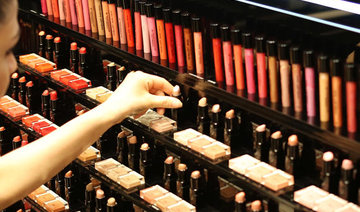
Good timing and sound business sense have been the key to the success of Nice-one, the first Saudi online retailer specializing in cosmetics and beauty products.
Since it was founded on Jan. 1, 2017 it has expanded steadily and now has more than 70 employees, but it all began on a much smaller scale.
Today, most consumers in their teens and twenties often prefer to shop online, using their smart phones, tablets or laptops. The convenience of home delivery and the ease of making purchases are the top drivers propelling the use of e-commerce worldwide. Although the Communications and Information Technology Commission (CITC) highlighted in its E-commerce in Saudi Arabia 2018 report that Saudi shoppers’ preference to make purchases through traditional channels remains high, a shift to online buying is gathering momentum, driven by high levels of Internet and mobile penetration as well as the young population of the country.
Nice-one’s founders, Abdulrahman and Omar Alolayan, spotted that shift at its earliest, in 2013. The two young Saudi brothers started selling beauty products using an Instagram account, before launching their business, developing an app and expanding to become one of the most promising startups in the Kingdom, with the ability to reshape the market.
CEO Abdulrahman Alolayan said: “During my years at university pursuing my masters degree, I started to look into different business opportunities before settling on only one cosmetic product, which I began to ship from the United States to my brother in Saudi Arabia.
“When I came back to the country, I decided to focus on the business and opened a small retail shop in Buraidah. This helped us to understand the market and its trends and learn about its customers’ needs on the ground. Then we agreed to move to Riyadh and rent a 200 square meter office and warehouse.”
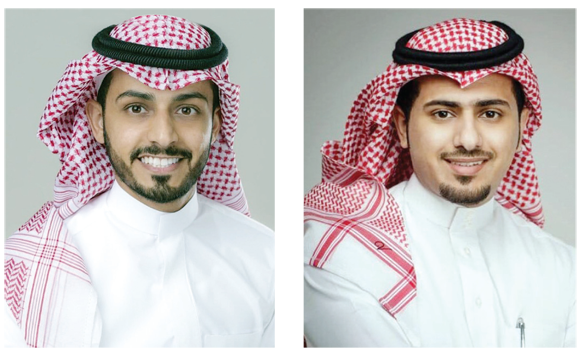
Brothers Omer, left, and Abdulrahman Alolayan
During that time, the newly established startup had only three employees and was a small operation.
“After four months, we recruited an experienced business development manager who helped us to make Nice-one the success it has become today,” said Abdulrahman.
Nice-one started by selling only makeup and beauty products, before gradually expanding its listed products.
Abdulrahman explained: “We were trying to focus more on our customers and their needs and building up our operations by starting a new category every six months. Our catalogue today includes beauty products, perfumes, hair care, and most recently sunglasses. We are proud to say that as of today we have more than 500 brands listed on our website in all available categories.”
Nice-one’s app is available on both Google Play and the Apple App Store and has more than 500,000 downloads.
“My advice to all entrepreneurs is never to start a business without understanding its market first and testing it on the ground. Also, you need to have your team lined-up in all the positions that you think are critical to your business. We faced a lot of technical and financial challenges during our first year, and that could’ve been avoided then through having the right people in place,” said Abdulrahman.
Today, Nice-one has a reputation as the first online retailer in the Kingdom for cosmetic products, and aims to become one of the best in the region.
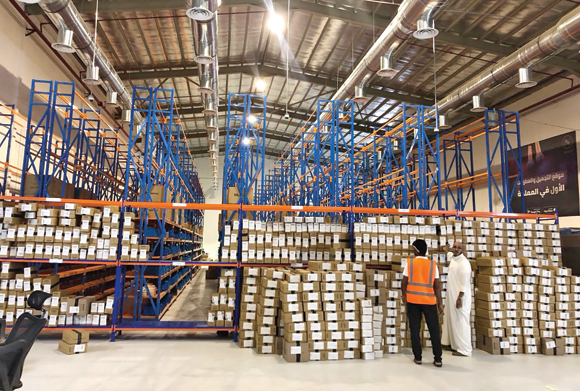
Nice-one’s warehouse. (File/Supplied.)