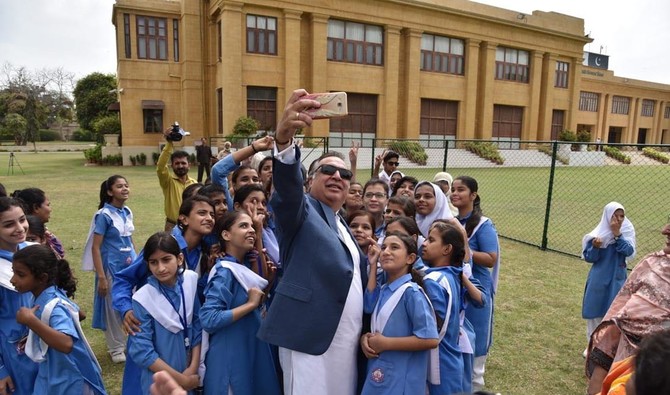
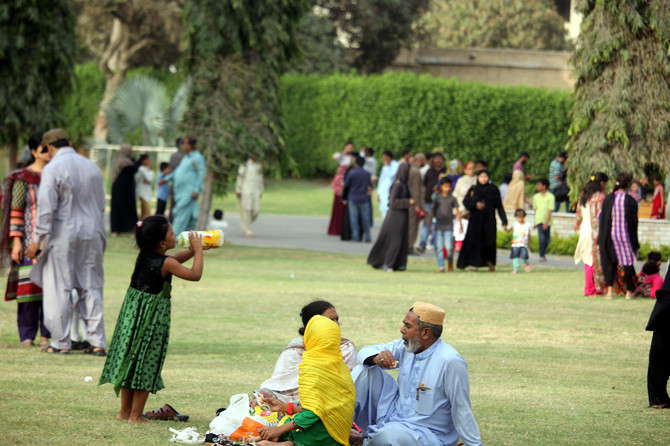
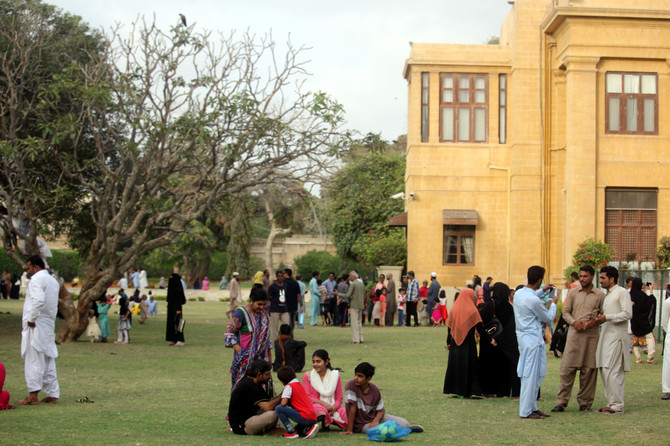
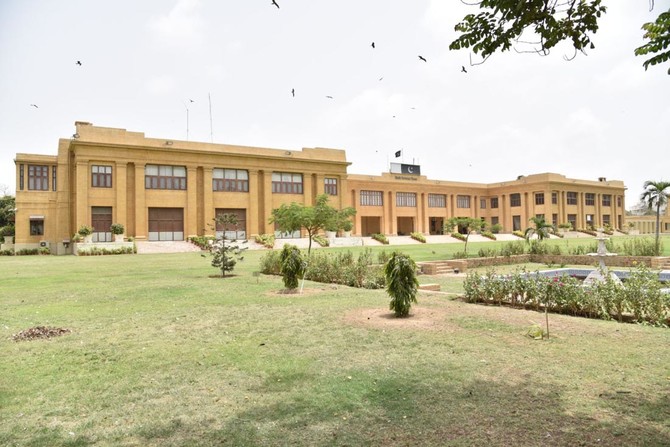
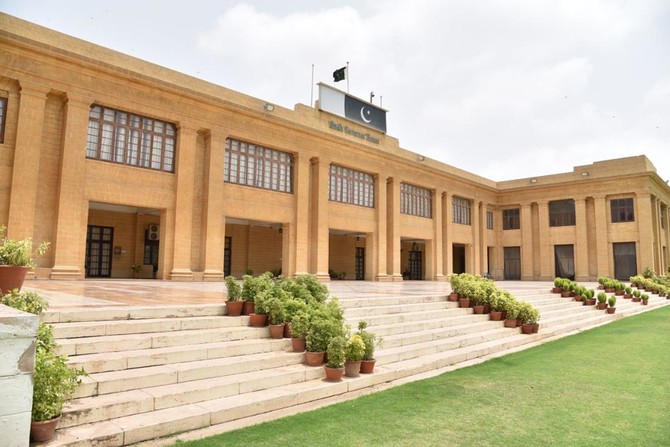
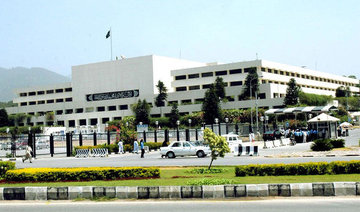
KARACHI: Sindh’s new governor, Imran Ismail, won over several residents after he saw through his promise and opened the Governor House for visitors on Sunday.
Ismail, who is also a prominent Pakistan Tehreek-e-Insaf (PTI) party leader, had vowed to allow students and families access to the historic building after being sworn in on August 27.
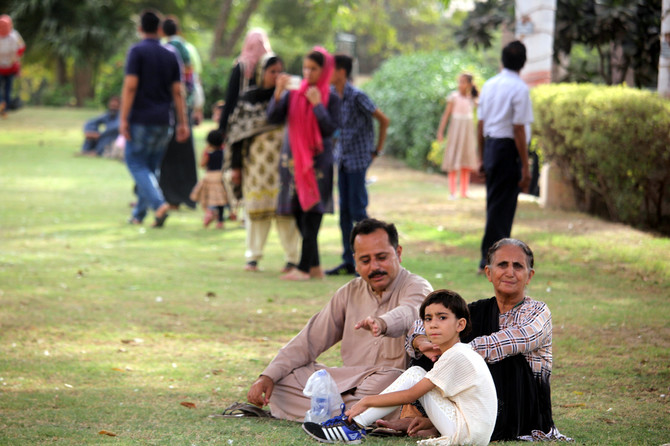
Maintaining that his official residence was a “national heritage”, Ismail said on Friday: “In the first phase, visitors will be able to access the park inside the facility. In the second phase, we will start guided tours to some portions of the building.”
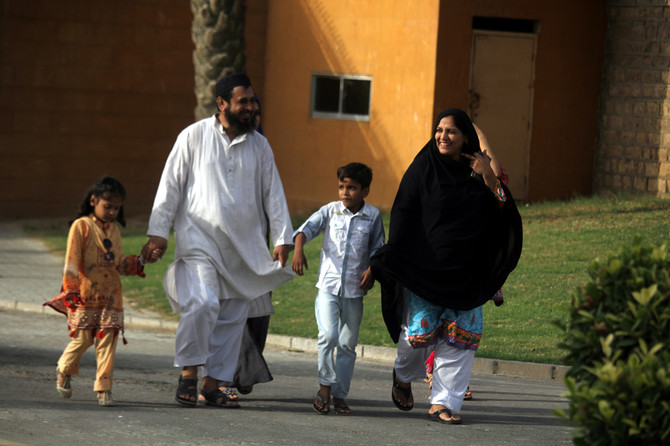
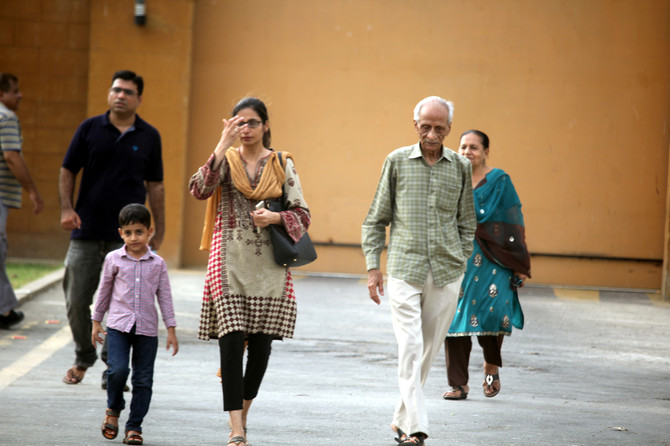
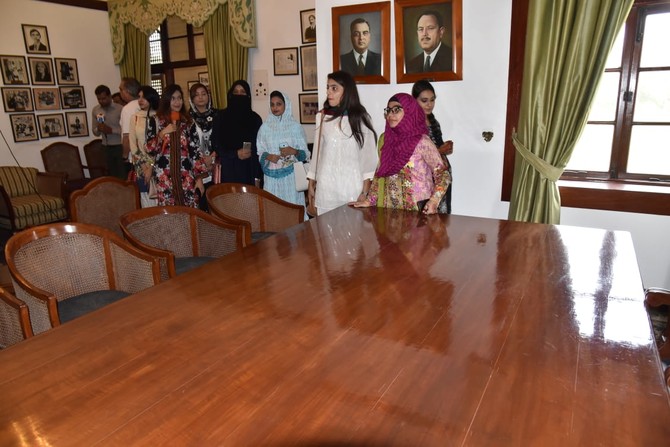
There was an overwhelming response to the decision, with hundreds queuing up to get into the building and Ismail personally greeting and taking pictures with the visitors.
“We used to see the outer walls of this building, knowing it was only frequented by influential people,” Razia Anwar, a resident of the city, told Arab News. “But Imran Khan and his party have made us feel special. We are now waiting for the time when they will open the Prime Minister House to the public too,” she said.
Others were not very impressed. “We can visit parks anywhere in the city,” Ahmed Ali, 42, said. “They should also open other portions of the building.”
Tahir Hasan Khan, a senior political correspondent, explained that the Governor House was once open to students, but later closed due to “security reasons”. “After assuming charge as the province’s governor in March 1997, retired Lt. Gen. Moinuddin Haider prohibited that for security reasons. The general public, however, was never allowed inside, and the PTI should, therefore, be hailed for this decision,” Khan said.
He also suggested that the authorities should have proper procedures in place, such as guided tours, for a seamless visit.
His thoughts were echoed by those people unable to get through the gates. “I was in the queue since 5pm,” Shahreyar Khan, a resident of the city, said. “But I was asked to go back when entry time was over. They need to have better procedures. Only those people who book in advance should be allowed inside,” he said.
The original building was constructed by Sir Charles Napier for his personal use in 1843. The government of India “purchased it from him when he left in 1847 following which the structure was occupied by Sindh’s Commissioner”, Saleem Khan, a Governor House spokesperson, said. The construction of the new Governor House began in 1936.
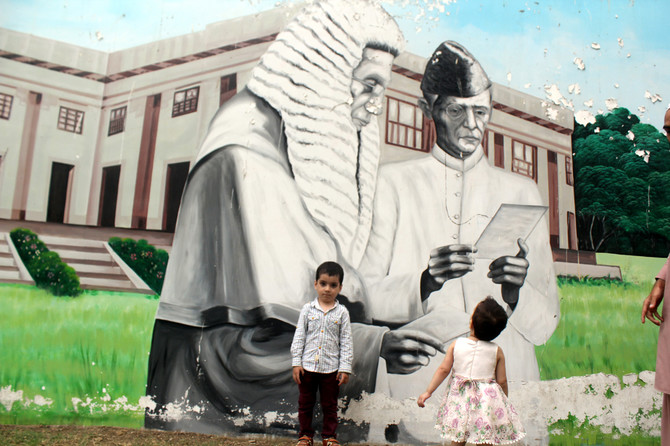
“The suite occupied by the Quaid-e-Azam (Muhammad Ali Jinnah) and Mohtarma Fatima Jinnah is called the Royal Suite. It was later used by visiting heads of state and other important personalities,” the spokesperson said.
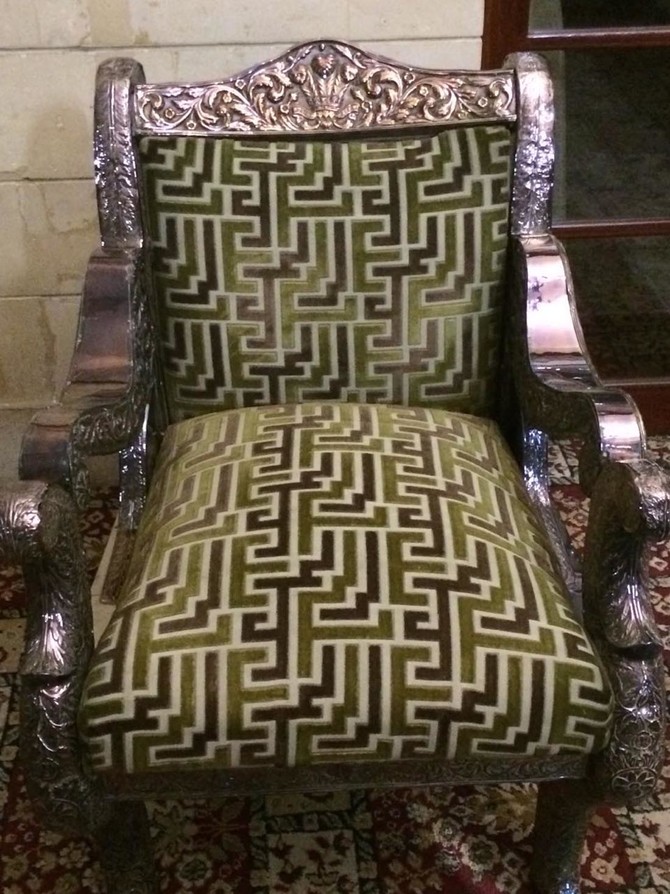
The building’s Darbar Hall, where oath-taking ceremonies are held, houses a historic throne that was made for King Edward VII, during his tour of India as the Prince of Wales, in 1876. It was also used by Queen Mary during the coronation of Emperor George V, in Delhi, in 1911.
“The main lawn and terrace are the place where Quaid-e-Azam took the oath as the first Governor General of Pakistan,” Khan said. “Several other governor generals, presidents and governors of Sindh have also received salutes on national days from smartly turned out contingents of young and energetic soldiers.”
Besides the historical nuggets that the place has to offer, it also houses a priceless relic — exhibited near the entrance of the Darbar Hall. A piece of cloth that adorns the Kaaba in Makkah, the “kiswat Al-ka`bah” was gifted by King Faisal of Saudi Arabia and is beautifully-encased in a glass frame.
The building was called Governor General House until 26 March 1956, when Iskander Mirza became the first president of the country. It remained President House until July 1970 when it was renamed Governor House.
Taking cognizance of Prime Minister Imran Khan’s austerity drive – where he intends to convert official residences into educational institutes – Ismail said that the fate of the Governor House had yet to be decided. “A committee is already working on the idea and will soon present its recommendations to the prime minister on alternative uses of these buildings.”
Visitors can access the building from 6am to 10am on weekdays and 4.30pm to 6.30pm on Sundays.


![]()
![]()
![]()
![]()
![]()
![]()
![]()
![]()
![]()
![]()
![]()
![]()
![]()
![]()
![]()
![]()
![]()
![]()
![]()
![]()

Hundreds throng to Governor House as Sindh opens doors to public








Hundreds throng to Governor House as Sindh opens doors to public
- Historic building was constructed during the British colonial period and also used by Pakistan’s founding fathe
- Governor Ismail welcomes visitors to his official residence considered by many as a “national heritage”
Related

Latest updates


© 2026 SAUDI RESEARCH & PUBLISHING COMPANY, All Rights Reserved And subject to Terms of Use Agreement.