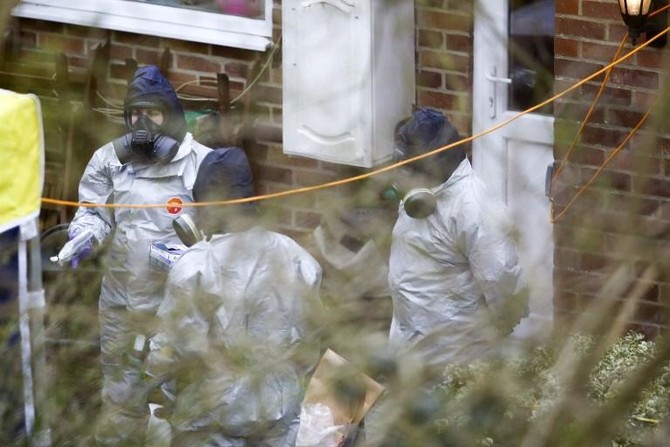
LONDON: British prosecutors said Wednesday they have charged two Russian men with the nerve agent poisoning of ex-spy Sergei Skripal and his daughter Yulia in the English city of Salisbury.
The Crown Prosecution Service said the men, known to British investigators as Alexander Petrov and Ruslan Boshirov, are charged in absentia with conspiracy to murder, attempted murder and use of the nerve agent Novichok.
Prosecutor Sue Hemming said the UK is not asking Moscow to extradite the men because Russian law forbids extradition of the country’s citizens.
Police say the men, both about 40, flew from Moscow to London on Russian passports two days before the Skripals were poisoned on March 4.
Assistant police commissioner Neil Basu said the men were probably using aliases. He appealed the public “to come forward and tell us who they are.”
Police released a series of images of the men as they traveled through London and Salisbury between March 2 and March 4. Police say the two men flew back to Moscow from Heathrow Airport on the evening of March 4, hours after the Skripals were found collapsed on a park bench in Salisbury.
Britain has issued a European Arrest Warrant for the suspects, meaning they can be detained if they leave Russia for another European country, but Basu conceded it was “very, very unlikely” police would be in a position to arrest them any time soon.
British officials have blamed the Russian government for the poisoning, a charge Moscow has denied.


![]()
![]()

UK charges two Russians for attempted murder of Skripals

UK charges two Russians for attempted murder of Skripals
- A European arrest warrant has been issued for the two Russians
- ‘We will not be applying to Russia for the extradition of these men as the Russian constitution does not permit extradition of its own nationals’


Latest updates


Recommended


© 2026 SAUDI RESEARCH & PUBLISHING COMPANY, All Rights Reserved And subject to Terms of Use Agreement.