LONDON: British police have identified several Russians who they believe were behind the nerve agent attack on former double agent Sergei Skripal and his daughter, the Press Association reported on Thursday, citing a source close to the investigation.
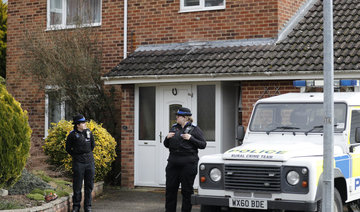
Skripal, a former colonel in Russian military intelligence who betrayed dozens of agents to Britain’s MI6 foreign spy service, and his daughter Yulia, were found unconscious on a public bench in the British city of Salisbury on March 4.
Britain blamed Russia for the poisonings and identified the poison as Novichok, a deadly group of nerve agents developed by the Soviet military in the 1970s and 1980s. Russia has repeatedly denied any involvement in the attack.
After analyzing closed-circuit television, police think several Russians were involved in the attack on the Skripals, who spent weeks in hospital before being spirited to a secret location, Press Association reported.
“Investigators believe they have identified the suspected perpetrators of the Novichok attack,” the unidentified source close to the investigation said, according to PA.
“They (the investigators) are sure they (the suspects) are Russian,” said the source, adding security camera images had been cross checked with records of people who entered the country.
A police spokesman declined to comment on the report.
After the attack on the Skripals, allies in Europe and the US sided with Britain’s view of the attack and ordered the biggest expulsion of Russian diplomats since the height of the Cold War.
Russia retaliated by expelling Western diplomats. Moscow has repeatedly denied any involvement and accused the British intelligence agencies of staging the attack to stoke anti-Russian hysteria.
Mystery surrounds the attack.
The motive for attacking Skripal, an aged Russian traitor who was exchanged in a Kremlin-approved spy swap in 2010, is still unclear, as is the motive for using of an exotic nerve agent which has such overt links to Russia’s Soviet past.
Novichok put the Skripals into a coma, though after weeks in intensive care they were spirited to a secret location for their safety.
“My life has been turned upside down,” Yulia Skripal told Reuters in May. “Our recovery has been slow and extremely painful.”
A British woman, Dawn Sturgess, died this month after coming across a small bottle containing Novichok near the city of Salisbury where the Skripals were struck down. Her partner, Charlie Rowley, is still in hospital.
A British police officer was also injured by Novichok while attending to the Skripals in March.


![]()

Britain identifies Russians suspected of Skripal nerve attack — report
Britain identifies Russians suspected of Skripal nerve attack — report

Latest updates


Recommended


© 2026 SAUDI RESEARCH & PUBLISHING COMPANY, All Rights Reserved And subject to Terms of Use Agreement.