

Google honors Fatima Surayya Bajia with a birthday doodle

Updated 01 September 2018
Follow

Google honors Fatima Surayya Bajia with a birthday doodle

  • Pays tribute to the late playwright on her 88th birthday
  • Bajia died in Karachi in 2016 after battling throat cancer

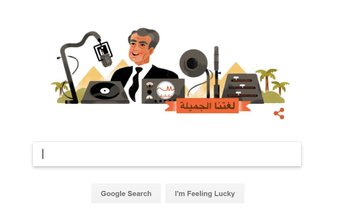
ISLAMABAD: Google on Saturday paid a tribute to legendary playwright Fatima Surayya Bajia with one of its iconic doodles on what would have been the late writer’s 88th birthday.
Bajja died in Karachi, in 2016, after a long battle with throat cancer.
Google doodles are special illustrations, graphics and short videos created to honor both living and dead icons from around the world. Previously, Google has displayed doodles of humanitarian Abdul Sattar Edhi and singers Nusrat Fateh Ali Khan and Nur Jehan from Pakistan.
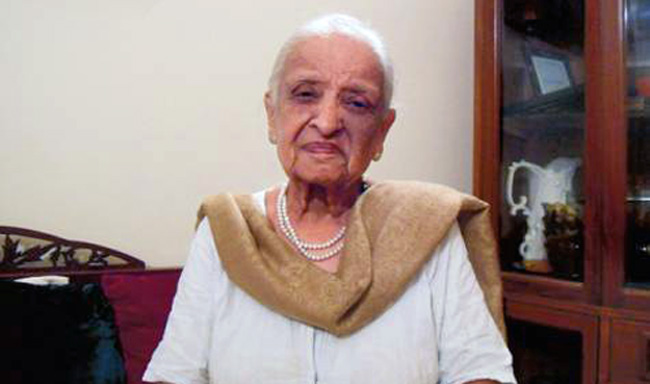


Bajia was born in pre-partition Hyderabad, India before moving to Pakistan with her family after Pakistan’s creation and independence in 1947. (Photo courtesy: social media)

Homeschooled her entire life, her siblings include a number of notable Pakistanis including actor, writer and performer Anwar Maqsood, Zehra Nigah, and the late Zubaida Tariq also known fondly as Zubaida Apa.
She first appeared in a play as an actress in 1966 with Pakistan Television (PTV) which sparked her interest in writing plays.
Recognized as one of Pakistan’s most prominent and successful literary minds, Bajia was the recipient of a number of accolades including Pakistan’s highest civilian honor — the Pride of Performance Award in 1996 and the Hilal-i-Imtiaz in 2012. She also received Japan’s highest civilian award for her body of work.
As a writer she wrote more than 20 plays for PTV including novel adaptations of AR Khatoon’s work: ‘Shama 1974,’ ‘Afshaan,’ and ‘Tasweer,’ Zubaida Khatoon’s ‘Aroosa’ and Mirza Quleech Bain’s Sindhi novel ‘Zeenat.’ Other popular plays included ‘Phool Rahi Sarsoon,’ ‘Arzoo,’ ‘Sassi Punno,’ and ‘Anarkali.’
In addition to her writing achievements, Bajia was also appointed as the adviser to the Chief Minister of Sindh province in Pakistan, and was a member of the committee of the Arts Council of Pakistan.

Pakistan assembly speaker warns opposition against anti-state remarks in parliament

Updated 17 January 2026
Follow

Pakistan assembly speaker warns opposition against anti-state remarks in parliament

  • Ayaz Sadiq says criticism of judiciary and armed forces will not be allowed on assembly floor
  • He calls violence during protests unacceptable, vows neutrality as National Assembly speaker

ISLAMABAD: Pakistan’s National Assembly Speaker Sardar Ayaz Sadiq said on Saturday that opposition lawmakers would not be allowed to speak against Pakistan, the judiciary or the armed forces on the floor of parliament, calling such remarks unacceptable.

Speaking to reporters during a visit to the eastern city of Lahore, Sadiq said parliamentary debate must remain within constitutional and legal limits, while reiterating his commitment to act impartially as speaker.

“No one will be allowed to speak against Pakistan, the judiciary or the armed forces on the floor of the National Assembly,” Sadiq said. “Negative or controversial remarks about judges or the armed forces are unacceptable.”

His comments come amid heightened political tensions after opposition groups held protests in the past, criticizing state institutions and targeting government and military properties.

The speaker said peaceful protest was a democratic right but drew a sharp line at violence and vandalism.

“Protest is the right of every citizen in a democratic society, but it must remain peaceful and within the bounds of the constitution and the law,” he continued, adding that arson, damage to property and the use of sticks or weapons in the name of protest were “unacceptable” and posed a threat to the rule of law.

“No opposition lawmaker will be allowed to speak on the National Assembly floor if they speak against Pakistan,” Sadiq said.

The speaker also noted the country’s economic indicators were gradually improving, citing an increase in foreign exchange reserves, and said Pakistan had further strengthened relations with countries including the United States, China, Russia, Türkiye and Saudi Arabia.