DUBAI: Stylistically, “Divine Intervention” might be painted in distinctly international art-house hues, but it’s a movie that could only have been made in Palestine.
Upon its release in 2002, its bristling brand of black comedy was recognized with serious cinema’s greatest honors: a Palme d’Or nomination – and Jury Prize win – at the Cannes Film Festival. But when Hollywood’s awards season rolled around later that year, the film’s beguiling Kafkaesque roadblocks came off the screen and onto the ballot form, with Oscar judges reportedly ruling the first entry from the then-unrecognized state as ineligible.
This sorry tale alone might have secured a certain notoriety, but cannot alone explain the canonical renown of director/star Elia Suleiman’s best-known picture. When in 2013 the Dubai International Film Festival polled nearly 500 film critics, writers and scholars to compile a definitive list of the 100 most important Arabic-language films ever made, “Divine Intervention” was the only movie from this century to make the top 10 – and one of only three post-2000 entries in the top 30 (the third of which was Suleiman’s 2009 picture “The Time That Remains.”)
Tellingly, today “Divine Intervention” is among just a handful of the anointed list’s entries readily available on DVD with English subtitles. It’s a largely plotless, absurdist portrait of life under occupation in his native Nazareth, and Suleiman’s studious cinematic referencing and ironic wit feel tailor-made for the liberal international intelligentsia.
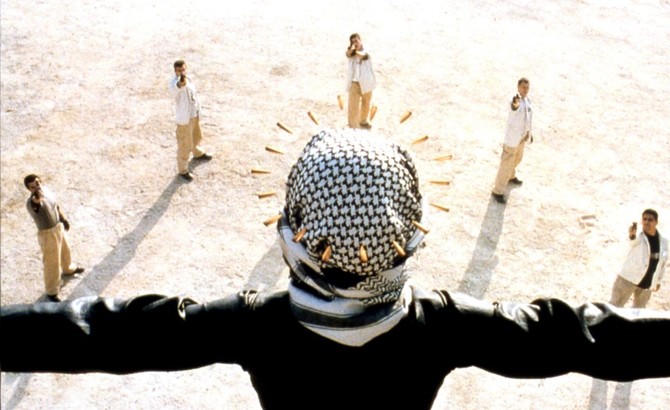
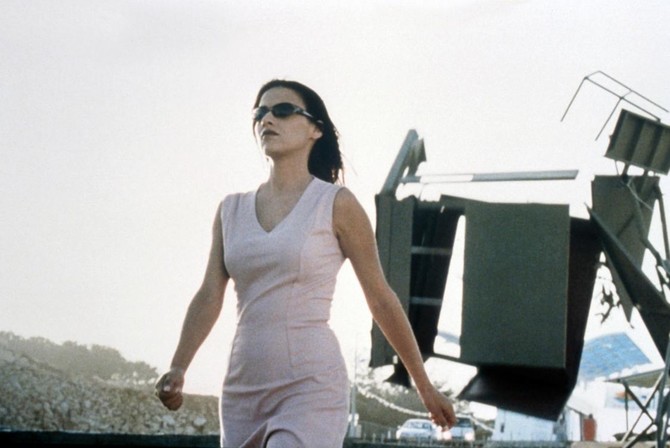
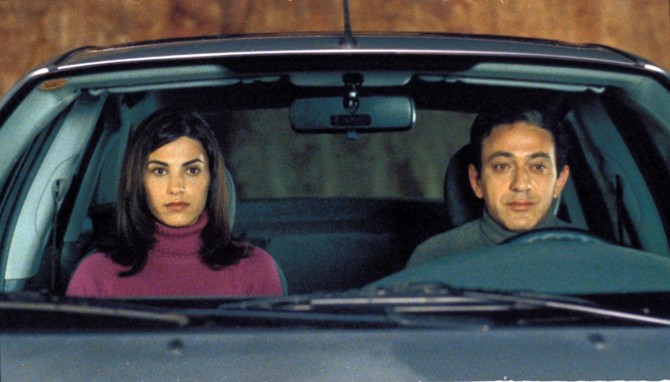
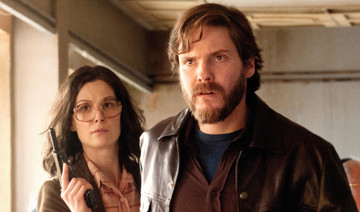
Like a tone poem or meditative montage, bleakly comic set pieces unfold with stoic detachment: A villager lines up glass bottles ready to throw at police. Santa Claus is stabbed to death. Thwarted lovers meet to furtively hold hands at a border checkpoint. A female Arab ninja takes down a crew of gun-toting commandos.
Comparisons abound to Jacques Tati and Jim Jarmusch and, like the latter, Suleiman has a keen sense of juxtaposing incongruous images with existing music – the soundtrack of “Divine Intervention” namechecks Arab talents from vintage legend Mohammed Abdel Wahab to contemporary superstar Amr Diab and indie heroes Soapkills.
Dialogue is in short supply: Suleiman’s character ES – surely a nod to Kafka’s K – utters not a single line. Instead, his actions speak loudest when releasing a helium balloon bearing Yasser Arafat’s face to float over Jerusalem – which dumbstruck Israeli soldiers farcically debate shooting down.


‘Divine Intervention’ one of the best Arabic-language films ever made

‘Divine Intervention’ one of the best Arabic-language films ever made

Riyadh exhibition to trace the origins of Saudi modern art
- Features painting, sculpture and archival documents
- Open from Jan. 27-April 11 at Saudi national museum
DUBAI: A new exhibition in Riyadh is focusing on the origins of Saudi Arabia’s modern art scene, examining how a generation of artists helped shape the Kingdom’s visual culture during a period of rapid change.
The “Bedayat: Beginnings of Saudi Art Movement” show reportedly traces the emergence of creative practices in Saudi Arabia from the 1960s to the 1980s, an era that laid the groundwork for today’s art ecosystem.
On view from Jan. 27 until April 11 at the National Museum of Saudi Arabia, it includes works and archival material that document the early years of modern and abstract art in the Kingdom, according to the organizers.
It will examine how artists responded to shifting social, cultural and economic realities, often working with limited infrastructure but a strong sense of purpose and experimentation.
The exhibition is the result of extensive research led by the Visual Arts Commission, which included dozens of site visits and interviews with artists and figures active during the period.
These firsthand accounts have helped to reconstruct a time when formal exhibition spaces were scarce, art education was still developing, and artists relied heavily on personal initiative to build communities and platforms for their work.
Curated by Qaswra Hafez, “Bedayat” will feature painting, sculpture, works on paper and archival documents, many of which will be shown publicly for the first time.
The works will reveal how Saudi artists engaged with international modernist movements while grounding their practice in local heritage, developing visual languages that spoke to both global influences and lived experience.
The exhibition will have three sections, beginning with the foundations of the modern art movement, and followed by a broader look at the artistic concerns of the time.
It will conclude with a focus on four key figures: Mohammed Al-Saleem, Safeya Binzagr, Mounirah Mosly and Abdulhalim Radwi.
A publication, documentary film and public program of talks and workshops will accompany the exhibition, offering further insight into a pivotal chapter of Saudi art history and the artists who helped define it.