

Eid Al-Adha: Cattle markets flooded with sacrificial animals that are too pricey for most buyers

1 / 11
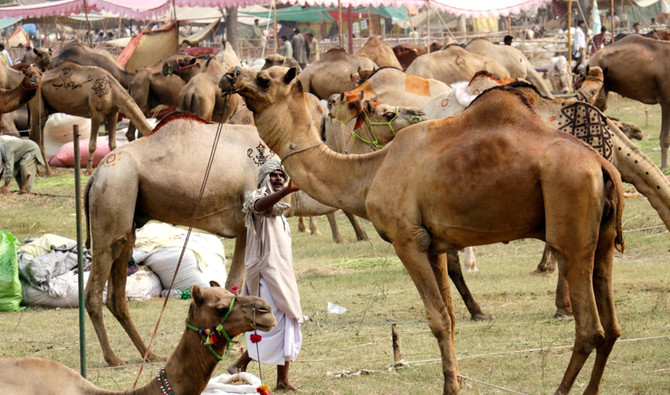
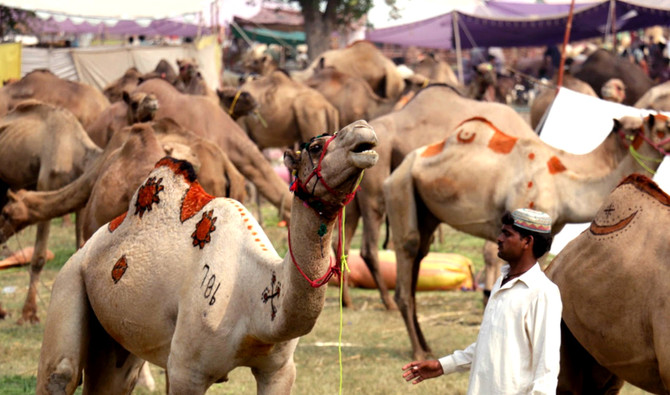
Sacrificial camels are brought to Lahore’s makeshift cattle market ahead of Eid Al-Adha. These animals have been kept in a separate corner. (AN photos by Malik Shafiq)
2 / 11
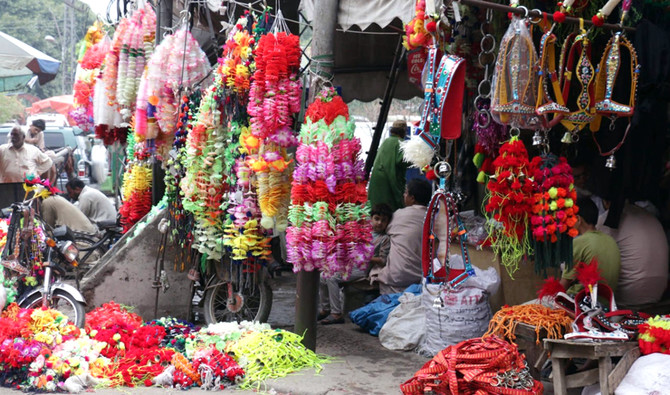
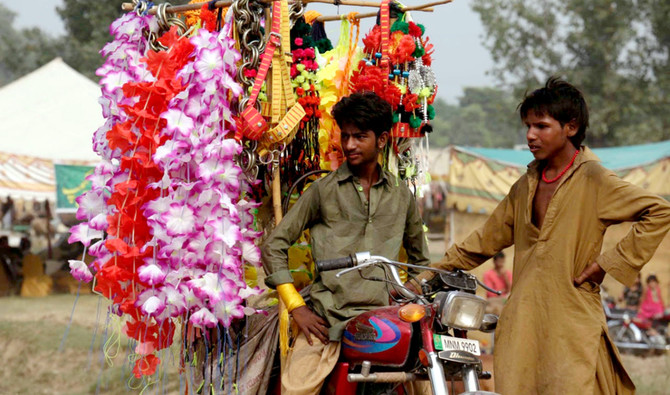
Eid creates a business opportunity for many people. This material is being sold to decorate the sacrificial animals. (AN photos by Malik Shafiq)
3 / 11
Sacrificial camels are brought to Lahore’s makeshift cattle market ahead of Eid Al-Adha. These animals have been kept in a separate corner. (AN photos by Malik Shafiq)
4 / 11
Sacrificial camels are brought to Lahore’s makeshift cattle market ahead of Eid Al-Adha. These animals have been kept in a separate corner. (AN photos by Malik Shafiq)
5 / 11
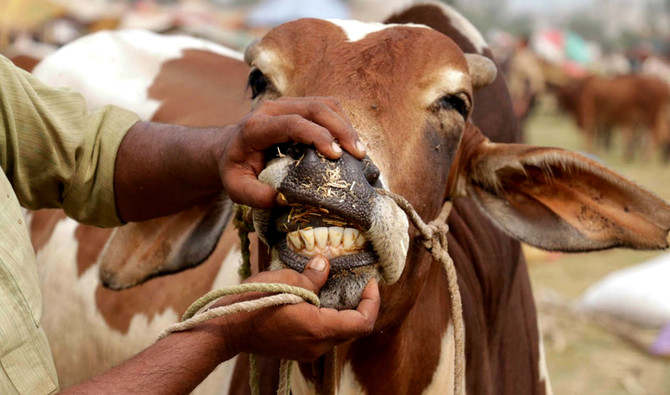
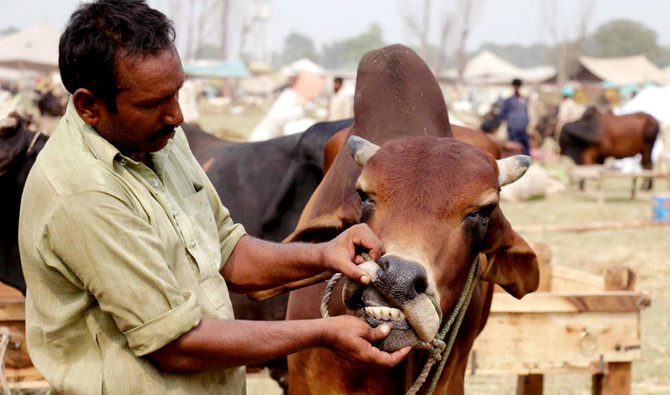
A buyer checks the teeth of an animal before making the purchase. (AN photos by Malik Shafiq)
6 / 11
A buyer checks the teeth of an animal before making the purchase. (AN photos by Malik Shafiq)
7 / 11
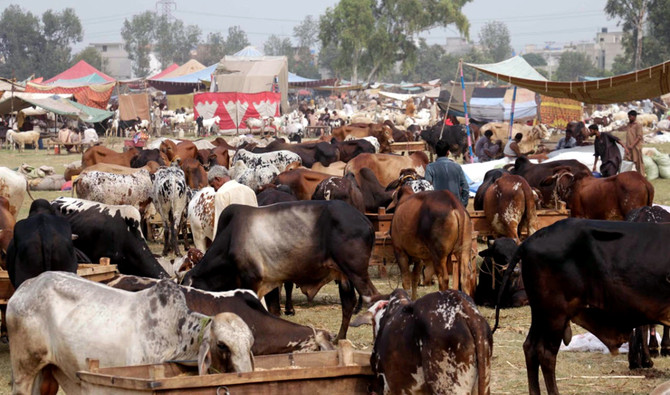
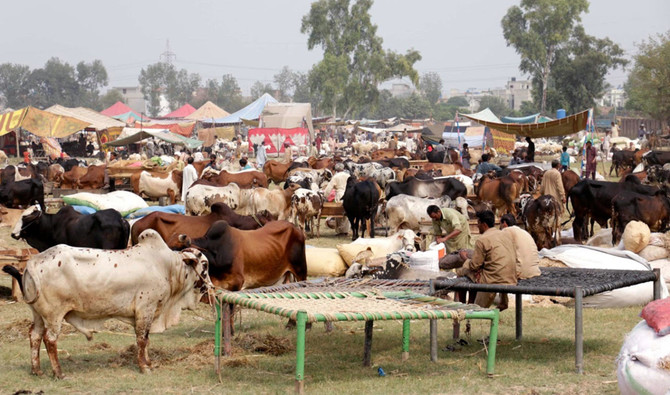
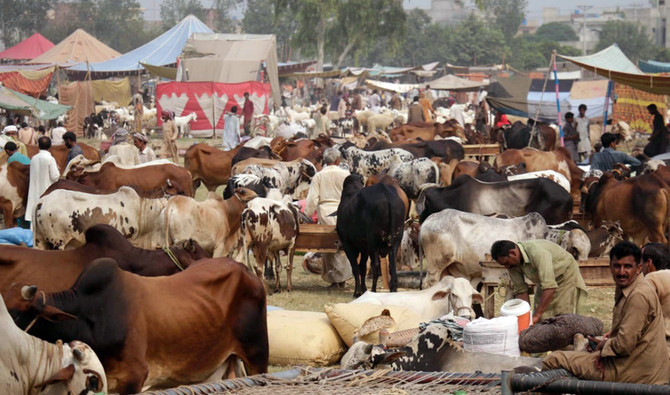
A view of the cattle market where several dozen people from different parts of Punjab have come to sell animals. (AN photos by Malik Shafiq)
8 / 11
A view of the cattle market where several dozen people from different parts of Punjab have come to sell animals. (AN photos by Malik Shafiq)
9 / 11
Eid creates a business opportunity for many people. This material is being sold to decorate the sacrificial animals. (AN photos by Malik Shafiq)
10 / 11
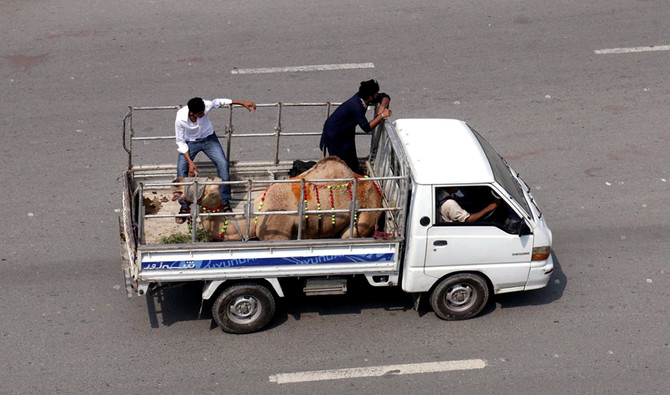
A camel is transported to a buyer’s residence after a purchase has been made. (AN photos by Malik Shafiq)
11 / 11
A view of the cattle market where several dozen people from different parts of Punjab have come to sell animals. (AN photos by Malik Shafiq)
Updated 19 August 2018
Follow

Eid Al-Adha: Cattle markets flooded with sacrificial animals that are too pricey for most buyers

  • Animal traders blame high market rates on the “overall price hike and unseen expenditures”
  • Some buyers plan to wait, hoping that animal prices will ultimately fall

LAHORE: Eid Al-Adha, the “Islamic Festival of Sacrifice,” is fast approaching and cattle markets are flooded with sacrificial animals. Yet, the buyers are not too enthusiastic about the unrealistically high prices.

The makeshift animal markets have been set up at nearly a dozen points in the city, mostly in areas near the Ring Road. The biggest sale-and-purchase point is the main cattle market that the City District Government has set up in Lahore.
The site attracts sellers from every corner of the country, especially the southern districts of Punjab, since it is one of the closest and most lucrative places where they can sell animals at a profitable rate.
The situation is a little different this year, as buyers come to the market, choose their favorite animal, and try to bring down the prices. However, a large number of them return empty-handed after their negotiations fail. The situation is not only difficult for buyers but also for animal traders, who feel quite dejected.
“We come from Dera Ghazi Khan every year and sell animals at reasonable rates. What we get here ahead of Eid makes it easier for us to spend the next year. However, the situation is different this time. With only a few days left to the festivities, our sales have not picked up momentum. And that is not good for us,” Abdul Ghani told Arab News on Sunday.
Many buyers complain that market rates are too high this year, and they do not fit into their budget. They worry that their purchasing power has reduced over the years.
“My salary is the same as it was last year, but the prices of animals have increased by about 50 percent. It was my third visit to the market, and I still can’t buy an animal,” Ali Hasan says.
Animal traders blame the “overall price hike” and “unseen expenses” for their own market rates.
“We have brought animals from Mianwali. This year we paid twice the amount that we did last year to transport our cattle to Lahore. Those who provided us with logistical support say the price of oil has increased. We also had to bribe the police at every checkpoint. Apart from that, we had to hire four people who could spend day and night with these animals and take care of them.
“Obviously, we have to bear the cost of their food and other necessities. The fodder for animals has also become more expensive. In other words, it is not possible for us to sell our animals without considering our costs and profit margin,” said Zaman Khan.
Some animal vendors have also been moving around in different parts of the city. A few of them have sold their animals for a good rate.
“I took a round of the inner streets of Tajpura, Garrison area and Fateh Garh and succeeded in selling eight animals for a good price,” Zar Khan, who came from a town near Kot Radha Kishen, told Arab News.
A careful estimate says that about half a million animals are sacrificed on Eid Al-Adha in Lahore: 60 percent of these are big animals (cows, camels, calves) while 40 percent are small (goats, sheep). Earlier, the situation was different since most people preferred to sacrifice small animals.
“In the recent past, people chose small animals to sacrifice since it was possible for them to afford goats and sheep. Now they are forced to sacrifice big animals since they can do that in groups and share the cost with other people,” said Imran Adnan, a business and commerce journalist.
A market survey reveals that a buyer needs at least Rs30,000 ($250) for a lamb or sheep and somewhere between Rs60,000 and Rs250,000 for a cow, calf or camel, subject to its weight and appearance. The cost of a big animal can be shared by seven partners who can then fulfill their religious obligation.
Some people say they will make the purchase at the night of 9th Dhu Al-Hijjah, hoping that the prices will have gone down by that time.
“Last year I bought an animal on the first day of Eid. The price was far less than I was demanded only a week earlier. I will wait for the right moment this year as well,” Ali Ahmad told Arab News.


Pakistan reviews austerity measures amid Middle East crisis, urges strict nationwide implementation

Updated 11 March 2026
Follow

Pakistan reviews austerity measures amid Middle East crisis, urges strict nationwide implementation

  • Deputy Prime Minister Ishaq Dar chairs review meeting of austerity steps
  • Officials briefed on salary cuts, school closures, four‑day week, petrol conservation

ISLAMABAD: Pakistan’s government on Wednesday assessed progress on a sweeping set of austerity measures introduced to mitigate the country’s economic strain from sharply rising global oil prices and supply disruptions linked to the ongoing war in the Middle East.

Prime Minister Shehbaz Sharif this week announced a series of austerity steps, including a four‑day work week for government offices, requiring 50  percent of staff to work from home, cutting fuel allowances for official vehicles by half, grounding up to 60  percent of the government fleet and closing all schools for two weeks to conserve fuel amid the global oil crisis.

The measures were unveiled in response to global oil market volatility triggered by the conflict involving the United States, Israel and Iran, which has disrupted supply routes such as the Strait of Hormuz and pushed crude prices sharply higher, straining Pakistan’s heavily import‑dependent energy sector.

“The meeting stressed the importance of strict and transparent adherence to the austerity measures, promoting fiscal responsibility and prudent use of public resources,” Deputy Prime Minister and Foreign Minister Senator Mohammad Ishaq Dar said in a statement.

He was chairing a meeting of the Committee for Monitoring and Implementation of Conservation and Additional Austerity Measures, constituted under the directions of the PM, bringing together federal and provincial officials to review execution of the broad cost‑cutting plan. 

Dar emphasized the government’s commitment to enforcing the PM’s austerity steps nationwide. The committee’s review also covered reductions in departmental expenditure, deductions from salaries of senior officials earning over Rs. 300,000 ($1,120), and coordination with provincial administrations to ensure uniform implementation of the plan.

Participants at the meeting reiterated that all ministries and divisions must continue strict monitoring and reporting, with transparent oversight mechanisms, as Pakistan navigates the economic pressures from the prolonged Middle East crisis and its fallout on global energy and trade markets.