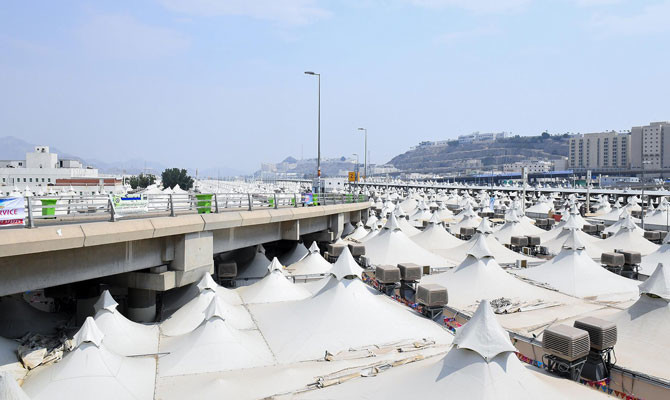
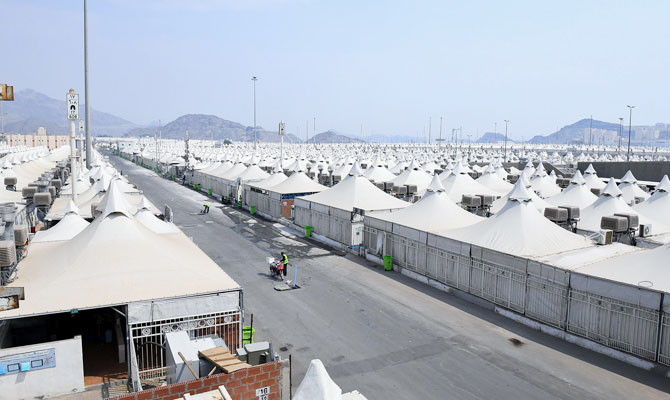
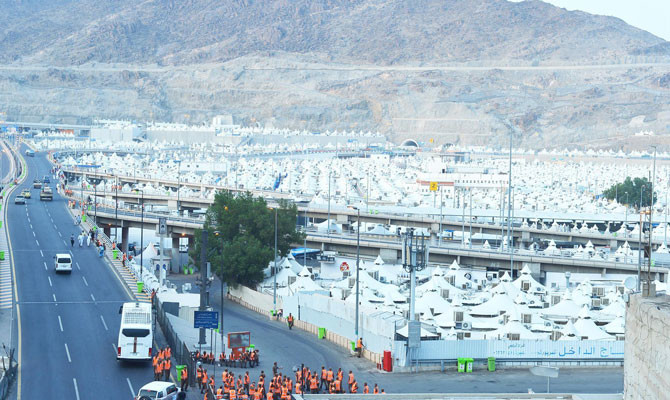
JEDDAH: Around 2 million pilgrims arrived in the Holy Land from outside and inside the Kingdom in preparation to set out from Makkah for Mina.
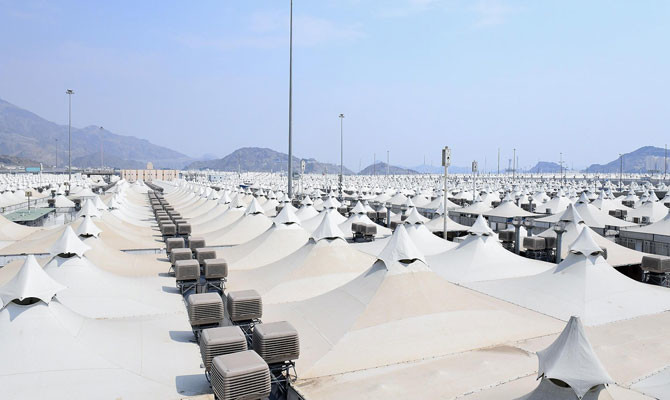
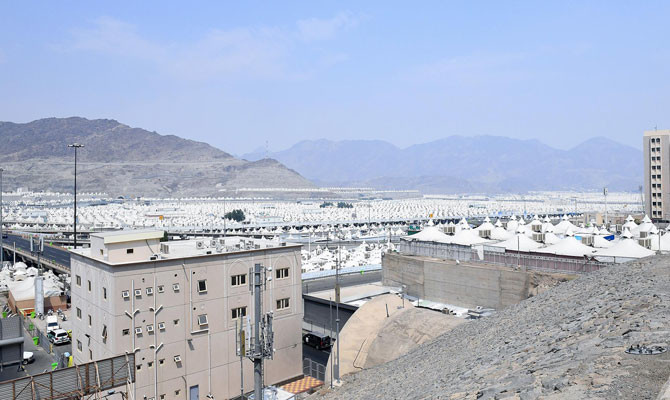
They will retrace the noble tradition of Prophet Muhammad (peace be upon him) and spend the Tarwiyah Day on Sunday in Mina. Here they will make final preparations for the Standing (Wuquf) at Arafat, which marks the climax of the annual pilgrimage, on Monday.
To be able to serve the pilgrims and enable them to perform Hajj rituals with ease and comfort, the government and private sectors concerned with Hajj and pilgrim affairs intensify their preparations, under the direct supervision of Prince Khalid Al-Faisal, adviser to King Salman, the governor of Makkah region and chairman of the Central Hajj Committee, and followed up by his deputy, Prince Abdullah bin Bandar.
The Ministry of Health will provide intensive and continuous health services supported by skillful human cadres and state-of-the-art medical technologies, in order to provide the best health services for pilgrims. The Ministry of Health has employed a total of 29,495 physicians, pharmacists, nurses and technicians to provide extensive health care to the pilgrims.
According to the ministry, its manpower during the Hajj consists of 780 consultants in various medical specializations, 1,248 specialists; 2,718 general practitioners; 1,428 pharmacists; 3,553 nurses; 1,173 technicians and lab specialists; 198 specialists in nutrition; 5,587 administrators; 165 engineers; and 1,491 ambulance drivers.
The General Presidency of the Grand Mosque and the Prophet’s Mosque will operate and maintain all technical devices and systems of lighting, air-conditioning and ventilation, sound and control systems, cameras, communication devices and electrical stairs, buildings and libraries in the Two Holy Mosques.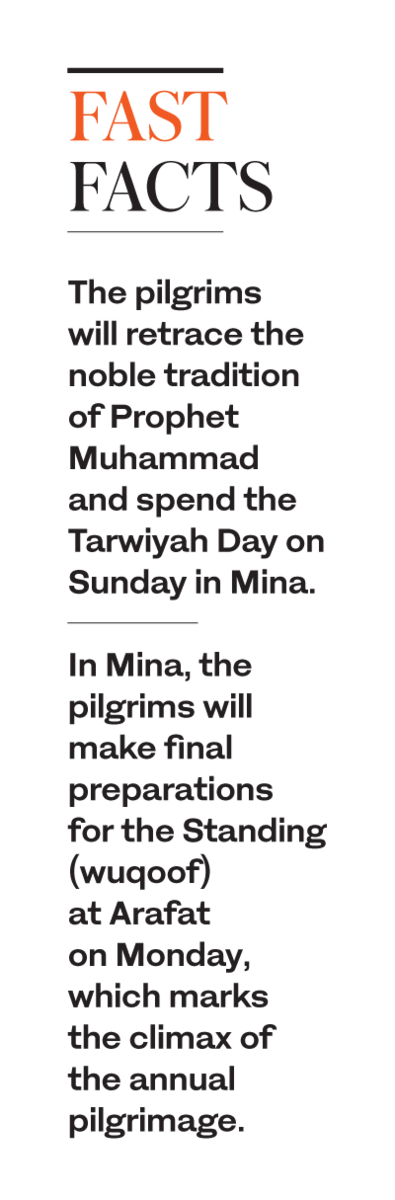
Air-conditioning has been installed in the basement and ground floor and many other areas. Thousands of fans have been installed in the Two Holy Mosques and their yards.
The area around the Two Holy Mosques has been equipped with more than 8,441 toilets, as well as more than 6,000 ablution units. All power supply lines have been prepared to make sure there is power 24/7.
More than 10,000 male and female employees will be available to follow up on work and monitor it during Ramadan, in addition to a large number of cleaners.
Among the services also provided by the Presidency are translation of Friday sermons into 10 languages, organization of various scientific programs, and competitions.
A total of 210 doors in the Grand Mosque and 100 doors in the Prophet’s Mosque have been prepared, as well as 28 escalators in the Grand Mosque and four escalators in the Prophet’s Mosque. There are 38 doors for people with special needs and seven for women.
The Saudi Red Crescent deployed 127 emergency centers, 361 ambulances, 20 motorbikes, and more than 1,861 people to work in the ranges of Makkah and Madinah.
There will be 22 operational hospitals in Madinah and the holy sites, 15 temporary emergency centers, supported with more than 87 ambulances and 653 paramedics.
The Ministry of Municipal and Rural Affairs mobilized its human and mechanical capabilities to enable pilgrims to perform their duties in a safe and healthy environment by employing more than 26,000 individuals and 717 mechanisms to implement the hygiene plan in Makkah and the holy sites, as well as specialized field teams to control 33,069 food facilities in Makkah.
Civil defense teams will be deployed around the clock to deal with all emergency cases, where the injuries will be transferred using stretchers and wheelchairs to several medical evacuation sites inside and outside the mosque.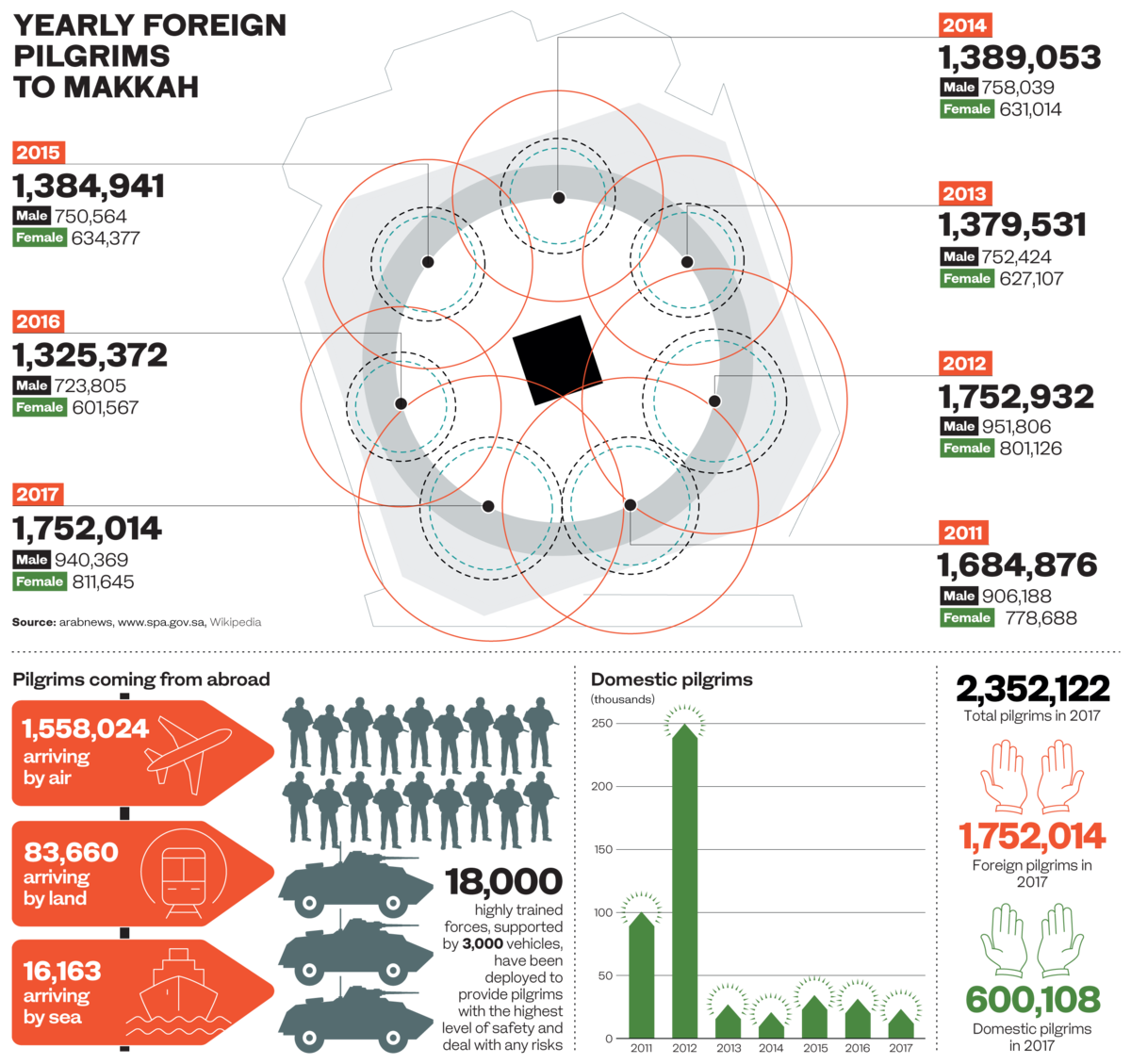
These teams will also be carrying out extraction and rescue operations inside the Holy Mosque and the surrounding area, in addition to providing urgent first aid, and transferring critical cases to the nearest hospitals and health centers, in coordination with the Red Crescent teams around the Holy Mosque. The Hajj security forces leaderships announced their readiness to maintain the security and safety of pilgrims during the pilgrimage season.
The General Command of the Air General Security is supported by all the security services and various government sectors.
In preparation for the Hajj season, the Saudi General Security Aviation Command announced that it has started implementing the first phase of its security plan to ensure the safety of pilgrims in the Kingdom. The aviation command will commence security operations over the holy sites, where special helicopters will monitor the activities surrounding the Hajj season this year. The planes are stationed in the designated locations in Makkah and Madinah from various bases to carry out the tasks assigned to them, namely traffic and security, logistical support for other security bodies, humanitarian services and the monitoring of pilgrims not following the rules.


![]()
![]()
![]()
![]()
![]()
![]()
![]()
![]()

All eyes on Mina as Hajj begins today


All eyes on Mina as Hajj begins today


Latest updates


Recommended


© 2026 SAUDI RESEARCH & PUBLISHING COMPANY, All Rights Reserved And subject to Terms of Use Agreement.