JEDDAH: An exhibition in Madinah, organized by the General Presidency of the Prophet’s Mosque, is showcasing the mosque’s expansions since its establishment by the Prophet Muhammad (peace be upon him).
“The exhibition, in the southern part of the mosque, highlights its expansions throughout history with 50 paintings, photographs, presentations, models and documentaries in Arabic and English,” said Faez Al-Faez, the exhibition’s director.
“The exhibition also includes copies of manuscripts, a model of the Prophet’s ring, photos of his letters and 200-year-old Qur’ans,” he added.
“The exhibition includes the most important books about Madinah, and a hall where visitors are shown a 20-minute video about the stages during which the mosque witnessed expansions since the prophet’s era,” Al-Faez said.
“The Prophet Muhammad was the first to expand the mosque in 628, followed by Caliph Omar bin Al-Khattab in 638. The mosque was later expanded in the years 651, 710, 778, 782, 1483, 1849 and 1861,” he added.
“During the Saudi era, the mosque witnessed a great expansion during the reign of King Abdul Aziz in 1953,” Al-Faez said.
“The expansions and development projects continued until King Salman ordered the completion of the expansion of the eastern and western sides in 2015,” he added.
“King Salman’s interest in this matter reflects the attention and keenness of the kings of Saudi Arabia to serve the visitors of Madinah, especially those visiting the Prophet’s Mosque, which holds a special place in the hearts of all Muslims,” Al-Faez said.
“The mosque’s ongoing expansion is in line with the Kingdom’s Vision 2030, which aims to provide as many pilgrims as possible with the opportunity to easily perform their rituals,” he added.
Those wishing to see the exhibition must send a request confirming the date of the visit, which can be from Sunday to Thursday.
Visitors praised the details of the mosque’s construction and expansions, and commended the Kingdom’s constant efforts since the reign of its founder King Abdul Aziz to take care of and expand the mosque.


![]()
![]()
![]()
![]()
![]()
![]()
![]()
![]()

Exhibition showcases expansions of Prophet’s Mosque in Madinah
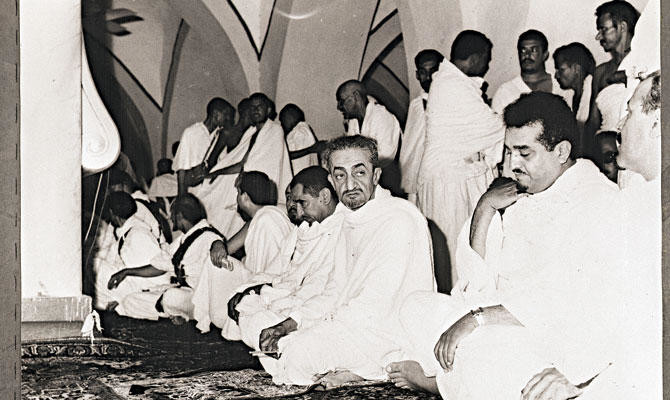


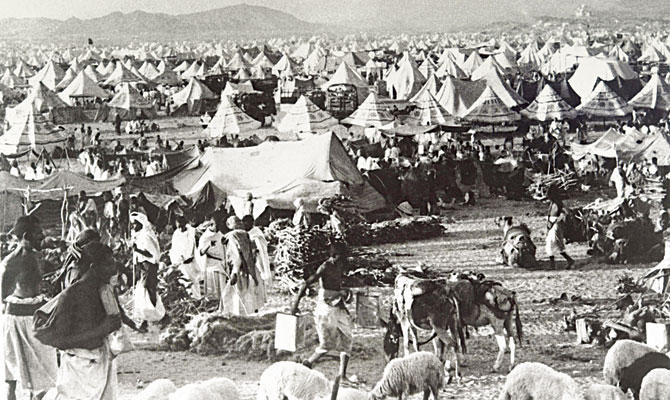

Exhibition showcases expansions of Prophet’s Mosque in Madinah
- During the Saudi era, the mosque witnessed a great expansion during the reign of King Abdul Aziz in 1953
- The mosque’s ongoing expansion is in line with the Kingdom’s Vision 2030, which aims to provide as many pilgrims as possible with the opportunity to easily perform their rituals


Latest updates


© 2026 SAUDI RESEARCH & PUBLISHING COMPANY, All Rights Reserved And subject to Terms of Use Agreement.