

Dog Day Afternoon: When Pacino showed the range of a true master

1 / 5
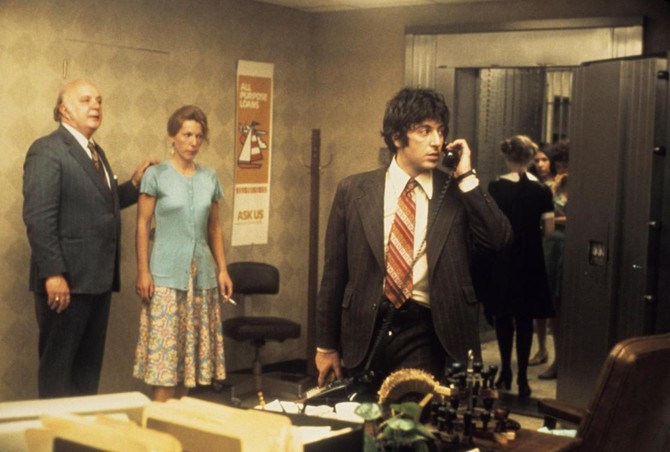
‘Dog Day Afternoon’ proved that there was more to Al Pacino than cold and steely, or loud and shouty. (Getty Images)
2 / 5
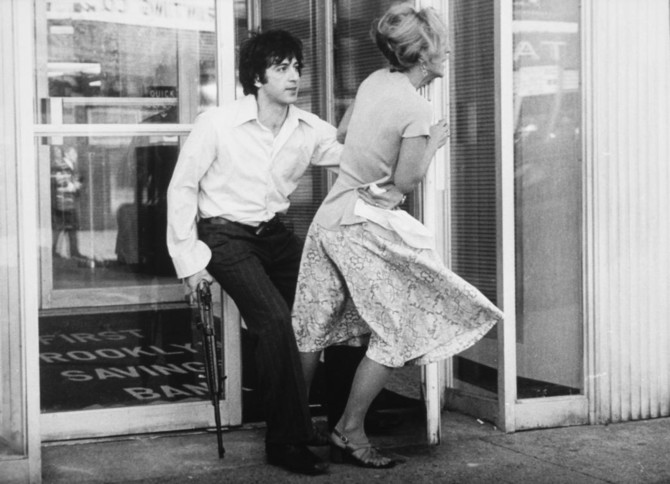
‘Dog Day Afternoon’ proved that there was more to Al Pacino than cold and steely, or loud and shouty. (Getty Images)
3 / 5
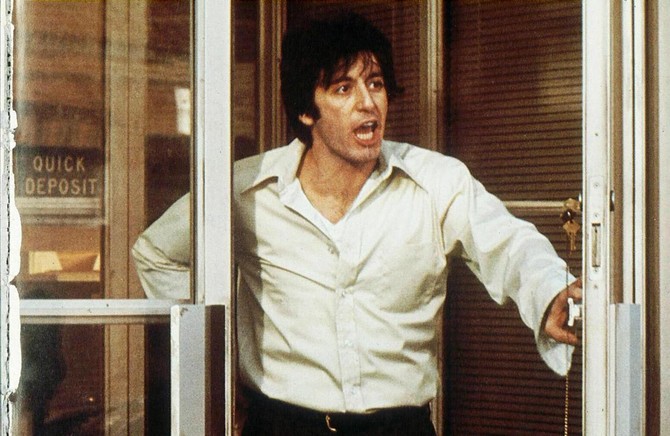
‘Dog Day Afternoon’ proved that there was more to Al Pacino than cold and steely, or loud and shouty. (Getty Images)
4 / 5
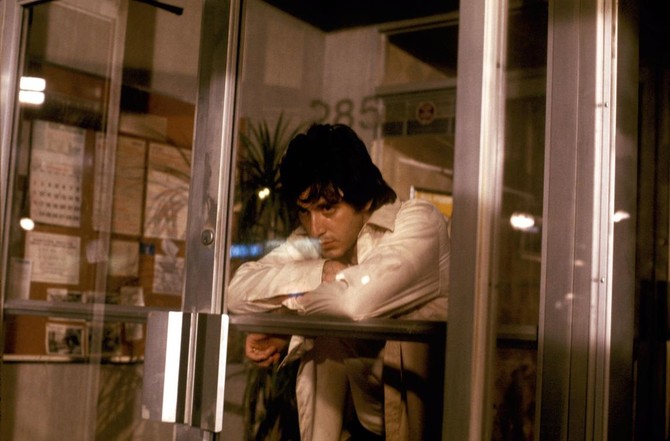
‘Dog Day Afternoon’ proved that there was more to Al Pacino than cold and steely, or loud and shouty. (Getty Images)
5 / 5
‘Dog Day Afternoon’ proved that there was more to Al Pacino than cold and steely, or loud and shouty. (Getty Images)
Updated 15 August 2018
Follow

Dog Day Afternoon: When Pacino showed the range of a true master

  • Pacino plays Sonny Wortzik, an effeminate outcast who desperately, brazenly – and really quite ineffectually – holds up a penniless Brooklyn bank
  • Emerging to collect a pizza delivery or goad the cops, cornered Wortzik becomes an unlikely folk hero, leading the simmering masses against authoritarianism

DUBAI: Once upon a time in Hollywood, Al Pacino’s name was not a byword for lukewarm thrillers or lackluster dramas. In possession of one of the most bankable faces in the movies, Pacino has a reputation that rests largely on just two roles: Michael Corleone in “The Godfather” (1972) and Tony Montana in “Scarface” (1983) – two iconic gangsters whose ruthless, brutish shadows obscure the riches they bookend.

Because Pacino’s script-screening was once judiciously discerning – if not always impeccable – throughout the 1970s, he acted in just eight films. Labors of love, not bottom-line negotiations, these heyday performances were rooted in compulsive zeal, obsessive research and an adherence to Stanislavski’s method system.

The complacency of contemporary Pacino sometimes feels like an insult to this golden run, and at its glorious centerpiece stands “Dog Day Afternoon” – a film which proved defiantly that there is so much more to Pacino than cold and steely or loud and shouty.

Under the nuanced gaze of Sidney Lumet – who directed Pacino two years earlier as the idealistic New York cop in the classic “Serpico” – the 1975 Oscar-winner was a triumph of tone, texture and pacing. And in nearly every frame, Pacino’s presence pulsates with magnetic charisma.

Pacino plays Sonny Wortzik, an effeminate outcast who desperately, brazenly – and really quite ineffectually – holds up a penniless Brooklyn bank alongside troubled friend Sal (fellow “Godfather” star John Cazale). Soon after the cops, the TV cameras arrive, and while he is claustrophobically holed up with his sympathetic hostages, Sonny’s unconventional backstory unravels out into the open.

As the spotlight is thrust onto a dysfunctional wife and lover, curious crowds descend on the scene. Emerging to collect a pizza delivery or goad the cops, cornered Wortzik becomes an unlikely folk hero, leading the simmering masses against authoritarianism.

This remarkable turn of events was based on a real failed heist of just three years earlier. The movie was nominated for six Oscars. Frank Pierson’s script won Original Screenplay. Meanwhile, Pacino – also up against Marlon Brando, Jack Nicholson and Robert Redford – lost out on the Best Actor gong to Jack Lemmon for “Save the Tiger.” That roll call alone is a testament to how far Hollywood has climbed, crawled and plunged.

Director Kaouther Ben Hania rejects Berlin honor over Gaza

Updated 20 February 2026
Follow

Director Kaouther Ben Hania rejects Berlin honor over Gaza

DUBAI: Kaouther Ben Hania, the Tunisian filmmaker behind “The Voice of Hind Rajab,” refused to accept an award at a Berlin ceremony this week after an Israeli general was recognized at the same event.

The director was due to receive the Most Valuable Film award at the Cinema for Peace gala, held alongside the Berlinale, but chose to leave the prize behind.

On stage, Ben Hania said the moment carried a sense of responsibility rather than celebration. She used her remarks to demand justice and accountability for Hind Rajab, a five-year-old Palestinian girl killed by Israeli soldiers in Gaza in 2024, along with two paramedics who were shot while trying to reach her.


A post shared by @artists4ceasefire

“Justice means accountability. Without accountability, there is no peace,” Ben Hania said.

“The Israeli army killed Hind Rajab; killed her family; killed the two paramedics who came to save her, with the complicity of the world’s most powerful governments and institutions,” she said.

“I refuse to let their deaths become a backdrop for a polite speech about peace. Not while the structures that enabled them remain untouched.”

Ben Hania said she would accept the honor “with joy” only when peace is treated as a legal and moral duty, grounded in accountability for genocide.