Hero dog saves Indian family in flood-hit Kerala

1 / 4
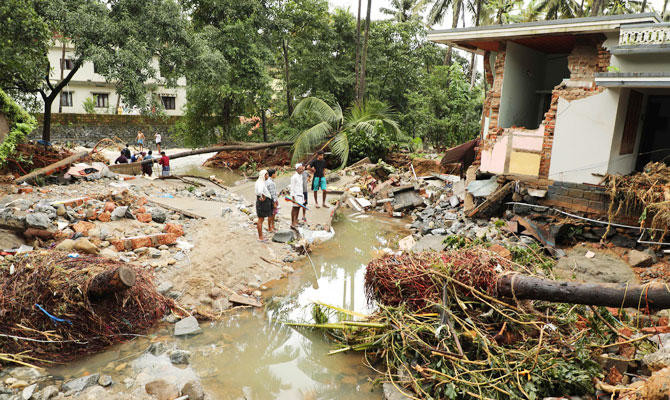
Local residents look at a partially destroyed house after heavy monsoon rains led to a landslide in Kannappankund, in the Indian state of Kerala on August 11, 2018. (AFP)
2 / 4
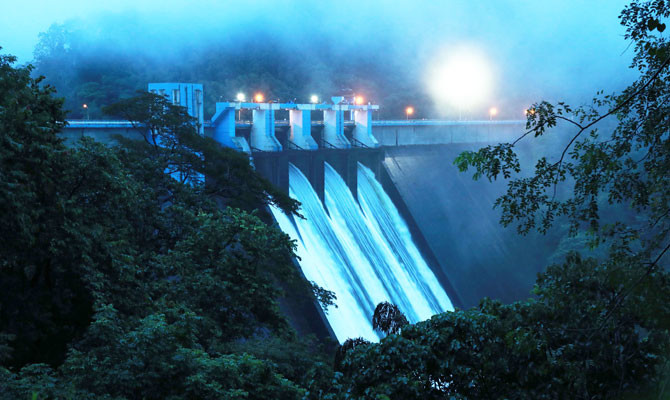
In this photo taken on August 9, 2018, water gushes out of Idamalayar dam as shutters of the dam opened with the storage level crossing 169 metre, the full reservoir level near Bhoothathankettu, on the Idamalayar River, a tributary of the Periyar River. (AFP)
3 / 4
An Indian man carries a basket of bananas next to houses immersed in flood waters in Ernakulam district of Kochi, in the Indian state of Kerala on August 10, 2018. (AFP)
4 / 4
Indian residents look at houses destroyed by flood waters at Kannappankundu in Kozhikode, in the Indian state of Kerala on August 10, 2018. (AFP)
Updated 14 August 2018
Follow

Hero dog saves Indian family in flood-hit Kerala

  • Kerala, famed for its pristine palm-lined beaches and tea plantations, is battered by the monsoon every year but the rains have been particularly severe this season
  • More than a million foreign tourists visited Kerala last year

NEW DELHI: A family in the flood-ravaged Indian state of Kerala narrowly escaped death after their pet dog woke them up moments before a landslide destroyed their home, local media reported Monday.
Mohanan P. and his family were sleeping at home in the mountainous Idukki district when their pet dog started barking raucously at around 3:00 am, waking the household.
“That’s when we realized something was wrong. I went out to see and we had to just rush out of the house,” Mohanan told Indian news network NDTV.
No sooner had the family rushed out when the landslide plowed down a nearby hill and demolished their home.
The family, dog in tow, have since moved to a government-run relief camp nearby.
Flash floods triggered by the annual monsoon rains have pounded the southern tourist hotspot in the past few days, killing 39 people and leaving 100,000 more homeless so far.


These shy, scaly anteaters are the most trafficked mammals in the world

Updated 21 February 2026
Follow

These shy, scaly anteaters are the most trafficked mammals in the world

CAPE TOWN, South Africa: They are hunted for their unique scales, and the demand makes them the most trafficked mammal in the world.
Wildlife conservationists are again raising the plight of pangolins, the shy, scaly anteaters found in parts of Africa and Asia, on World Pangolin Day on Saturday.
Pangolins or pangolin products outstrip any other mammal when it comes to wildlife smuggling, with more than half a million pangolins seized in anti-trafficking operations between 2016 and 2024, according to a report last year by CITES, the global authority on the trading of endangered plant and animal species.
The World Wildlife Fund estimates that over a million pangolins were taken from the wild over the last decade, including those that were never intercepted.
Pangolins meat is a delicacy in places, but the driving force behind the illegal trade is their scales, which are made of keratin, the protein also found in human hair and fingernails. The scales are in high demand in China and other parts of Asia due to the unproven belief that they cure a range of ailments when made into traditional medicine.
There are eight pangolin species, four in Africa and four in Asia. All of them face a high, very high or extremely high risk of extinction.
While they’re sometimes known as scaly anteaters, pangolins are not related in any way to anteaters or armadillos.
They are unique in that they are the only mammals covered completely in keratin scales, which overlap and have sharp edges. They are the perfect defense mechanism, allowing a pangolin to roll up into an armored ball that even lions struggle to get to grip with, leaving the nocturnal ant and termite eaters with few natural predators.
But they have no real defense against human hunters. And in conservation terms, they don’t resonate in the way that elephants, rhinos or tigers do despite their fascinating intricacies — like their sticky insect-nabbing tongues being almost as long as their bodies.
While some reports indicate a downward trend in pangolin trafficking since the COVID-19 pandemic, they are still being poached at an alarming rate across parts of Africa, according to conservationists.
Nigeria is one of the global hot spots. There, Dr. Mark Ofua, a wildlife veterinarian and the West Africa representative for the Wild Africa conservation group, has rescued pangolins for more than a decade, which started with him scouring bushmeat markets for animals he could buy and save. He runs an animal rescue center and a pangolin orphanage in Lagos.
His mission is to raise awareness of pangolins in Nigeria through a wildlife show for kids and a tactic of convincing entertainers, musicians and other celebrities with millions of social media followers to be involved in conservation campaigns — or just be seen with a pangolin.
Nigeria is home to three of the four African pangolin species, but they are not well known among the country’s 240 million people.
Ofua’s drive for pangolin publicity stems from an encounter with a group of well-dressed young men while he was once transporting pangolins he had rescued in a cage. The men pointed at them and asked him what they were, Ofua said.
“Oh, those are baby dragons,” he joked. But it got him thinking.
“There is a dark side to that admission,” Ofua said. “If people do not even know what a pangolin looks like, how do you protect them?”