Husain Haqqani: Pakistan should accept my right to dissent

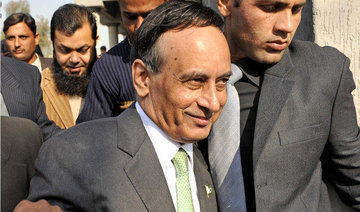
Husain Haqqani. (AFP/file)
Updated 12 August 2018
Follow

Husain Haqqani: Pakistan should accept my right to dissent

  • Pakistan’s Supreme Court directed FIA to bring Haqqani back to the country
  • Ex-ambassador to US rejects allegations of embezzlement and abuse of power in “Memogate” case

ISLAMABAD: Pakistan’s former ambassador to the US, Husain Haqqani, said on Sunday that Pakistani authorities should accept that he cannot be forced to return to Pakistan to face the charges that have been brought against him, claiming there is insufficient evidence against him to justify extradition. 

“My comments on yesterday’s #Pakistan SC (Supreme Court) proceedings and the failed attempts to force my return. Time for authorities to accept my right to dissent and stop wasting time and energy,” Haqqani tweeted.
In reponse to another tweet, Haqqani stated “If there is a real case against anyone, courts of other countries would extradite him upon presentation of evidence.”
On August 9, Ahmer Bilal Sufi — an expert on international law — told a three-member bench of the Supreme Court that Haqqani should be repatriated to Pakistan to face criminal charges including breach of trust, misappropriation, cheating and embezzlement.
Sufi is assisting the country’s top court in the famous “Memogate” case.
In June this year, Pakistan’s Supreme Court directed the Federal Investigation Agency (FIA) to bring Haqqani back to Pakistan.
Haqqani was forced to resign from his post in 2011 after being accused of seeking American help against Pakistan’s armed forces, a request he allegedly shared with US officials in a written memorandum, hence the “Memogate” tag. That controversy came to light just days after US Navy SEALs killed Al-Qaeda leader Osama bin Laden in Abbottabad.
In March this year, the FIA lodged a “first information report” accusing Haqqani of embezzlement and abuse of power during his time as Pakistan’s ambassador in Washington from 2008 to 2011.


Pakistan grants commercial license to Kuwait-backed Shariah-compliant digital bank

Updated 7 sec ago
Follow

Pakistan grants commercial license to Kuwait-backed Shariah-compliant digital bank

  • Pakistan has announced that Raqqami Islamic Digital Bank aims to launch operations this month with $100 million investment
  • Prime Minister Shehbaz Sharif calls for Kuwait and Pakistan to translate cordial political relations into strong economic ties

ISLAMABAD: Prime Minister Shehbaz Sharif granted the Kuwait Investment Authority-backed Raqqami Islamic Digital Bank (RIDB) the commercial license to operate in Pakistan on Tuesday, stressing the need to convert cordial political ties between the two countries into a strong economic relationship. 

Pakistan’s finance adviser Khurram Schehzad announced last month that RIDB intends to launch operations in the South Asian country from February with a $100 million investment. 

The RIDB describes itself as Pakistan’s first fully Shariah-compliant digital bank. The retail bank offers online financing, savings and payment services to individuals and small and medium-sized enterprises, also focusing on financial inclusion for underserved segments.

Prime Minister Sharif participated in a ceremony to grant the license to RIDB in Islamabad. The event was attended by top RIDB officials including its Chairman Abdullah Al-Mutairi and Chief Executive Officer Umair Aijaz. 

“This would go a long way in further strengthening our brotherly and our bilateral economic relations,” Sharif told participants. “You said very aptly that economic and brotherly relations go hand in hand. It cannot be that your political relations flourish but economic relations remain stagnant.”

He said the Shariah-compliant digital bank will also have features that will support and augment banking in Pakistan. 

Sharif called on both nations to join hands to promote their bilateral economic, investment and trade relations “like never before.” He vowed that Pakistan’s government was committed to enhancing bilateral trade and economic ties by working closely with the Kuwaiti government.

Pakistan’s banking sector is dominated by a handful of large lenders with strong capital buffers and profits driven largely by holdings of government securities.

Pakistan has intensified its efforts in recent years to secure foreign investment, particularly from Gulf nations, as it seeks to ensure sustained economic progress. Schehzad has said that the RIDB’s entry into Pakistan reflects strengthening investment ties between Islamabad and Kuwait, particularly in the financial and digital economy sectors.