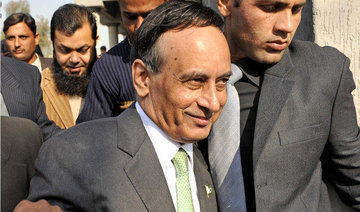
ISLAMABAD: Former Pakistani Ambassador to the US Husain Haqqani can be repatriated to Pakistan on criminal charges including breach of trust, misappropriation, cheating and embezzlement, the Chief Justice of Pakistan was told during a suo moto hearing of the Memogate case on Thursday.
The CJP, Justice Saqib Niar, had directed the Pakistan government in March to present Haqqani before the court within one month. The court then appointed, as amicus curiae, Ahmer Bilal Sufi, an expert on foreign litigation, to assist in Haqqani’s repatriation.
The three-member bench comprising Justice Nisar, Justice Umer Ata Bandyal, and Justice Ijazul Ahsen resumed hearing the case on Thursday.
During the hearing, Sufi submitted a complete report along with guidelines for mutual legal assistance.
Pakistan could proceed with the case on a reciprocity basis as Pakistan had earlier cooperated with the US in handing over suspects, said Sufi.
Haqqani faces criminal charges for breach of trust and failing to account for the funds handed over to him by the Pakistan government in his capacity as the then ambassador to the US.
A formal FIR bearing No (7/2018) dated 10.3.2018 has been registered against Haqqani under sections 3, 4, 409, 109 PPC r/w 5(2) 47 PCA, submitted Sufi.
“This relates to the charge of criminal breach of trust, misappropriation, cheating and embezzlement and the offenses under which the said FIR has also been lodged overlaps with the offense of corruption and corrupt practices under section 9(a)(xi) of National Accountability Bureau (NAB) Ordinance, 1999,” Sufi said.
Sufi contended that the offense was extraditable under Article 17 of the UN Convention against Corruption, 2003 read with Article 44 of the said Convention, which acts as a multilateral extradition treaty between Pakistan and the US.
The International Criminal Police Organization (Interpol) earlier turned down the FIA’s request to issue a warrant for Haqqani.
Sufi further informed the court that alternate mechanisms, in the form of a formal letter seeking US cooperation, could be sent to the US Government. The amicus curiae also prepared a draft of guidelines the court could consider approving for the FIA to facilitate transnational investigations.
He explained that this would also require the FIA to maintain a database of all legal documents, arrangements executed with other states, bilateral agreements and memorandums of understanding.
The apex court instructed the attorney general and NAB to give their comments on the draft legislation prepared by Sufi.


![]()

Husain Haqqani can be repatriated, SC told
Husain Haqqani can be repatriated, SC told
- Pakistan’s former envoy to the US faces criminal charges for breach of trust and failing to account for funds handed over to him by Pakistan government during his diplomatic appointment
- Interpol earlier turned down Pakistan’s request to issue arrest warrant for Haqqani
Latest updates


Recommended


© 2026 SAUDI RESEARCH & PUBLISHING COMPANY, All Rights Reserved And subject to Terms of Use Agreement.