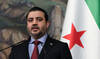
LONDON: Iran’s labor minister was fired on Wednesday as the fall-out grew over the country’s economic meltdown in the face of new US sanctions.
Ali Rabiei, a close political ally of President Hassan Rouhani, lost a parliamentary motion calling for his removal from office by 129 votes to 111.
The Iranian economy is beset by high unemployment, a plunging rial that has lost half its value since April, and a series of nationwide protests against government corruption, economic mismanagement and the squandering of national resources on military intervention in Lebanon, Syria and Yemen.
Analysts doubt whether Rouhani can respond effectively, given his failure to address long-standing economic problems. “The economic section of Rouhani’s team is the weakest part of the government. Everyone knows this, but he never changed his direction because they are his allies,” said Mohammed Reza Behzadian, a former head of the Tehran Chamber of Commerce.
Protests began last December, spreading to more than 80 cities and towns and resulting in 25 deaths. Sporadic demonstrations led by truck drivers, farmers and merchants in Tehran’s bazaar have continued regularly since then and have resulted in violent confrontations with security forces.
They have intensified in the past week, with a fresh wave of demonstrations in cities including Isfahan, Karaj, Rasht and Tehran, resulting in what Amnesty International described as a “wave of mass arrests.”
Amnesty called on Tehran on Wednesday to release peaceful protesters and to conduct a “prompt, impartial and independent” investigation into the killing of a protester in Karaj, northwest of Tehran, on Aug. 3.
“Amnesty International is also urging the authorities to protect all detainees from torture and other ill-treatment and to reveal the fate and whereabouts of dozens of detainees whose families have not heard from them since their arrests,” the rights group said.
“Among those detained and at risk of torture and other ill-treatment is human rights defender Nader Afshari, who was arrested by Ministry of Intelligence officials on Aug. 1, 2018, in the city of Karaj, northwest of Tehran, and whose whereabouts are unknown as he is being held in a secret detention facility.
“Since July 31, 2018, thousands of people have taken to the streets to voice their grievances over increasing economic hardship in Iran caused in part by high inflation and the steep devaluation of the rial currency.
“According to reports from journalists and human rights activists inside Iran, as well as independent news groups outside the country, security forces have detained scores of people in jails and secret detention facilities notorious for torture and other ill-treatment over the past week, denying many of them access to their families and lawyers.”