- “The Karachi operation shall be reviewed in totality and in consultation with all stakeholders. All parties should have a level playing field,” reads the third point of the MoU signed by the PTI and the MQM as a power-sharing deal
- Formation of monitoring committee to check on the alleged human rights violations by law enforcers during operation had been a long-standing demand of the MQM, which was rejected by PPP’s Sindh Government
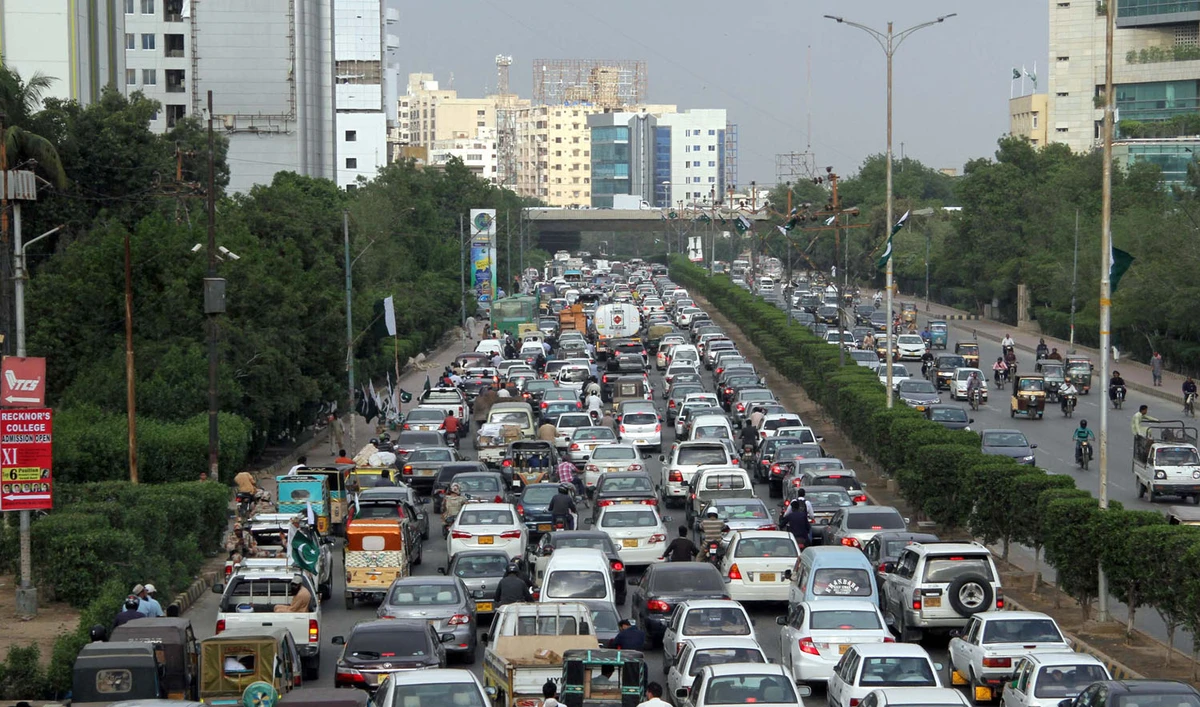
KARACHI: The Karachi operation, which was launched in 2013 against criminal elements, will continue in the same way with a different pace, despite the Pakistan Tehreek-e-Insaf’s promise to “review” it as part of its power-sharing deal with the Muttahida Qaumi Movement-Pakistan, analysts and security sources have said.
The PTI entered into a power-sharing agreement with the MQM-P in exchange for its support for Imran Khan’s party in the center.
The third point of the nine-point Memorandum of Understanding (MoU) signed by the PTI Sindh President, Dr. Arif Alvi, and member coordination Committee of the MQM-P, Faisal Subzwari, reads: “The Karachi operation shall be reviewed in totality and in consultation with all stakeholders. All parties should have a level playing field.”
“Any deal can’t undo the sacrifices being rendered by law enforcement agencies for bringing peace in Karachi,” a security official said in his brief comment on the deal, while speaking to Arab News.
Mazhar Abbas, a senior political analyst, agreed that the point will bring no changes to Karachi’s targeted operation, which was started by Pakistan’s civil and military establishment in September 2013. Abbas recalls that a monitoring committee to stop violations had been the MQM’s demand from day one, and it was initially accepted by the PMLN’s government.
“However, the PPP’s provincial government rejected it, saying that since the Chief Minister, being captain of the operation, is monitoring there is no such need of any monitoring committee,” Abbas told Arab News.
Khawaja Khalid Farooq, former head of the National Counter Terrorism Authority (NACTA), said since law and order is a provincial subject, the PTI’s federal government may hardly give the MQM-P any leverage with ther operation as the provincial government will belong to the Pakistan People’s Party.
“Both the military and civil leadership would certainly want to address the genuine concerns of the MQM-P but it will not bring any changes to the operation,” Farooq told Arab News.
Zoha Waseem, a security analyst who has studied security, terrorism and political violence in Karachi, also agreed: “This appears to be a haphazardly constructed memorandum. The third point about the Karachi operation is structured in standard, diplomatic words to appease the MQM for the time being.”
How will the operation be reviewed and who will review it?
“This is a Rangers-led operation, which means that the Army has direct oversight on it, and that it is independent from political parties. The MQM has long asked for a monitoring committee over the operation, which never materialized,” Waseem told Arab News.
“Now that the MQM is in coalition with the PTI, will they be able to form a monitoring committee? Does that mean the MQM will have the same say as the Army over the operation? Or is the Army confident now that the MQM is weakened enough and this coalition cannot reverse their political standing?” she asked, adding: “It would be a mistake to think that.”
Waseem suggested that the PTI needs to tread carefully. “This is a need-based relationship between PTI and MQM and one in which the maintenance of Karachi’s security could be the source of this relationship’s insecurity. And as we know, Pakistan’s internal security is a domain of the military establishment, which means that political parties need to defer to other institutions for maintaining the city’s law and order, and that is where differences between the PTI and MQM could arise.”
Imran Ismail, central leader of the PTI, says the MQM had been claiming that that operation was targeted at the MQM. “We said to MQM that the operation is targeted toward terrorists and you had plenty of terrorists in the past,” Ismail told Arab News.
“We have agreed that if any injustice has been done with the MQM in past we will address that by reviewing the operation,” he said but clarified: “We are not changing the future course of the operation. In the past the Karachiites wouldn’t even vote with their freewill. The credit goes to the Army and Rangers,” he said.
“We believe that the peaceful election campaign and holding of elections are also indicators of Karachi Targeted Action’s relative success but now Karachi needs targeted development,” MQM-P’s central leader Faisal Subzwari told Arab News.
Subzwari says that for the Karachi’s targeted action all stakeholders, including federal and provincial governments, political parties and law enforcement agencies, should form a forum that can review the need of a continued or culminated action. “All legitimate and peaceful political parties must be given a level playing field. It is a genuine need of this hour,” he said.
Other noticeable promises
According to the power-sharing agreement, the local government system in Sindh and Punjab does not conform to the constitutional requirements under section 140-A, so the PTI will help the MQM-P in its legal battle for more powers for the local tier of the government.
“All appointments in the government should be based on merit and according to law through an accredited, impartial testing system,” the MoU reads, adding since the urban centers of Sindh, including Karachi, have been severely neglected in the past, direct financial package will be announced immediately that shall be disbursed by the federal government, with special emphasis on water.
“Both parties shall strive to introduce police reforms as implemented by the PTI in KP and promised by MQM(P) in its manifesto, so that police is de-politicized and recruited with merit in letter and spirit according to the law that envisages local recruitment.”
“The resolution passed by the National Assembly regarding the Karachi census and as decided in the Council of Common Interest should be implemented immediately,” it goes on. Both parties have also agreed to establish a university of international level and repute in Hyderabad.
Whether point-three or other eight promises????, experts say, it will not be easy for the PTI to implement them because of the delegation of more powers to provinces as a result of the 18th constitutional amendment. “Several legislations will forbid the PTI from bypassing the provincial government and the PTI will not be willing to give it to PPP’s Sindh Government,” Abbas said. The federal government can still initiate mega projects.
Subzwari says if the PTI, which has majority seats in Karachi now, does not implement the MoU, it will be a problem as all these points raised by the MQM-P are in the interest of the people of the city.
Ismail said that since the deal is for the betterment of the city, it will be implemented in letter and spirit. “We will ensure full implementation, which is better for both the parties and people of Karachi and other urban units of Sindh,” Ismail vowed.