Saudi tankers ship oil again in Bab Al-Mandeb

1 / 2
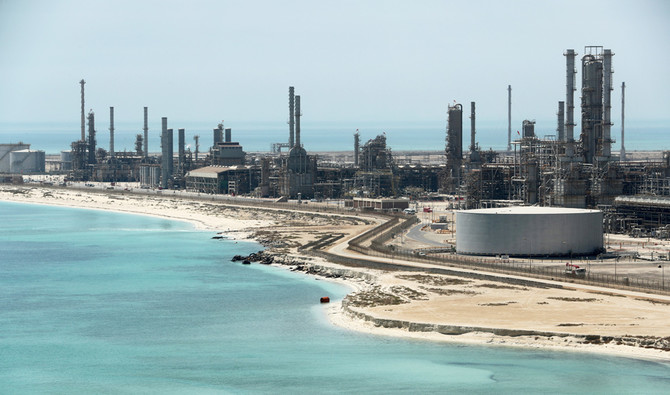
General view of Saudi Aramco's Ras Tanura oil refinery and oil terminal in eastern Saudi Arabia. (REUTERS/Ahmed Jadallah/File Photo)
2 / 2
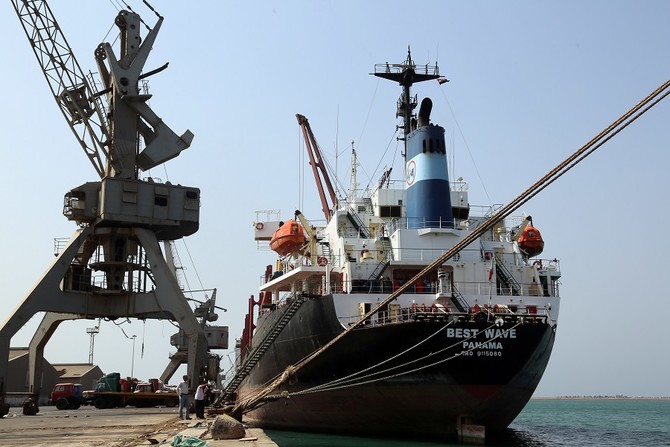
The Kingdom had temporarily stopped moving crude through the strait on July 25 after attacks by Houthi militias in Yemen on two oil tankers sent shockwaves through global energy markets. (File photo: AFP)
Updated 05 August 2018
Follow

Saudi tankers ship oil again in Bab Al-Mandeb

  • Coalition takes ‘necessary measures’ to secure key Red Sea waterway
  • After Saudi Arabia halted shipments, the Houthis said they would also halt attacks in the Red Sea for two weeks to support peace efforts

DUBAI/LONDON:  Saudi Arabia has resumed oil shipments through the strategic Red Sea shipping lane of Bab Al-Mandeb.

The Kingdom had temporarily stopped moving crude through the strait on July 25 after attacks by Houthi militias in Yemen on two oil tankers sent shockwaves through global energy markets.

Saudi Energy Minister Khalid Al-Falih said: “The decision to resume oil shipment through the strait of Bab Al-Mandeb was made after the leadership of the coalition has taken necessary measures to protect the coalition states’ ships.”

The measures were taken “in co-ordination with the international community,” the minister said. 

Saudi Aramco also confirmed that shipping had resumed, effective immediately. “The company is careful to continue monitoring and evaluating the current situation in coordination with the relevant bodies and take all necessary procedures to ensure safety,” it said.

Saudi Arabia leads an Arab coalition against the Houthis to restore Yemen’s legitimate government, but the attacks on the tankers were the first time the conflict threatened to disrupt energy markets.

Houthis’ weapons hunt

The Bab Al-Mandeb strait is a narrow waterway connecting the Red Sea with the Gulf of Aden in the Arabian Sea. 

After Saudi Arabia halted shipments, the Houthis said they would also halt attacks in the Red Sea for two weeks to support peace efforts.

The resumption of shipments through the waterway is good news for both consumers and oil companies who until now had been pondering the impact of either paying higher insurance premiums to use the channel or re-route exports around Africa.

Meanwhile, North Korea supplied weapons including ballistic missiles to the Houthis after a deal reached in Damascus in 2016, according to a report by a UN investigation team.

The report said Syrian arms trafficker Hussein Al-Ali offered “a range of conventional arms, and in some cases ballistic missiles to armed groups in Yemen and Libya.”


Saudi Arabia’s cultural sector is a new economic engine between Riyadh and Paris, says ambassador

Updated 25 January 2026
Follow

Saudi Arabia’s cultural sector is a new economic engine between Riyadh and Paris, says ambassador

RIYADH: Culture has become a fundamental pillar in bilateral relations between France and Saudi Arabia, according to the French Ambassador to the Kingdom, Patrick Maisonnave.

Maisonnave noted its connection to the entertainment and tourism sectors, which makes it a new engine for economic cooperation between Riyadh and Paris.

He told Al-Eqtisadiah during the opening ceremony of La Fabrique in the Jax district of Diriyah that cultural cooperation with Saudi Arabia is an important element for its attractiveness in the coming decades.

La Fabrique is a space dedicated to artistic creativity and cultural exchange, launched as part of a partnership between the Riyadh Art program and the French Institute in Riyadh. 

Running from Jan. 22 until Feb 14, the initiative will provide an open workspace that allows artists to develop and work on their ideas within a collaborative framework.

Launching La Fabrique as a space dedicated to artistic creativity

The ambassador highlighted that the transformation journey in the Kingdom under Vision 2030 has contributed to the emergence of a new generation of young artists and creators, alongside a growing desire in Saudi society to connect with culture and to embrace what is happening globally. 

He affirmed that the relationship between the two countries is “profound, even cultural par excellence,” with interest from the Saudi side in French culture, matched by increasing interest from the French public and cultural institutions unfolding in the Kingdom.

Latest estimates indicate that the culture-based economy represents about 2.3 percent of France’s gross domestic product, equivalent to more than 90 billion euros ($106.4 billion) in annual revenues, according to government data. The sector directly employs more than 600,000 people, making it one of the largest job-creating sectors in the fields of creativity, publishing, cinema, and visual arts.

Saudi Arabia benefiting from French experience in the cultural field

Maisonnave explained that France possesses established cultural institutions, while Saudi Arabia is building a strong cultural sector, which opens the door for cooperation opportunities.

This comes as an extension of the signing of 10 major cultural agreements a year ago between French and Saudi institutions, aiming to enhance cooperation and transfer French expertise and knowledge to contribute to the development of the cultural system in the Kingdom.

He added that experiences like La Fabrique provide an opportunity to meet the new generation of Saudi creators, who have expressed interest in connecting with French institutions and artists in Paris and France.

La Fabrique encompasses a space for multiple contemporary artistic practices, including performance arts, digital and interactive arts, photography, music, and cinema, while providing the public with an opportunity to witness the stages of producing artistic works and interact with the creative process.