LONDON: Iran’s application of the death penalty to individuals arrested during the country’s economic crisis would be in “direct breach of international law,” the world’s leading human-rights organization has said.
At least 29 people have been arrested for “economic disruption,” Iranian officials announced last weekend, with many facing charges that carry the death penalty.
Amnesty International on Wednesday expressed “alarm” over the arrests, saying that the application of the death penalty for non-violent crimes would be “in direct breach of international law.”
The plunging value of the Iranian currency and worsening economic situation has prompted a string of public protests this year. In an apparent attempt to be seen to be tackling the crisis, officials announced dozens of arrests and blamed unnamed “enemies” for the rial’s decline.
“Amnesty International is alarmed at the judiciary’s announcement that it has charged individuals arrested in relation to the country’s economy and currency crisis with ‘corruption on earth’ (efsad-e fel arz), which incurs the death penalty,” an Amnesty spokesperson told Arab News.
#ISFAHAN, #Iran, Agust 1, 2018. The people rallied to protest against the Iranian regime’s corruption and the declining economic situation for the second consecutive day on Wednesday. #IranProtests #FreeIran2018 pic.twitter.com/Jg2L3sMxzA
— NCRI-FAC (@iran_policy) August 1, 2018
“This would be in direct breach of international law, which restricts the use of the death penalty to only the ‘most serious crimes’ — those involving intentional killing. Amnesty International’s research has shown that basic fair trial guarantees are absent in death penalty cases in Iran.”
The statement follows warnings from other campaign groups over the human-rights situation in Iran.
“In recent weeks and months we’ve had many protests,” Mahmood Amiry-Moghaddam, spokesman for the Oslo-based Iran Human Rights group, told Arab News on Tuesday.
“Human rights are suffering … and every day they suffer more. Iran is among the biggest violators of human rights in the world today.”
حضور پلیس ضد شورش در منطقه شاپور جدید اصفهان
گروهی از کسبه و رانندگان شاپور جدید در "اعتراض به گرانی و بیکاری" تجمع کردهاند. pic.twitter.com/nTICjOLRNj— BBC NEWS فارسی (@bbcpersian) July 31, 2018
Harvard scholar and Iranian affairs expert Dr. Majid Rafizadeh said that the arrests connected to the economic crisis amounted to a PR exercise by the Iranian government.
“The arrests by the regime are mostly cosmetic actions aimed at projecting that the Islamic Republic is taking actions to address corruption and address people’s grievances,” he said.
“The regime is also trying to point (the) finger at some individuals rather than on the systematic financial corruption within the political establishment.”
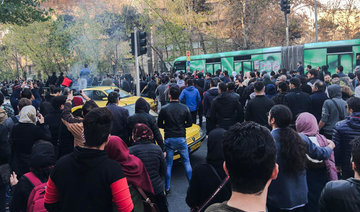
Amid widespread public anger, demonstrations spread to the historic city of Isfahan on Tuesday, with protesters demanding an end to the Iranian regime’s costly interference in the affairs of neighboring countries in the region.
Video footage showed hundreds of protesters shouting: “No to Gaza, no to Lebanon, my soul is Iran’s redemption.” The slogan refers to Tehran’s military adventures in Syria, Iraq and Lebanon, at the expense of the domestic economy.
“The protests in Isfahan are significant because they highlight people’s ongoing and growing outrage and frustration with the theocratic establishment, as the economy is in shambles,” said Rafizadeh. “Despite the regime’s crackdown, people continue to take to streets as they can’t make ends meet.”