Saudi Arabia’s NEOM — a destination fit for a king

1 / 4
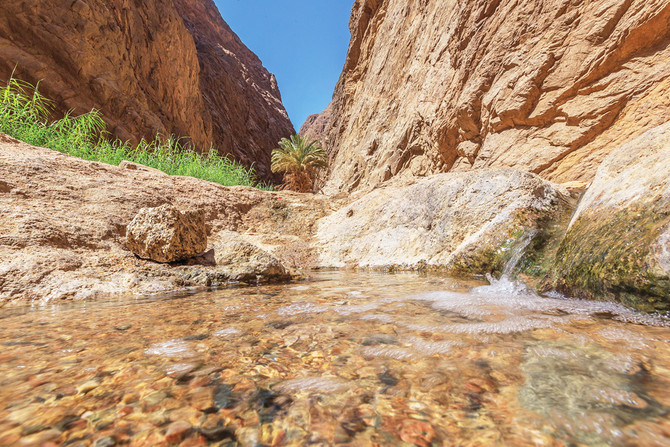
NEOM’s unique geographical location permits a climate temperature that is known to be roughly 10C cooler on average than the rest of the GCC. (Photo/Supplied)
2 / 4
NEOM’s unique geographical location permits a climate temperature that is known to be roughly 10C cooler on average than the rest of the GCC. (Photo/Supplied)
3 / 4
NEOM’s unique geographical location permits a climate temperature that is known to be roughly 10C cooler on average than the rest of the GCC. (Photo/Supplied)
4 / 4
NEOM’s unique geographical location permits a climate temperature that is known to be roughly 10C cooler on average than the rest of the GCC. (Photo/Supplied)
Updated 15 August 2018
Follow

Saudi Arabia’s NEOM — a destination fit for a king

  • The NEOM project is a transnational megacity and economic hub being built in the Red Sea
  • Covering a 26,500-square-kilometer area, the NEOM giga-project was unveiled last October

JEDDAH: Saudi Arabia’s King Salman is on holiday in NEOM, where he will enjoy some rest and recreation, according to a statement released by the Saudi Press Agency. 

This is an encouraging sign that NEOM, currently restricted to public access while under construction, is nevertheless progressing nicely.

This past October, Saudi Crown Prince Mohammed bin Salman unveiled the Kingdom’s plans for NEOM, a $500 billion, 26,500km2 transnational megacity and economic hub the likes of which the world has never seen. 

Backed by the Kingdom’s vast Public Investment Fund, NEOM will operate as an independent economic zone powered solely by regenerative energy, spanning three countries, complete with its own self-governing laws and regulations and all strategically designed for economic stimulation. 
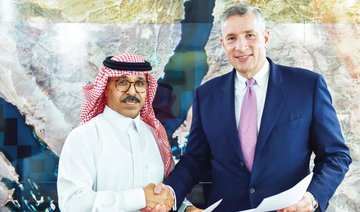
Today also marks the first day that Nadhmi Al-Nasr, NEOM’s newly appointed CEO, will assume his responsibilities after being appointed last month. Al-Nasr, who is a member of NEOM’s founding board, will transition from leading NEOM Bay to becoming NEOM’s overall CEO, replacing Dr. Klaus Kleinfield, with the former CEO becoming the personal adviser to the chairman of NEOM’s founding board, Saudi Crown Prince Mohammed bin Salman. 

Kleinfield, a former CEO of Siemens AG (the largest industrial manufacturing conglomerate in Europe), will now undertake wider responsibilities that focus on enhancing the technological and economic development of Saudi Arabia as a whole. 

Al-Nasr, who has more than 30 years of experience with Saudi Aramco, had worked on developing the strategy and development of NEOM Bay, one of the initial stages of NEOM. Al-Nasr’s responsibilities as CEO will now include furthering the strategic development, major initiatives, and business plans for NEOM’s core economic sectors. 


The world’s first independent economic zone

Currently being developed in Tabuk, the northwest corner of Saudi Arabia that intersects Egypt and Jordan, NEOM is a pillar of Saudi Arabia’s Vision 2030, and is being precisely constructed with a foundation that serves nine specialized investment sectors: Energy, biotech, food, mobility, advanced manufacturing, technological and digital sciences, tourism, media, and entertainment; all sectors strategically designed to attract international investment, and all part of a grand push to diversify Saudi Arabia’s oil-centric economy.


Geographically situated at the center of world trade

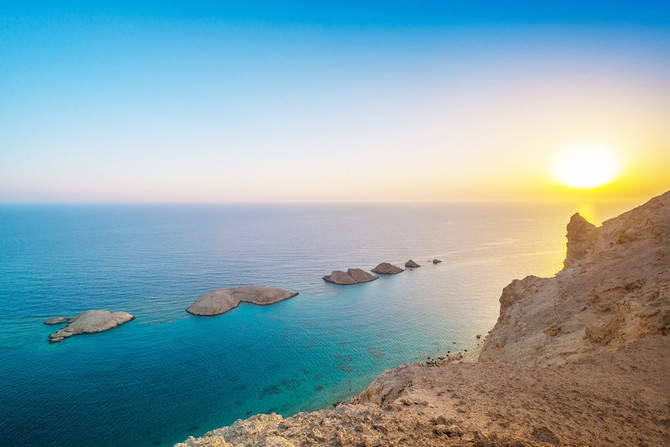
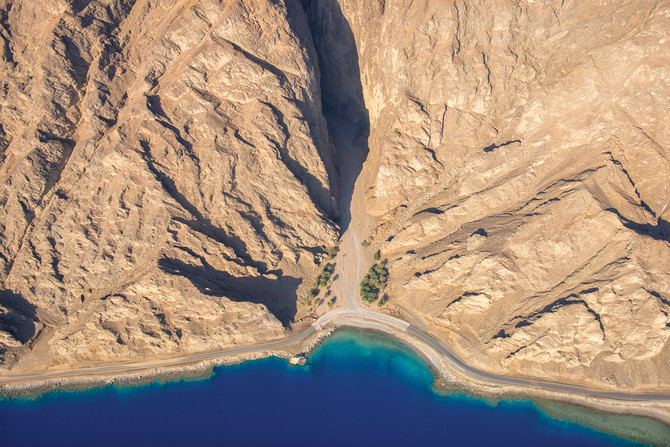
NEOM is currently being built on a diverse terrain sheltered by mile-high mountains and cooled by breezes from more than 450 km of Red Sea coastline. Future guests will be able to enjoy previously untouched naturally formed beaches, islands, and vast desert terrains where even snowfall can be expected during the winter.

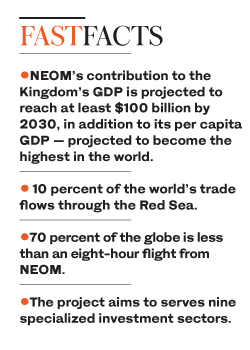
NEOM’s unique geographical location permits a climate temperature that is known to be roughly 10C cooler on average than the rest of the GCC. Located along one of the world’s most established economic arteries, the Red Sea, in which nearly 10 percent of all the world’s trade flows, NEOM is primed to bring together the best of not only the Middle East, but the world at large, as 70 percent of the world is less than an eight-hour flight away. 

Supported by fully automated services along with zero-carbon infrastructure, NEOM will operate solely on wind and solar power. Thousands of solar panels paired with wind turbines will generate enough grids of stored power to supply all of NEOM all year round with low-cost regenerative energy.
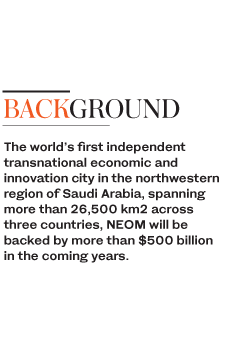
As an aspiring global hub for innovation, knowledge, and trade, NEOM will also establish itself as the prime entrance to the King Salman Bridge, a $4 billion causeway linking Western Asia and Africa. NEOM’s massive land mass will stretch across the Egyptian and Jordanian borders, and will thus establish itself as the first private economic zone to span three countries. 


A hub for technology, energy, biotech, and digital sciences

NEOM aims to foster innovation through an open-source policy platform, where the world’s top scientists will have an open invitation to conduct research in the fields of medical science, artificial intelligence, and virtual reality. By adopting a regulatory framework that fosters technological growth according to the highest international standards, guidelines, and practices, scientists will have the luxury of having NEOM itself as a scientific testing ground for next-generation genomics, gene therapy, nanobiology, bioengineering, and stem cell research.


Decoder

What's NEOM?

NEOM is an amalgamation of the word “neo”, Latin for “new,” and the first letter “m” of the Arabic word “mustaqbal”, which translates as “future.”


Heritage Commission brings maritime history to life at Shiraa Wooden Ships Festival in Jeddah

Updated 10 sec ago
Follow

Heritage Commission brings maritime history to life at Shiraa Wooden Ships Festival in Jeddah

  • Celebration highlighted Kingdom’s historic relationship with sea

Jeddah: The Saudi Heritage Commission brought Jeddah’s waterfront to life with the Shiraa Wooden Ships Festival, a cultural celebration highlighting the Kingdom’s deep-rooted maritime heritage and its historic relationship with the sea. 

The event, which ran from Jan. 13-16, invited visitors to explore how seafaring shaped coastal life, trade and cultural exchange across the generations.

A Heritage Commission representative said: “Shiraa reflects our commitment to reconnecting people with the sea and reviving maritime heritage through an interactive cultural experience.

“The program restores the human journey with the sea and highlights the historical role of ports in trade, discovery and cultural communication across the ages.”

At the heart of the festival was the Al-Qilafa exhibition, which traced maritime heritage from Qur’anic references to everyday coastal life, the wooden ship itself being a living symbol of memory.

The exhibition unfolded as a narrative journey through a series of interconnected zones. It opened with a contemplative reflection on the sea as a source of divine provision, drawing on Qur’anic references to present the sea as a blessing whose abundance shaped livelihoods and traditions across generations. This introduction was followed by an exploration of the lives of sailors, where traditional costumes, everyday coastal objects, fishing and pearl-diving tools illustrated how survival at sea evolved into skilled crafts supported by accumulated knowledge and expertise.

Saleh Al-Ghamdi, who attended with his children, described the experience as a memorable one, and added: “It was both informative and enjoyable. My children learned how fishermen lived and how wooden ships were built. Offering an event of this scale free of charge is impressive, and I hope to see more initiatives like this.”

The journey continued by examining the broader impact of maritime activity, with ships and maritime crafts displayed alongside maps tracing historic sailing routes, showing how ports became gateways for trade, cultural exchange and discovery, and how coastal cities grew in rhythm with the sea.

Musical instruments associated with coastal sea songs, including a semsemiah, were presented with folkloric maritime chants, reflecting how rituals, music and customs carried the spirit of the sea beyond labor and into community life. Artifacts recovered from the Umluj shipwreck anchored this final section, reinforcing the idea of maritime heritage as a living legacy preserved in memory, practice and culture within coastal communities today.

Beyond the exhibition, visitors entered the artisans’ pavilions, an interactive journey across six stations showcasing traditional maritime crafts, including wooden shipbuilding, net making, rope making, sail making, pearl diving and jewelry creation. These crafts reflected a complete maritime journey, from constructing the ship to transforming the sea’s treasures into artistic value.

The partners’ pavilions highlighted institutions supporting maritime heritage and sustainability. Amal Mohammed, from the Saudi Red Sea Authority, said the authority’s participation aimed to raise awareness of coastal development efforts, and added: “We want visitors to understand how maritime heritage connects to building a thriving and sustainable coastal tourism sector.”

Students from King Abdulaziz University’s Faculty of Maritime Studies also engaged with visitors, introducing academic pathways in maritime transport, navigation, marine engineering and port management.

Abdulrahman Hamid said the interest from young visitors was encouraging, and added: “There is growing demand for maritime expertise locally and internationally, in line with Saudi Vision 2030. Many young boys and girls showed curiosity about maritime studies, and we explained that while the field is challenging, it offers important career opportunities.”

Families and children gathered at Shiraa Square, an interactive entertainment space featuring traditional games, hands-on shipbuilding activities, remote-controlled boat racing in collaboration with the Saudi Sailing Federation, and sailboat riding.

Artistic expression was highlighted in the Al-Danah zone through the visual arts concept “Dreamed by Us,” featuring photography by Alan Villers. Designed as a tranquil space inspired by the symbolism of pearls, the area combined video content and interactive elements by ZFX and ID Scenes with sculptures, installations and light-based artworks that explored themes of beauty, patience and discovery.

The festival also featured interactive workshops at Craft Shore, where visitors tried net making, opening oysters to extract pearls, creating sea-inspired canvases and sculpting waves in clay.

Farah Ahmed, who was visiting from Makkah, said the activities brought heritage to life in an engaging way, adding: “It wasn’t just something to observe, it was hands-on and educational, and we learned a great deal while enjoying the experience.”

High school student Hanan Soufi said the festival had influenced her academic ambitions, and added: “I’m interested in marine engineering, and visiting the King Abdulaziz University booth helped me understand that women can pursue these studies.

“The Al-Qilafa exhibition was especially informative, from traditional clothing and tools to navigation, port cities and maritime music. It was truly a standout experience.”