CAIRO: Egypt will allow stretches of land in the southern Sinai to be used for Saudi Arabia’s planned megacity Neom project announced by the Kingdom last October.
The agreement forms part of a $10 billion joint investment fund the two countries signed during the visit to Cairo this week by Crown Prince Mohammed bin Salman, according to a Saudi official.
The size of the committed land is said to be more than 1,000 square kilometers.
Saudi Arabia’s 26,500-square-kilometer Neom project is to focus on industries including water and energy, food, media, advanced manufacturing, biotechnology and entertainment.
It forms part of the country’s Vision 2030 growth strategy which aims to diversify the country away from its reliance on oil.
The project will run along the coast of the Red Sea as well as the Gulf of Aqaba. Its borders will extend across Egyptian and Jordanian borders, making it the first private economic zone to span three countries.
The megacity project plans to pioneer the latest technologies including automated driving, passenger drones, the use of robots and developing new ways of growing and processing food.
The project is expected to attract more than $500 billon of investment from the Saudi government, the Saudi Arabian Public Investment Fund (PIF) and international investors. Neom’s contribution to the Kingdom’s GDP is projected to reach $100 billion.
As part of the newly signed Egypt-Saudi joint venture, Saudi Arabia is to build seven cities and tourism projects, while Egypt will focus on developing the existing resorts of Sharm El-Sheikh and Hurghada.
Saudi Arabia is said to be working with Egypt and Jordan on attracting more European cruise and tourism companies active in the Mediterranean to consider operating in the Red Sea as well. An official said the Kingdom was currently negotiating with more than seven tourism-related operators.
Egypt and Saudi Arabia also signed an agreement during the Crown Prince’s visit to protect the marine environment and to maintain coral reefs and beaches in the Red Sea area.
Separately, Saudi Arabia announced last August it was planning to develop 50 luxury resorts on islands and other sites on the Red Sea, backed by PIF. Construction of this development is expected to start in 2019 and be completed in 2022, according to state news agency reports.
The Crown Prince arrived in Cairo on Sunday, meeting with Egypt’s President Abdel Fattah El-Sisi to discuss future cooperation in tackling terrorism and regional insecurity as well as how to strength business ties between the two countries.
The crown prince also met with Egypt’s Coptic Pope Tawadros II in the first such visit by a Saudi official to the spiritual center of the country’s Orthodox Christian community. He also met Egypt’s top Islamic official, Ahmad Al-Tayyeb, and saw a performance at the Cairo Opera.
Prince Mohammed is scheduled to arrive in the UK on Wednesday to meet British government officials.


![]()
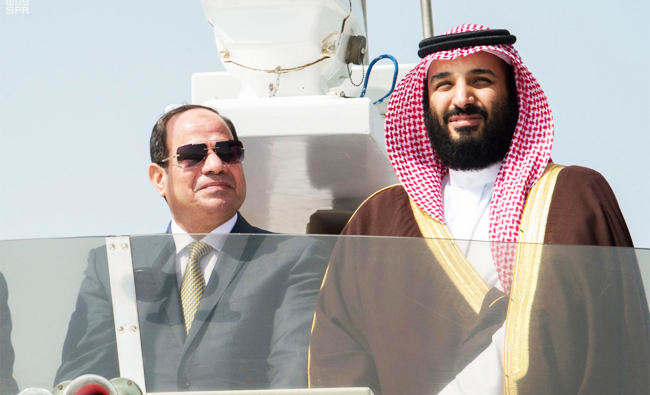
Egypt signs $10bn deal with Saudi Arabia to support Neom project
Egypt signs $10bn deal with Saudi Arabia to support Neom project

Latest updates


© 2026 SAUDI RESEARCH & PUBLISHING COMPANY, All Rights Reserved And subject to Terms of Use Agreement.