

Huda Beauty set to launch its first-ever fragrance

Mona (L) and Huda Kattan are set to launch their debut fragrance. (AFP)
Updated 30 July 2018
Follow

Huda Beauty set to launch its first-ever fragrance

  • The fragrance reveal comes in clip from the sisters’ reality TV show that is streamed on Facebook

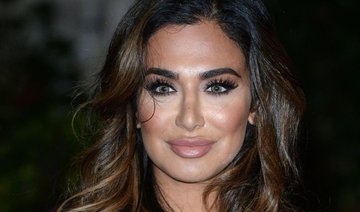
DUBAI: She is one of the most famous beauty influencers in the world, has a successful brand and just nabbed the 37th spot on Forbes’ list of America’s richest self-made women and now Huda Kattan — along with her sister and business partner Mona — have announced plans to launch their first-ever perfume.

Co-founder of Huda Beauty, the Instagram star’s cosmetic brand that is sold across the world, Mona Kattan took to Instagram to confirm that the company is indeed releasing its debut scent.

“It’s official guys!! We’re launching our own fragrance!! Years in the making! I’ve been dying to share this with you all! Check out the latest episode of @hudaboss for more behind the scenes!!! I can’t wait to share this with you all!!! We’ve put our hearts into this! Stay tuned for more details!! (sic),” she enthusiastically posted on Instagram, referring to the sisters’ reality TV show that is streamed on Facebook.

The show, which aired for the first time on June 12, gives viewers behind-the-scenes access to the Iraqi-American sisters, showing people the “good, bad, scary and ugly times” of running a family business in Dubai, where Huda, Mona and sister Alya are based.

Explaining the concept in a released statement at the time, Kattan said her show would be “really raw” and “really real,” but she promised that it all “comes from the heart.

“My family and I have been working so hard on it and it basically shows everything. It shows the reality of running a business with your family, the good times, the bad times, the scary times, the ugly times,” she said.

“It’s a real, honest series and I can’t wait for you guys to see it,” she added.

The fragrance reveal comes in clip from the reality show, which Mona posted on her Instagram account. In it, we see her visit a perfume factory in Grasse, France, an area that is known for its rose blooms. Viewers also learn that 600 kilos of roses can result in the creation of a kilo of absolute — the highly concentrated aromatic oil extracted from plants.

“I love perfume. I love it so much that I have dedicated an entire room in my house to perfume,” Mona says in the episode. “I feel like this project is a special baby for us and having a brand born out of social media, it’s really important for us to capture content every step of the way.”

Meanwhile, in some more good news for the make-up moguls, Instagram scheduling tool Hopper HQ just released its Instagram Rich List that uses internal data, influencer rate cards and public information to rank who is making the most cash through the social media platform. 

The star-studded list is split into various sections, with Huda topping the list of beauty-related influencers based on her reported ability to command up to $33,000 per sponsored post.
Sheikha Al-Mayassa talks cultural patronage at Art Basel Qatar Conversations panel

Updated 04 February 2026
Follow

Sheikha Al-Mayassa talks cultural patronage at Art Basel Qatar Conversations panel

DOHA: Cultural leaders at the inaugural edition of Art Basel Qatar in Doha have discussed how patronage is reshaping art ecosystems, with Qatar’s own long-term cultural vision at the center.

The opening panel, “Leaders of Change: How is patronage shaping new art ecosystems?” brought together Sheikha Al-Mayassa bint Hamad bin Khalifa Al-Thani, chair of Qatar Museums, and Maja Hoffmann, founder and president of the Luma Foundation, in a discussion moderated by Hans Ulrich Obrist, artistic director of the Serpentine Galleries in London. The talk formed part of the Art Basel Conversations x Qatar Creates Talks program, coinciding with the debut of Art Basel Qatar which runs in Doha until Feb. 8.

Sheikha Al-Thani framed Qatar’s cultural project as a strategic, long-term endeavor anchored in national development. “Qatar has a national vision called 2030 where culture was one of the main pillars for socioeconomic development and human development,” she said. “We have always invested in culture as a means of human development.”

That vision, she explained, underpins the decision to welcome a major international fair like Art Basel to Doha after turning away many previous proposals.

“For the longest time, I can’t tell you how many art fairs came to us wanting to be here, and we never felt it was the right time,” she said. “However, this is an important year for us and we felt, with the surplus of talent and the growing gallery scene we had here, that it was time to bring industry to talent, because that’s how we will spur the economic diversification from hydrocarbon to a knowledge-based society.”

She was also keen to stress that Art Basel Qatar was not conceived as a conventional marketplace.

 “This is not your typical art fair … It’s a humane art fair where engagement is more important than transaction, discourse more important than division, and curiosity more important than conviction,” she added.

That ethos extends to the fair’s artistic leadership. Al-Thani described how the decision to have an artist — Wael Shawky — serve as artistic director emerged collaboratively with Art Basel’s team.

“He’s a global artist who’s now become a very local artist, very invested in our local art scene. And really, I think that’s the beauty of partnerships … There is a safe space for us to critique each other, support each other, and really brainstorm all the possibilities … and then come to a consensus of what would make sense for us,” she said.

Collecting art, she added, has long been embedded in Qatari society: “My grandmother is almost 100 years old. She was collecting in the 60s when Qatar was a very poor country. It’s in our DNA … always with this notion of investing in knowledge and human development.”

Today, that impulse translates into comprehensive, multi-disciplinary collections: “We are both collecting historical objects, contemporary objects, modern objects, architecture, archival material, anything that we feel is relevant to us and the evolution of this nation towards a knowledge-based economy.”

Looking ahead, Al-Thani outlined a new cultural triangle in Doha — the National Museum of Qatar, the Museum of Islamic Art and the forthcoming Art Mill Museum — as engines for both economic diversification and intellectual life.

 “That ecosystem will enhance the economic growth and diversification, but also the knowledge that’s available, because the diversity in the collections between these three institutions will no doubt inspire young people, amateurs, entrepreneurs to think outside the box and inform their next business,” she said.

The panel closed with a focus on the future of large-scale exhibitions with Rubaiya, Qatar’s new quadrennial, timed to coincide with the anniversary of the 2022 World Cup.

“Every four years in memory of the opening of the World Cup, we will open the quadrennial. This year, the theme is ‘Unruly Waters.’ At the center of the theme is Qatar’s trading route to the Silk Road,” explained Al-Thani.

“It’s important for us to trace our past and claim it and share it to the rest of the world, but also show the connectivity that Qatar had historically and the important role it has been playing in diplomacy.”