ISLAMABAD: European Union Election Observation Mission (EUEOM) has expressed concerns about restrictions on media in Pakistan ahead of July 25 general elections, saying that this will undermine democracy in the country.
“We are greatly concerned about the restrictions on the media. The media have a vital role to play in an electoral process, and attempts to stifle the media undermine democracy and disadvantage the voter,” Michael Gahler, chief observer of the Mission, told Arab News in an exclusive interview on Saturday.
About recent suicide attacks and violence against candidates contesting the election, he said the violence must not and will not undermine the elections and the democratic process.
“Parties and candidates should have maximum opportunity to campaign, voters should have their voices heard, and people should be able to cast their ballot without fear or hindrance,” he added.
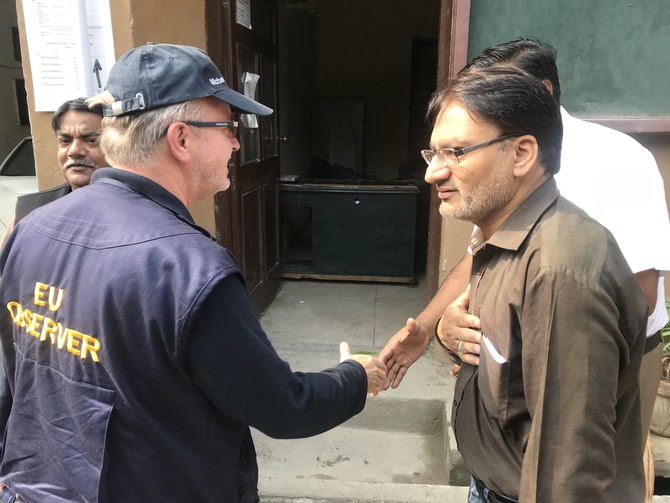
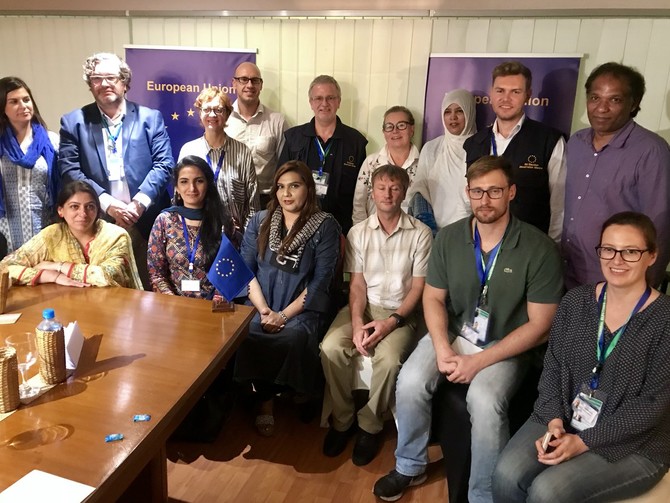
The EUEOM is deploying 120 observers across Pakistan on the polling day except Balochistan province owing to the security concerns. It will have a central team of 10 analysts in Islamabad, 60 long-term observers working in teams of two in districts across the country.
In its team, the mission also has seven members of the European Parliament and 41 diplomats from EU member state embassies in Pakistan.
Gahler said their mandate is to observe all aspects of the electoral process and assess the extent to which the elections comply with international and regional commitments for elections, as well as with national legislation.
However, he highlighted that in line with the EU long-term election methodology, the mission was ready to deploy from Europe in early June. “However, due to a series of bureaucratic delays, the first group of observers arrived only on June 24, and the mission’s 60 long-term observers in July,” he said.
The chief observer of the mission said the long-term observers were deployed across Pakistan just one week before polling day. “This is very unusual and never happened in previous missions to Pakistan, nor in any other country where the EU has observed (the elections),” he said.
He said the short period of time between now and election day has “implications on the EUEOM’s ability to thoroughly assess some key aspects of the electoral process, including the candidates' nomination process, campaign environment in different parts of the country, as well as work of election administration at the local level.”
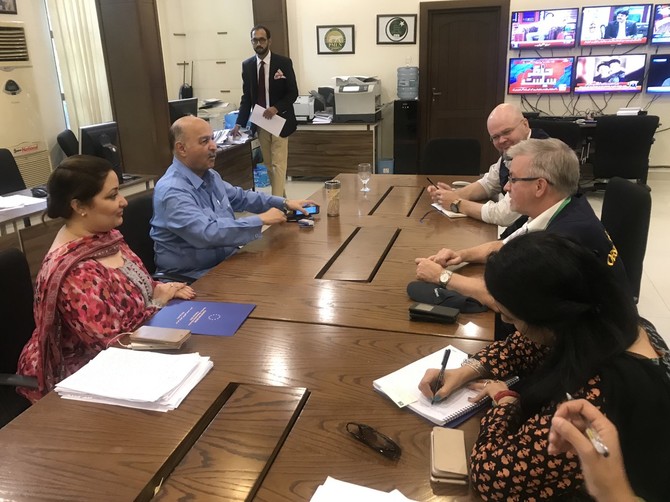
Gahler said the mission observers have met a wide range of media, civil society and political parties at both national and provincial level. “Numerous interlocutors have expressed concerns about the election environment, and we will be giving our assessment on July 27,” he said.
The EU mission will present a preliminary report based on its observations on July 27, while a final report with recommendations for consideration will be published about two months after the end of the electoral process.
Gahler, however, declined to comment on the election preparations and role of the Election Commission of Pakistan in holding free and fair elections until after polling day.
“This is because the electoral process is still ongoing and we do not want to pre-judge a process that has not yet finished,” he added.
He also dispelled the impression that EU mission simply endorses the election results and avoids mentioning incidents of rigging, mismanagement and media censorship in its final report.
The EU Election Observation Missions never ratify results of the elections as they do not have the mandate to do so, he said. “It is for the authorities of Pakistan to ratify (election) results,” he said.
“Observer missions merely accompany an electoral process and make recommendations for reform of future electoral processes,” Gahler said.


![]()
![]()
![]()
![]()

EU observers express concerns over restrictions on media in Pakistan ahead of elections
EU observers express concerns over restrictions on media in Pakistan ahead of elections
- EUEOM has deployed 120 observers across Pakistan except Balochistan province owing to security concerns
- EU mission will present its preliminary report based on its observations on July 27, a final report two months after end of the electoral process


Latest updates



© 2026 SAUDI RESEARCH & PUBLISHING COMPANY, All Rights Reserved And subject to Terms of Use Agreement.