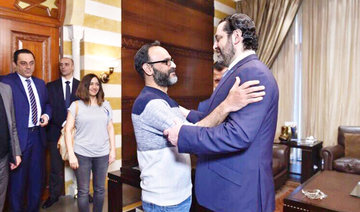
BEIRUT: The New York-based Human Rights Watch is calling on Lebanese authorities to investigate allegations of torture made by a well-known actor who was detained and later exonerated of charges of spying for Israel.
The watchdog said Monday the case of Ziad Itani is a test for whether the law criminalizing torture, passed in November, will end impunity for security officials.
Bassam Khawaja, a HRW researcher, said Itani’s case “was extremely disturbing.” Itani alleges he was framed, held incommunicado for days during which he was tortured and threatened with violence against his family. The allegations against Itani were then leaked to the media to further pressure him, Khawaja said.
Itani was exonerated in March, nearly four months after he was detained.
Lebanon’s public prosecutor said he has received no formal complaints.

Lebanon must investigate torture claims by actor Ziad Itani, HRW says
- Watchdog said case of Ziad Itani is test for whether the law criminalizing torture will end impunity for security officials
- Lebanon’s public prosecutor said he has received no formal complaints
US resumes food aid to Somalia
- The United States on Thursday announced the resumption of food distribution in Somalia, weeks after the destruction of a US-funded World Food Programme (WFP) warehouse at Mogadishu’s port
NAIROBI: The United States on Thursday announced the resumption of food distribution in Somalia, weeks after the destruction of a US-funded World Food Programme (WFP) warehouse at Mogadishu’s port.
In early January, Washington suspended aid to Somalia over reports of theft and government interference, saying Somali officials had “illegally seized 76 metric tons of donor-funded food aid meant for vulnerable Somalis.”
US officials then warned any future aid would depend on the Somali government taking accountability, a stance Mogadishu countered by saying the warehouse demolition was part of the port’s “expansion and repurposing works.”
On Wednesday, however, the Somali government said “all WFP commodities affected by port expansion have been returned.”
In a statement Somalia said it “takes full responsibility” and has “provided the World Food Program with a larger and more suitable warehouse within the Mogadishu port area.”
The US State Department said in a post on X that: “We will resume WFP food distribution while continuing to review our broader assistance posture in Somalia.”
“The Trump Administration maintains a firm zero tolerance policy for waste, theft, or diversion of US resources,” it said.
US president Donald Trump has slashed aid over the past year globally.
Somalis in the United States have also become a particular target for the administration in recent weeks, targeted in immigration raids.
They have also been accused of large-scale public benefit fraud in Minnesota, which has the largest Somali community in the country with around 80,000 members.


