



Before Saudi Arabia ended its 35-year ban on cinemas, before it began the construction of its own full-fledged movie industry, Saudi Arabian film was still making headlines and garnering praise across the world through the work of Haifaa Al-Mansour. With her 2005 documentary “Women Without Shadows,” and her groundbreaking 2012 film “Wadjda” — the first movie to be shot entirely in the Kingdom — Al-Mansour brought Saudi Arabia’s culture and issues to the global stage with poetry and fervor.
Given the limitations of the Saudi film industry five years ago, it was inevitable that, after “Wadjda,” Al-Mansour would take her talents outside of the Kingdom in order to continue telling stories to the world. This month saw the release of “Mary Shelley,” in which Al-Mansour has brought to the screen the life of another brilliant woman who helped progress the society around her, the woman who wrote the seminal novel “Frankenstein,” which she published anonymously at only 20 years old.
“If I were able to make films in Saudi, I might have stayed, but I think also for me I wanted to grow as a filmmaker: To explore bigger markets, and bigger storytelling. That is why I tried to make an English-language film,” Al-Mansour told Arab News. “As an artist, I grow. I have a bigger audience and reach more people. I love to be a part of that.”
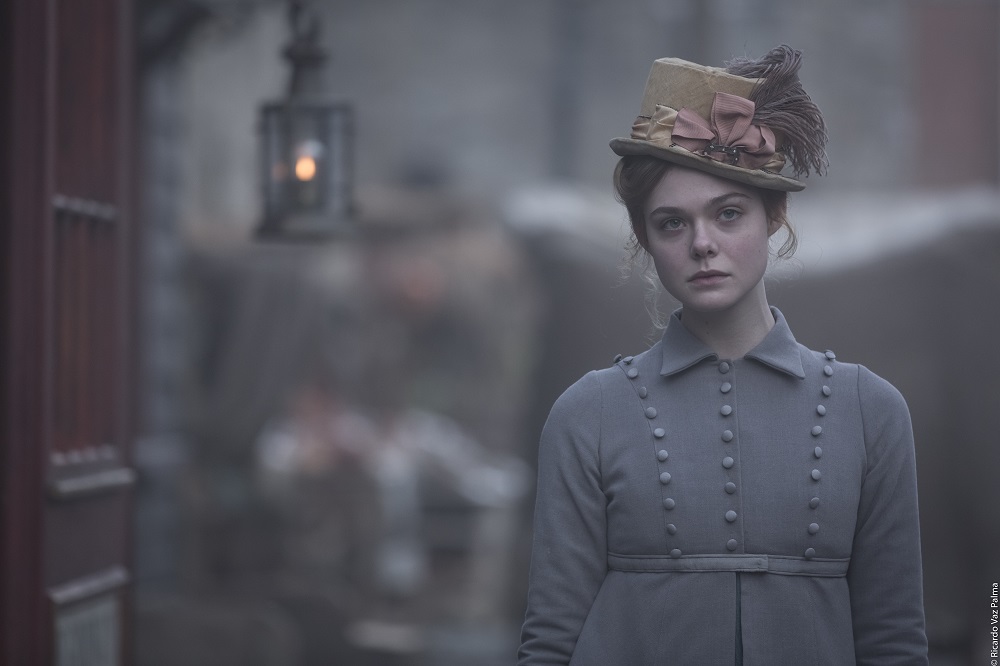
Al-Mansour and Shelley have more in common than it may seem. Shelley was famously married to poet Percy Shelley, with whom she travelled to Lake Geneva, where the story of Frankenstein was born. Al-Mansour is the daughter of poet Abudl Rahman Mansour, who introduced her to the magic of cinema at a young age.
“No matter where you set your film, you always have to connect with the characters. It’s very important for me as a filmmaker to have something in common with the characters that I create on screen. If I don’t, I can’t really portray them or portray their struggles, happiness, or whatever else they go through.,” Mansour said.
“In the beginning, telling the story of Mary Shelley, an English woman, was maybe not easy, but I connected with her journey — trying to find her voice, and trying to have her book published — I felt that story represents me. The character, the struggle, represents me. That is what I discovered. It doesn’t matter where the film is set. If you can unlock the characters, and connect with them, you can make it anywhere in the world,” she continued
American actress Elle Fanning, who plays the lead role in “Mary Shelley,” was impressed with Al-Mansour’s handling of the material.
“In a way she just knows what it feels like to be a young girl, to grow up and go through the hardships that women have,” Fanning told Arab News. “A lot of strong women have lived with this script; it’s very powerful and you can feel that on set which I think is crucial and important in telling Mary’s story.”
Al-Mansour admitted she did not expect to be asked to direct an English-language period drama as her first film after “Wadjda” (“The producers sent it to my agent and I was very surprised,” she said. “It’s a period piece! Set in England!”), but the story of Mary Shelley was one that she was familiar with from when she was at college.
“I was a literature major, so I read “Frankenstein,” and I read about Mary Shelley,” she said. “I did a paper on women authors and she was one of them, but I had forgotten about that. I was just a kid writing for college. But when they sent me the script, it was very interesting. I started reading about her, and reading about her life, and I felt it was a story that needs to be told.”
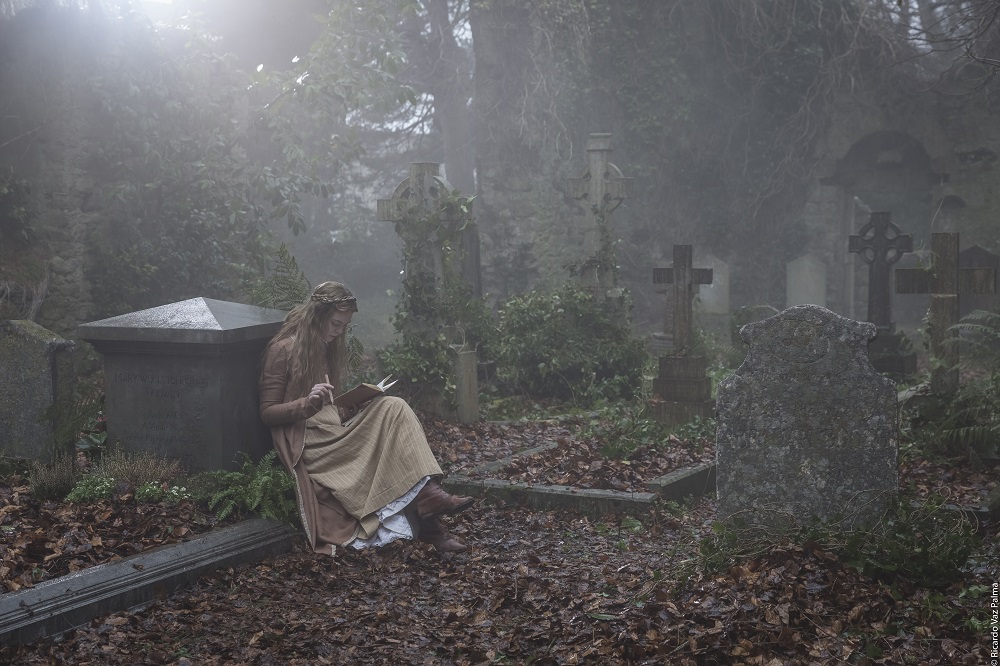
Al-Mansour believes films such as “Mary Shelley” need to exist so that young women can see the effect that they can have on the world, through the example of pioneering women from history.
“It is a legacy. You leave a legacy for women. We need to understand that we are not coming out of nowhere. We have made advancements in science and literature. It’s important to build on those advancements. That is what empowers women to move forward — to see other women doing stuff,” said Al-Mansour.
The filmmaker believes that now is a great time for female directors, pointing out that it is not only Saudi Arabia that is changing — Hollywood, too, is finally embracing the idea of women helming the biggest movie projects.
“I think ‘Wonder Woman’ is amazing,” Al-Mansour said. “It not only conquered the box office, but it has a female star and a female director (Patty Jenkins). I always feel that studios are reluctant to give a $100 million budget for a female star and a woman director. ‘Wonder Woman,’ in a way, succeeded in opening the door for other female filmmakers. Niki Caro is doing “Mulan” for Disney, which is amazing. She’s one of the few female filmmakers doing films above $100 million. That’s never happened before. It’s an exciting time for women.”


