

Monsoon in Bangladesh adds to Rohingya refugees’ plight

1 / 5
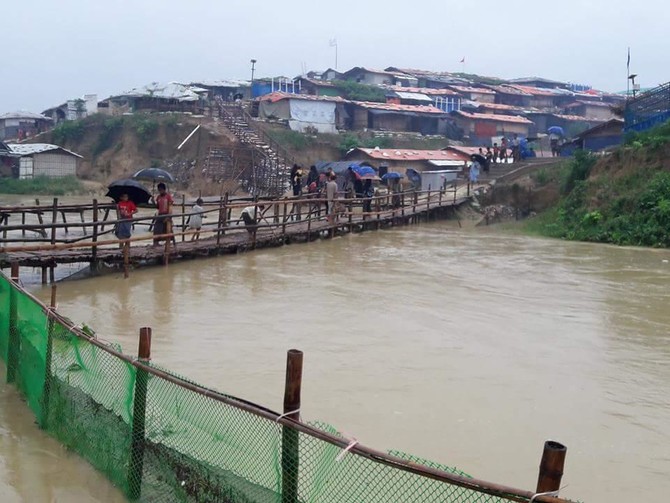
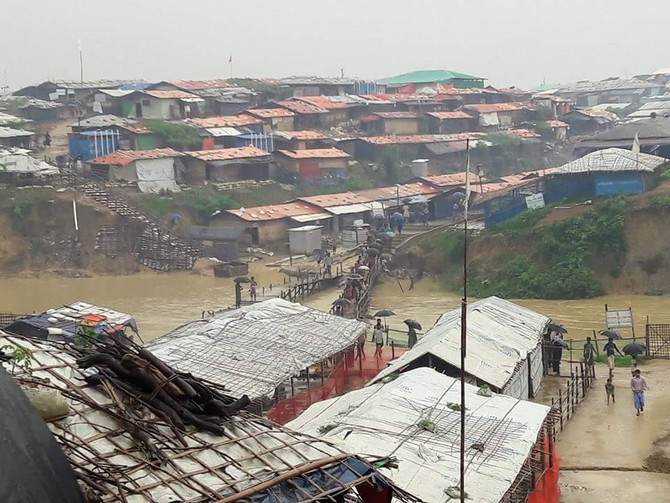
Monsoon rains are disrupting the lives of more than a million Rohingya refugees living in the squalid camps in Cox’s Bazar. (Arab News photos)
2 / 5
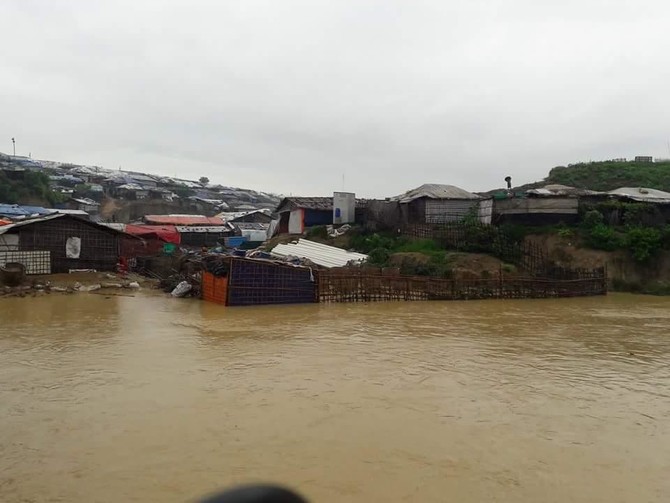
Monsoon rains are disrupting the lives of more than a million Rohingya refugees living in the squalid camps in Cox’s Bazar. (Arab News photos)
3 / 5
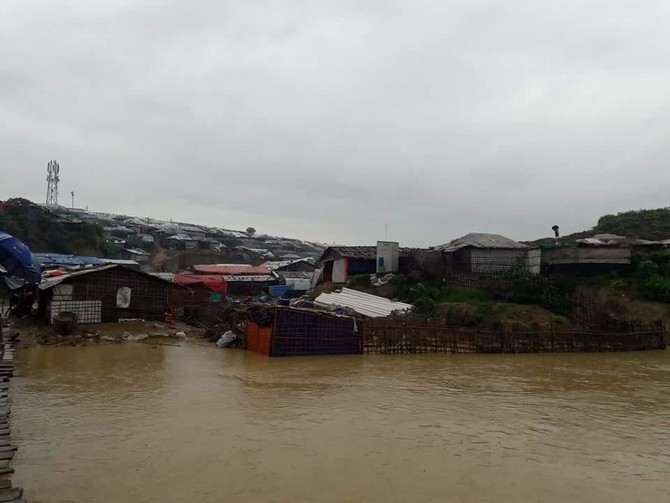
Monsoon rains are disrupting the lives of more than a million Rohingya refugees living in the squalid camps in Cox’s Bazar. (Arab News photos)
4 / 5
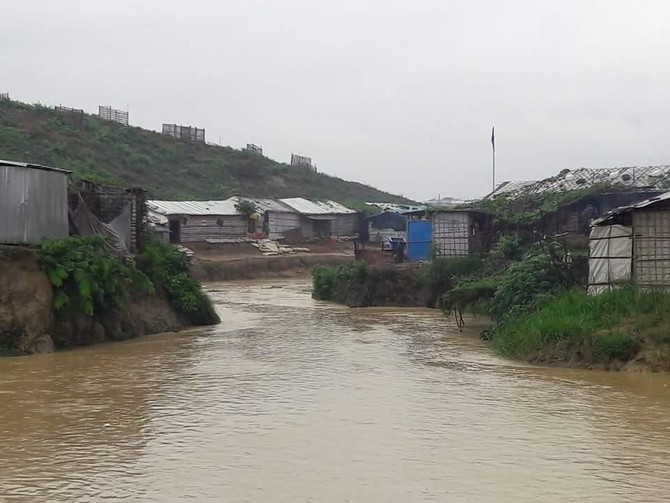
Monsoon rains are disrupting the lives of more than a million Rohingya refugees living in the squalid camps in Cox’s Bazar. (Arab News photos)
5 / 5
Monsoon rains are disrupting the lives of more than a million Rohingya refugees living in the squalid camps in Cox’s Bazar. (Arab News photos)
Updated 25 June 2018
Follow

Monsoon in Bangladesh adds to Rohingya refugees’ plight

  • Bangladesh government has established 40 diarrheal training centers in the refugee camps to deal with the outbreak of diarrhea among the refugees.
  • Authorities in Bangladesh have taken urgent steps to face the emergencies: 169 medical centers equipped with doctors and medical staff are providing treatment to the Rohingyas.

DHAKA: As the monsoon starts showering in the Rohingya refugee camps of Cox’s Bazar, water-borne disease makes a fresh attack on the inhabitants of the congested bases.

According to World Health Organization (WHO) situation update report, last week 873 Rohingya patients were identified with Acute Watery Diarrhea (AWD) — nearly double the average number of AWD patients in recent weeks.

Aid agencies are feared to have more waterborne disease patients in the mid-monsoon.

“My son has suffered from diarrhea for the past two days,” said Morium Begum, a Rohingya refugee living in Balukhali camp, while waiting in the queue for the doctor at a health center. Her three-year-old boy, Ahmed Musa, looks very pale and ailing because of dehydration.

Another girl, Halima Khatun, 6, has suffered from high fever for the past four days.

“I visited the doctor with my daughter in this camp two days ago. They have prescribed Halima some medicines, but her condition has not improved,” said her mother, Khadiza Begum, while visiting an NGO-run health center at Kutupalang camp in Ukhia, Cox’s Bazar.

Authorities in Bangladesh have taken urgent steps to face the emergencies: 169 medical centers equipped with doctors and medical staff are providing treatment to the Rohingyas.

“We are maintaining a very close coordination with all the government and NGO-run medical centers to address any emergency and humanitarian crisis,” says Dr. Abdul Mannan, Upazilla health officer of Ukhia, where most of the refugees now live in makeshift houses.

“We have noticed a significant rise in waterborne diseases during this month of monsoon, which include fever, diarrhea, respiratory problems for the children and older people, skin diseases, and jaundice,” added Mannan.

Describing the situation as “so far under control,” he said emergency response teams were always on “standby mode” with ambulances to carry the distressed Rohingyas to the nearby hospitals.

Anticipating the crisis, the Bangladesh authority has hired another team of 40 doctors to provide emergency treatment. They are also on “standby” and will be deployed on a needs basis in the crucial areas, said Cox’s Bazar district civil surgeon Abdus Salam.

“To deal with the diarrhea patients, we have established 40 diarrhea training centers within the camp areas. In addition, all our paramedic staff are provided with special training on the treatment of diarrhea patients.”

According to the latest situation report of Inter-Sector Coordination Group (ISCG), last week the refugees in Cox’s Bazar district experienced 95mm rain. During this period 116 shelters were damaged by rain and heavy wind.

Although authorities in Bangladesh have relocated 32,000 refugees to a safer place, the ISCG said, there are still around 215,000 refugees living on the hill slopes at great risk of landslides and monsoon floods. Of them, 42,000 are living at “highest risk.” By the end of this month, another 3,500 refugees will be shifted to safer zones, according to the ISCG report.


France investigates two Franco-Israelis for ‘complicity in genocide’

Palestinians look on as trucks carrying humanitarian aid arrive in Khan Yunis in the southern Gaza Strip.
Updated 58 min ago
Follow

France investigates two Franco-Israelis for ‘complicity in genocide’

  • Pair are accused of seeking to block aid trucks entering Gaza between January and November 2024 and in May last year at the Nitzana and Kerem Shalom frontier posts
PARIS: French authorities have issued warrants for two Franco-Israeli nationals for “complicity in genocide” over allegations that they tried to stop humanitarian aid entering conflict stricken Gaza, a legal source said Monday.
According to a lawyer for the NGOs that made a legal complaint last year, it is the first time that a country has considered the blocking of aid as possible “complicity in genocide.”
The warrants were issued in July last year for Nili Kupfer-Naouri of the Israel is Forever group and Rachel Touitou of the Tsav 9 group, the source close to the investigation told AFP following a French media report.
The warrants call for the two to appear before an investigating magistrate but not for their detention.
The pair are accused of seeking to block aid trucks entering Gaza between January and November 2024 and in May last year at the Nitzana and Kerem Shalom frontier posts.
Olivier Pardo, a lawyer for Kupfer-Naouri, said the “pacifist” actions sought to condemn the “hijacking” of humanitarian aid by Hamas and other groups that launched the October 7, 2023 attacks that set off the Gaza war.
“If peacefully demonstrating with an Israeli flag against a terrorist organization seizing humanitarian aid, diverting it, and reselling it at exorbitant prices to Gazans is a crime — then there is no need to look down on the mullahs, France is Iran!” said Touitou, 34, on her social media account.
In an interview with The News website, Kupfer-Naouri, 50, called the French investigation “anti-semitic madness.”
Pardo said Kupfer-Naouri was in Israel but was ready to speak to French investigators there.
The two activists are also suspected of “public provocation for genocide” by calling for aid to be prevented from reaching Gaza, the source said.
Another source close to the investigation said warrants could be issued for about 10 other people.
The complaints were made last year by the Palestinian Center for Human Rights and the rights groups Al-Haq and Al-Mezan. Clemence Bectarte, a lawyer for the groups, said it was the first investigation of its kind in genocide law.
Other legal complaints have also been made in France for “war crimes” over the deaths of Franco-Palestinian children in Gaza in an Israeli bombing raid and against two Franco-Israeli soldiers who took part in operations in the territory.
Another complaint is over the Hamas attack that set off the war.