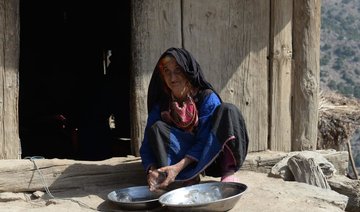
KABUL: The burden of life has made Masooma look twice her age. Her life story in many ways is similar to those of several hundred thousand other Afghan women who have become widows since the latest conflict began here more than 40 years ago.
She lost her husband in a rocket attack 17 years ago in Kabul and since then has been feeding and raising her five children, doing jobs such as cleaning and laundry.
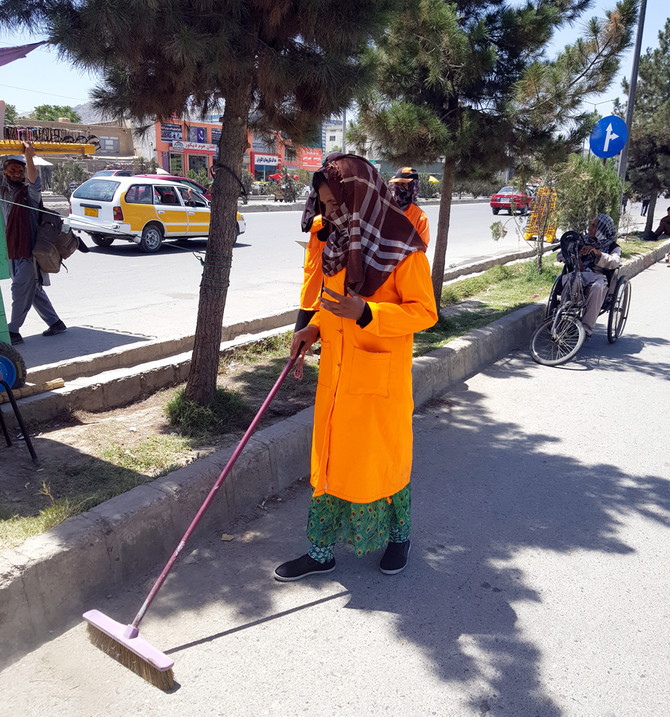
Looking frail and exhausted, Masooma is now part of the army of Kabul’s municipality and cleans roads in the city where the gap between the rich and poor is widening, thanks to the flow of foreign aid that has largely ended up in the pockets of commanders and those with links either to the government or foreign troops, as Masooma laments.
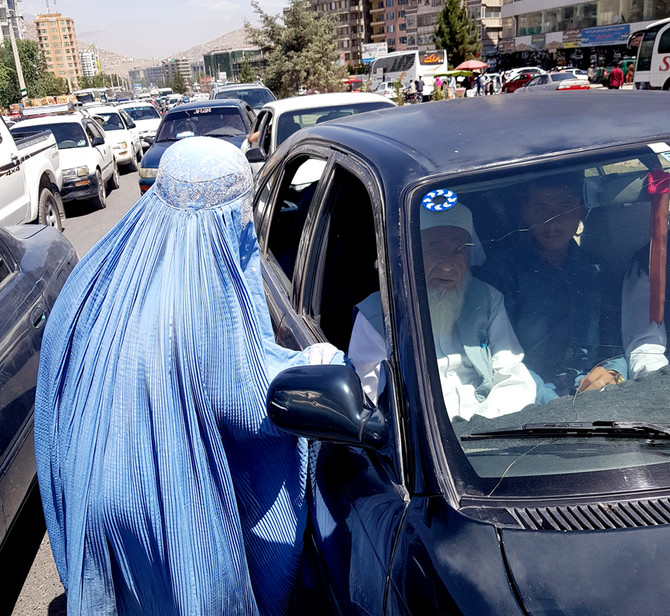
“I hate to beg and am proud of my job. I'm happy to earn a livelihood in a legitimate way,” Masooma told Arab News, sweeping a road and wearing an orange gown and a tight headscarf.
Like the rest of her female colleagues, she cleans the streets by braving the attacks, the rising heat in summer and extreme cold in winter.
Her eldest child is a young man now and he is a bus conductor, helping her to pay the rent for the house and sharing other responsibilities.
But her life has been a long struggle in a male-dominated society where women are perceived largely as owned by their father before becoming their husband’s property and widows are often rejected or regarded as burdens.
“You cannot imagine the hardships I have gone through. It is not easy to raise five children without a father, without money and a house,” Masooma said.
Widows are the most vulnerable people in Afghanistan. They suffer violence, expulsion, ostracism and sometimes forced remarriage, often with a brother-in-law, as reported by the UN Mission in Afghanistan in a study in 2014.
Ferooza, another widow, lost her husband 20 years ago during a clash with the Taliban in northern Baghlan province. She moved to Kabul along with her daughter, Habiba. They have similar jobs to Masooma, with no health or life insurance in a country in the middle of war that relies on foreign aid.
“Life is very tough for widows. It is not easy for women to clean the streets day after day, for months and years, but we do not have an alternative. We are content and feel happy that we are working rather than being a burden on others,” Habiba told Arab News with a mild smile.
According to the Ministry of Labor, Social Affairs, Martyrs and Disabled, there are more than 500,000 widows in Afghanistan, most of them war widows. Of these, 70,000 are breadwinners for their families, the ministry said in recent statistics given to the media last week.
Some 15 kilometers southeast of the capital is the “zanabad,” or city of women, built completely by widows. The first women settled on this stony-slope location outside Kabul in the 1990s, hoping to escape the stigma they are forced to endure.
Today it is known as Afghanistan’s "hill of widows," home to a cluster of women who have eked out independence in a society that shuns them.
Ninety percent of them are illiterate, some even taking care of as many as eight children, Hashratullah Ahmadzai, spokesman for the ministry, told Arab News.
“We are in a state of war. The number of women who become widows is increasing. Those who fight on the government side and those on the side of the Taliban and the miltants have wives and mothers too. People on both sides suffer and women on all sides are affected more than anyone in this war,” Ahmadzai said.
War widows who are registered by the government receive some meagre annual help from the ministry, but that does not meet the need of the victims, he said.
Gul Ghotai, head of the statistics department at the Ministry of Women Affairs, said the government lacks any strategy on creating vocational or short-term jobs for the widows.
“The ministry of women has done nothing on this. The government as a whole has failed to address the widows’ problems because it does not have the capacity. It has not even come up with a plan as to how to tackle the problem,” she told Arab News.