Meet the women who already drive in Saudi Arabia

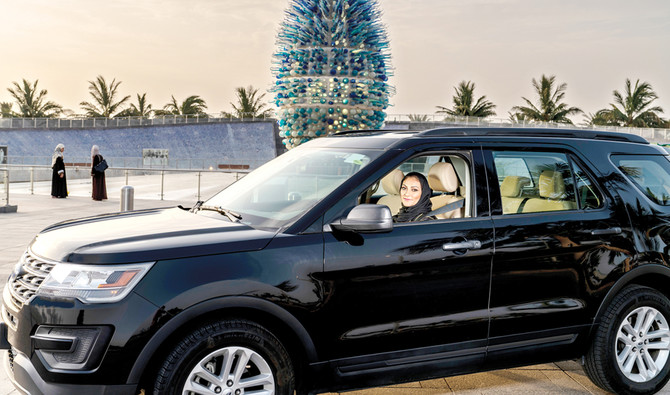
Dr. Aala Abulfaraj, 37, drives at KAUST where traffic rules are very strict and a points-based system is used. (AN photo by Ziyad Alarfaj)
Updated 22 June 2018
Follow

Meet the women who already drive in Saudi Arabia

  • Driving is “one of the new life requirements in Saudi Arabia,” says Dr. Aala Abulfaraj, a research scientist at King Abdullah University of Science and Technology
  • Sara Al-Uraifi, who works in public relations at Aramco in Dhahran, cautions women drivers not to get too excited, saying the Kingdom is not yet ready for women to go on the road.

JEDDAH: Saudi women preparing to drive in the Kingdom for the first time on Sunday might be surprised to learn that some have taken to the road already.

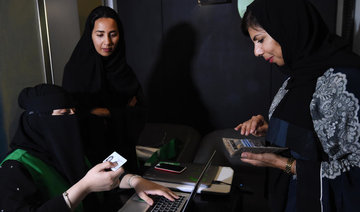
At institutes such as King Abdullah University of Science and Technology (KAUST) and Saudi Aramco, women have been issued driver’s permits by the special zone’s driving school. 

Dr. Aala Abulfaraj, 37, drives at KAUST, where she is a research scientist in molecular biology and immunology, and an assistant professor in King Abdul Aziz University’s bioscience department. 

Abulfaraj said the driving environment at KAUST is similar to that of European countries or the US.

“Everyone has to follow the rules and they are strict — and because most people there are cycling, walking or using golf carts, everyone has to take care, especially children because some kids cycle to school.”

KAUST uses a measuring system for violations, Abulfaraj explained. “The traffic rules are very serious. It’s a points-based system. For example, using your phone while driving is three points. If you don’t stop at the stop sign, it’s eight points. If you reach 19 points, they will take your driver’s license away for three months and you will be prohibited from even cycling.”

Safety is KAUST’s main priority, she said. “A traffic police officer and an officer from the safety department are present during the driving test,” she told Arab News. “The traffic police officer observes; even if you turned correctly, but it’s not safe, they won’t give you the permit.”

Abulfaraj said in the past when a woman’s only role was as a housewife, there was no need to drive. “But the number of employed women has increased significantly and now we’re equal to men in everything. We are independent, we are studying the same subjects as men, getting jobs in the same field — and driving is important.”

Driving is “one of the new life requirements in Saudi Arabia,” she said.

Abulfaraj advised younger women to pay attention to safety and avoid being distracted by the “exciting new opportunity.” 

“Driving is something that the whole world is doing; we were the only ones who weren’t allowed to. I know it’s exciting, but women have to remember that it’s a responsibility. Your life is in your hands.” 

Abulfaraj learned to drive while studying in the US from 2008 till 2011. “It was exciting. I’m a mother of two, so when I’m driving, I get scared because I have my daughters with me.

“Responsibility makes a person more careful,” she said. 

Gehan Saied Al-Abbasi, 50, an Egyptian freelance CAD engineer, also drives at KAUST.

Driving there is “peaceful and safe” with no traffic, crowds or rush hours, and the maximum speed limit is 60 km an hour,” she said.

“In KAUST, all people know their rights. They are fully aware of the driving laws. Everything is well organized. Stop signs are everywhere and crosswalks; security cars and cameras are everywhere.”

The engineer said she is pleased about the new decree allowing women to drive. “It’s a good decision. Women have the right to be independent and strong.”

Female drivers should be encouraged, Al-Abbasi said. “I want to tell them not to panic from any inconvenience in the street and to be confident — you can do it.” 

Al-Abbasi obtained her driver’s license in Egypt and is exchanging her Egyptian license for a Saudi one. 

“I used to drive in Egypt from 1986 until now,” she said. “It was a good experience. I feel independent.” 

Another special institute driver is 28-year-old Saudi Sara Al-Uraifi, who works in public relations at Aramco in Dhahran.

She praises Aramco’s safe driving environment. “Driving there is so peaceful. It is quiet, away from traffic or crazy, loud drivers. Small roads, no highways and low speed,” she told Arab News.

Al-Uraifi said Aramco’s traffic rules are also strict. “Any violation will affect the employee’s evaluation and future career.” 

Driving will empower women, Al-Uraifi said. “It is a start to a new approach in the Kingdom, giving women equal chances and treatment.” 

She advised women to be cautious. “Don’t get too excited and start driving from day one. Take it slowly. The Kingdom is not yet ready for women to go on the road. There are a lot of crazy drivers on the road that don’t follow the rules and their mentality won’t change immediately.” 

Al-Uraifi will exchange her Bahrain license for a Saudi one and plans to drive “at some point.”

“In the beginning I will start driving only in nearby areas, avoiding traffic and peak hours till things get stable,” she said.

Joy Awards 2026 spotlights arts in the Arab world

Updated 18 January 2026
Follow

Joy Awards 2026 spotlights arts in the Arab world

RIYADH: Riyadh hosted its annual Joy Awards, bringing together stars and creative projects from across the Arab world as part of an event that has been held annually since 2022. The 2026 ceremony continued its focus on recognizing storytelling and creative work, while highlighting projects released over the past year.
As audiences anticipated the winners following the release of the nominees, awards were presented across six sectors; music, cinema, series, directors, sports and influencers. In addition to category awards, the ceremony also honored recipients of special accolades including Personality of the Year, Lifetime Achievement, and Joy Honorary awards.
Previous events have recognized Arab and international figures for their contributions to the arts, including Matthew McConaughey, who received the Personality of the Year Award in 2025.
Amid the Kingdom’s expansion of its entertainment sector — spanning film, music and sports — the Joy Awards reflected Riyadh Season’s role in hosting large-scale cultural events.
This year’s fan-favorite nominees, many of whom were Saudi nationals, were cheered on as they walked the Joy Awards’ iconic lavender carpet, where fashion once again took center stage as a key expression of the region’s evolving creative identity.
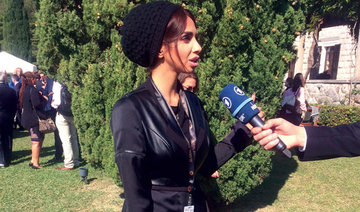
Among winners who took home the Joy Awards was Saudi 14 year old Rateel Alshehri, who won Favorite Female Influencer. Speaking to Arab News on the lavender carpet, Rateel shared her excitement towards Joy Awards:
“I’m so excited about being at Joy Awards today, it’s something I’ve been looking forward to (…) Everyone here deserves to be here.” On her beautiful sky-blue gown, Rateel shared that she was wearing Saudi designer, Adnan Akbar.
Rateel’s excitement towards the awards was echoed by both Arab and non-Arab guests on the lavender carpet as many took in the unique atmosphere that Riyadh offers Joy Awards; where Arab entertainment and art is celebrated.
Lebanese actress Laila Abdullah also shared her enthusiasm towards both the award show and the Kingdom’s ambitions in hosting the Joy Awards and creating a hub for creative voices.
Speaking to Arab News she emphasized Saudi’s unique qualities: “It’s this mix of culture and luxury (…) It has that Gulf Arab character, the Saudi touch, you know? And that’s what really makes it stand out” Joy Awards was filled with a bustling energy that was eager and excited to give a platform to dreamers, artists, and talents who have been waiting to showcase their visions within the Arab world. It was a celebration that went beyond mere award-giving, reflecting the same ambition and creative momentum that defines Riyadh Season.
The lavender carpet paved way for international guests to speak to Saudi media on how it feels to be a part of an artistic celebration of Arab talent. Speaking to Arab News, Australian actor Luke Arnold shared his excitement towards attending the Joy Awards: “What I’m most excited about is kind of what I love about film and television, which is people from all over the world coming together to tell stories and share their expertise (…) It’s really exciting hearing about some of the potential projects happening, meeting some of the local talent here…just really excited to have more stories out in the world.”
Speaking to Arab News, Lebanese fashion influencer Karen Wazen reiterated the sentiment on Riyadh giving Joy Awards a special and unique energy for the arts, saying: “I am so impressed, I’m so proud to be at an event like this in our region, in Saudi Arabia. This is probably the most impressive and big carpet that I’ve ever seen (…) I’m very excited to watch the ceremony, but also I think to just meet so many people from our industries, it’s a beautiful place to do so.”
That vibrant atmosphere was on full display at the Joy Awards as the ceremony continued with stars like Millie Bobby Brown winning the Personality of the Year Award and the Lifetime Achievement Honor presented to acting legend Forest Whitaker. The stardom was not limited to the film sector, as American pop star Katy Perry performed her iconic songs live; and British singer Robbie Williams took to stage to give a standout performance.
The Joy Awards 2026 once again proved that setting new benchmarks in entertainment and creative expression is not only achievable, but celebrated when driven by local talent and support. As stars from around the world took to Riyadh’s lavender carpet, Arab culture was placed firmly at the forefront — spanning film, music, and digital creativity. The Joy Awards stand as a symbol of the broader cultural transformation that Riyadh is championing across the Arab world’s entertainment industry.