

Saudi-led Arab coalition condemns Houthi threats to civilians, relief workers in Yemen

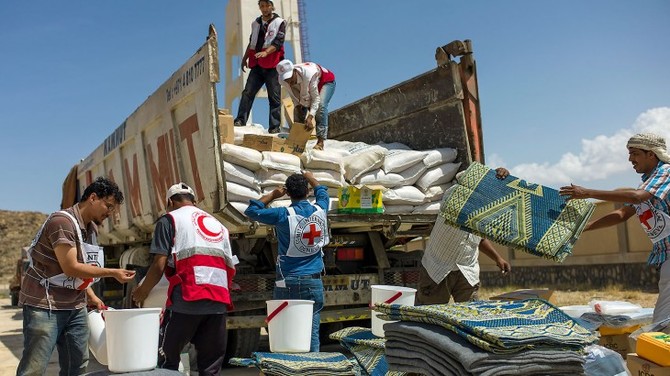
The ICRC pulled 71 international staff out of Yemen because of security incidents and threats, and moved them to Djibouti. (Photo courtesy: ICRC)
Updated 08 June 2018
Follow

Saudi-led Arab coalition condemns Houthi threats to civilians, relief workers in Yemen

  • The ICRC pulled 71 international staff out of Yemen because of security incidents and threats, and moved them to Djibouti
  • The leadership of the coalition reiterated its commitment to facilitate the work of humanitarian aid workers from international organizations in areas under the control of the Yemeni government

DUBAI: The Saudi-led Arab coalition on Friday condemned Houthi threats to civilians and aid workers in Yemen, following the International Committee of the Red Cross (ICRC) statement to withdraw its relief and humanitarian workers from the country.

The ICRC said on Thursday it had pulled 71 international staff out of Yemen because of security incidents and threats, and moved them to Djibouti.

In response, the leadership of the coalition reiterated its commitment to facilitate the work of humanitarian aid workers from international organizations in areas under the control of the Yemeni government, as well as those under the control of the Iran-backed Houthi militia, the Saudi Press Agency reported.

The coalition is keen to provide the necessary protection and ensure the safety for the staff of international organizations undertaking humanitarian work in Yemen, coalition spokesperson Colonel Turki Al-Maliki said, so they can respond to the needs of the Yemeni people safely and freely.

He stated that those who break international law and threaten the lives of humanitarian workers should be held responsible and face legal action.

The colonel said that the coalition, that backs the internationally recognized government of President Abdrabbuh Mansur Hadi, continues to apply the highest standard of protection for civilians and international humanitarian organizations.

The coalition ensures their safety and security and facilitates their freedom of movement without any restrictions or constraints as applicable to international humanitarian law, Al-Maliki added.


GCC states ‘face reliance on Saudi Arabia for food imports’

Updated 06 March 2026
Follow

GCC states ‘face reliance on Saudi Arabia for food imports’

  • With 70 percent of food coming through Strait of Hormuz, analysts warn of inevitable shortages

DUBAI: Some Gulf states may have to rely on overland food deliveries from Saudi Arabia if the US-Israel-Iran war continues to disrupt shipping through the Strait of Hormuz and restrict regional airspace, analysts warned on Thursday.
The region is up to 90 percent dependent on food imports, and price surges and scarcity of some goods are expected.
“With over 70 percent of GCC foodstuffs being imported through the Strait of Hormuz, Gulf states face shortages if the war persists,” said Neil ​Quilliam of the Chatham House think tank. 
“While GCC countries have taken steps to diversify suppliers and ensure sufficient stores to withstand disruption, this can only last several months. At this point, price increases ​and longer lead times will start to hit the markets.”
Commodities analyst Ishan Bhanu said: “The biggest immediate effect will be due to the blockade of Jebel Ali in Dubai, serving about 50 million people. Qatar, Kuwait, Bahrain and Iraq effectively become landlocked and will depend on overland routes through Saudi Arabia.”
Bottlenecks are yet to show and the UAE has said its strategic reserves of vital goods cover four to six months of needs. It urged residents to report unjustified price increases through a dedicated hotline.
Supermarket staff ​throughout the Gulf said shelves remain largely stocked, though suppliers are taking longer to replenish certain products. Iran’s strikes on the Gulf since Saturday prompted panic buying in supermarkets, a dry run for what could come. 
“Perception of risk matters, and even if stocks are sufficient now, public runs on supermarkets can spook the public,” Quilliam said.