ISTANBUL: Ennam Alshayib wakes up every morning, grateful for her new life and renewed purpose. But memories of the last four years she has spent on the run from war-torn Syria still haunt her.
First there was the arduous journey she took from Damascus with her family in tow, followed by their arrival in Egypt, desperate and tired. Then they went on to Dubai, before eventually reaching their new home in Turkey.
After a difficult start to her time here, the turning point came when she spotted a Facebook post from a US government-funded project for refugees in Turkey called LIFE — Livelihoods Innovation through Food Entrepreneurship.
She immediately applied to take part and was soon sitting in the LIFE office, inside a cozy four-story building in the middle of the main industrial zone of Istanbul.
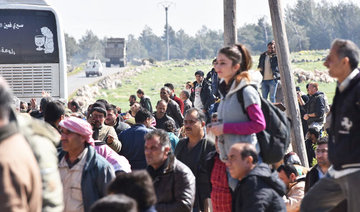
An estimated 3.5 million Syrian refugees live in Turkey after seven long years of civil war in their own country. Many of them find it difficult to find regular employment, begging on the streets of Istanbul or living in squalid refugee camps.
LIFE, which was launched last September, aims to change that. It was started by a consortium of Turkish, Syrian and American partners who wanted to support refugees to earn a living through starting up restaurants and food businesses.
The two-year project is targeted at refugees in Gaziantep, near Turkey’s southern border with Syria, and Istanbul, with the goal of giving them greater independence and helping them integrate into Turkish society.
The project is to have a total of 1,240 direct beneficiaries, 75 percent of them Syrians, and at least half of them women.
Participants are trained in various fields ranging from food marketing and hygiene, to e-commerce and packaging.
At the end of the program, they publish their own cookbooks with recipes for Turkish, Syrian and other Middle Eastern dishes, as well as stories about the origins of each dish. Participants come from varying backgrounds, bringing with them different skills and experiences.
“I graduated from university with a degree in pre-school education,” Alshayib told Arab News. “But I have always found the food industry attractive and have experience cooking for big events at the company my husband was working for in Damascus.”
Before joining the LIFE program, Alshayib was selling traditional Syrian foods, such as hummus and falafel, at the Grand Bazaar in Istanbul. She hopes to set up her own Syrian restaurant in Turkey after graduating from the program.
Another participant, 48-year-old Jordanian Rabeia Alsheshany, also dreams of running her own business.
“I’m now in the middle of Europe and it’s become my home country. My daughter studies at university here and I would prefer to stay here for the rest of my life,” she said.
Each trainee is assigned a mentor. The program culminates in a competition during which the trainees will pitch their business plans to a panel of judges. The two most innovative will be chosen to receive financial support.
Ali Ercan Ozgur, is president of International Development Management, a Turkish civil society organization and one of the sponsors of LIFE.
“The most important role of this project will be to support the skills that will help (refugees) have a sustainable livelihood,” he said. He described food as a “common language” that can help unite the people of Turkey and Syria.