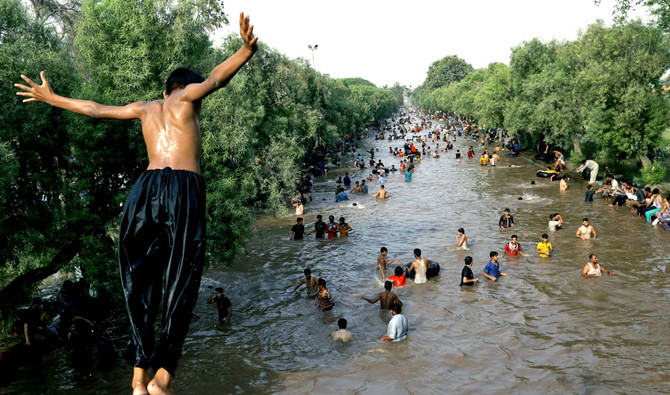
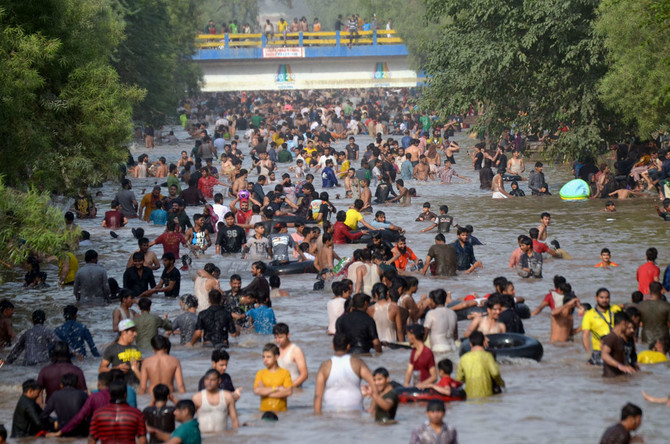
LAHORE: A border between the two classes — Haves and Have-Nots — the city canal is a center of attraction for the lower-middle-class families to beat the heat of the scorching sun in the month of Ramadan as hundreds throng here to cool their fast.
Lahore’s canal, virtually in the center of the city, serves as a demarcation line between affluent areas and the rest. Upmarket areas have farmhouses, swimming pools, centrally air-conditioned halls. There are meeting points where the upper middle and elite classes meet while away their time waiting for breaking the fast moment.
But the lower middle classes have only one source to fetch the body mercury to lower side — the canal.
Several hundreds of people visit the canal to beat the heat where the trees are a natural substitute for beach umbrellas and sun awnings, shielding bodies from the fierce heat of the sun.
These families count themselves lucky to have the canal so close to their homes and are drawn to its cooler banks and hang out there during their fasting hours.
“I am lucky I live nearby, only half a kilometer from this point. I cannot afford air conditioning. We are fasting in the holy month of Ramadan and count the canal water as a blessing for us. My family spends the hottest hours of the day on the canal bank,” said mother of three Inayat Begum, interviewed standing in the water of the canal.
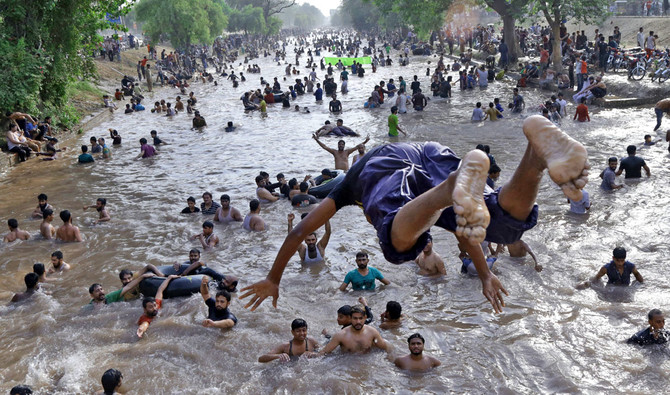
This canal also attracts hundreds of young people every day who use it as a swimming and jumping pool.
“It is really a good place to enjoy if you are fasting. Dip in the water, cool your body and also have fun,” Ali Noor, a boy in his teens told the Arab News.
Those who use the canal as a swimming pool do so against medical advice, however, as the waters can cause disease.
“The water of the canal is not clean as many people throw their waste in it and it contaminates the water. Taking a bath here can cause skin allergies and people should avoid it. Many families dip their young babies in the water and that is very harmful,” said Dr. Arif Mehmud of Mayo Hospital.
But while the District Administration has banned bathing in the canal, law enforcing agencies take a lenient view due to Ramadan.
“It is very hot and poor people spend their noon here. They beat the heat by swimming in canal water. They are fasting and we do not take action against them except issuing them with warnings,” a member of the Dolphins, the newly formed police squad to fight street crime in Punjab province, said while patrolling the canal side.


![]()
![]()
![]()
![]()
![]()
![]()
![]()

Lahorites beat the heat on ‘canal beach’



Lahorites beat the heat on ‘canal beach’
- Lahore canal is a border between the two classes — Haves and Have-Nots
- Doctor warns against dipping young babies in the harmful canal water


Latest updates


Recommended


© 2026 SAUDI RESEARCH & PUBLISHING COMPANY, All Rights Reserved And subject to Terms of Use Agreement.