

Grow your own dinner with these six heat-beating garden veggies

1 / 4
Peppers are wonderfully heat resistant. (Shutterstock)
2 / 4
3 / 4
4 / 4
Updated 03 June 2018
Follow

Grow your own dinner with these six heat-beating garden veggies

  • As the Gulf's temperatures soar, you could be surprised to learn you can still grow your own food
  • Jump on the grow-your-own bandwagon and beat the heat with these hardy vegetables

DUBAI: As the international trend of growing your own vegetables heats up, as do the summer temperatures in the Gulf. However, if you wish to cut costs by feeding your family organically grown veggies, fear not for you too can jump on the grow-your-own bandwagon and beat the heat with these hardy options.

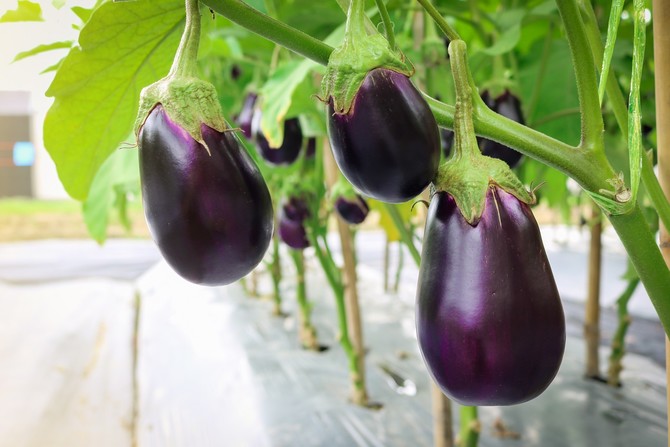
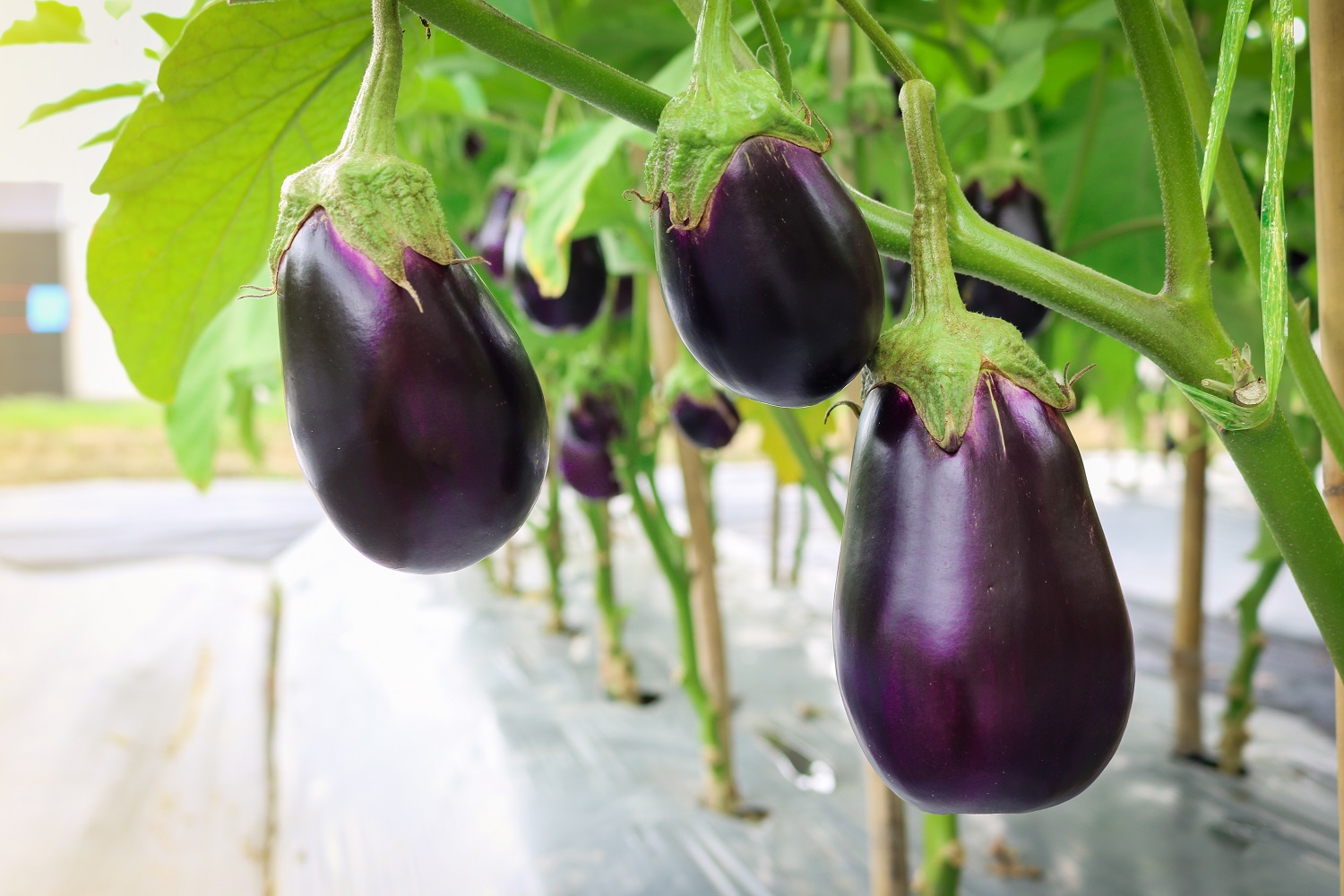
Eggplants

Eggplants will grow well when planted through June and are best adapted to high heat in a not-too-foggy environment. They do, however, need a significant amount of nitrogen so you will have to use additional fertilizer and ensure the seedlings get plenty of sun. If you’re short on space, try planting the seedlings alongside tomatoes, which also do well in sunny, hot environments.
Beans

An amazing and healthy variety of beans can be produced all summer long, making for the perfect addition to salads or side dishes. The long list includes pinto, kidney and cannellini beans, snap beans or string beans and green beans, soybeans, edamame, asparagus and yard-long beans.

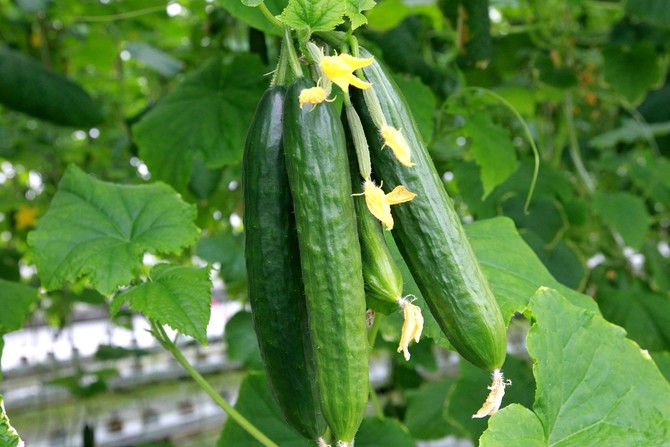
Cucumbers and sweet corn

Corn is one of the best companion plants for cucumber. The tall stalks of sunflowers help shade cucumber plants in the hot summer sun and both can be grown in June, making for a great two-in-one option if you are short on space.

Peppers

Make sure you plant your peppers in a bed that receives sunlight all day long. The soil should be well-drained and the peppers should be planted a minimum of 30 centimeters apart. Most sweet peppers mature in 60-90 days, while hot peppers can take up to 150 days to mature.

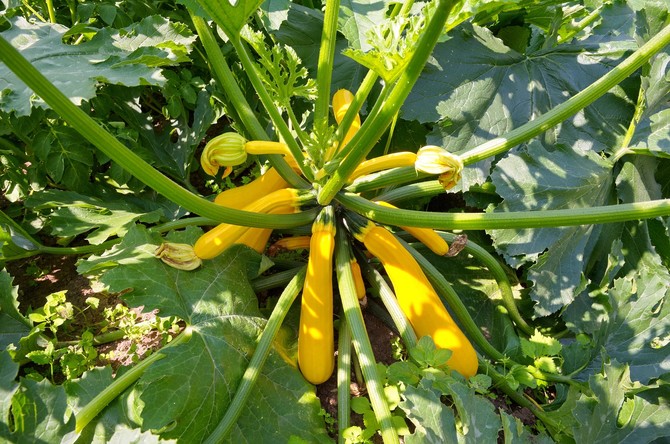
Pumpkins and squash

These hearty soup, stew and side dish options are ideal for soaring summer temperatures, especially if you go for Moschata-type summer squashes that need nighttime temperatures of more than 15 degrees Celsius to grow well (that’s a breeze in our corner of the world).

Okra

The drought-tolerant vegetable will grow well alongside melons, cucumbers, sweet peppers or eggplant, but make sure to go for heirloom varieties of okra with deeper root systems. The far-reaching roots allow the vegetables to boast improved drought and heat tolerance qualities.


Cairo book fair breaks visitor records

Updated 03 February 2026
Follow

Cairo book fair breaks visitor records

  • Strong Saudi participation underscores KSA’s prominent role in Arab cultural landscape
  • Egyptian writer Naguib Mahfouz, who was awarded the Nobel Prize in Literature in 1988, was selected as the fair’s featured personality

CAIRO: The 57th edition of the Cairo International Book Fair has attracted record public attendance, with the number of visits reaching nearly 6 million, up from a reported 5.5 million previously.

Egypt’s Minister of Culture Ahmed Fouad Hanou said: “This strong turnout reflects the public’s eagerness across all age groups to engage with the exhibition’s diverse cultural and intellectual offerings.”

Hanou said the event included “literary and intellectual activities, meetings with thinkers and creative figures, and thousands of titles spanning various fields of knowledge.”

The Egyptian writer Naguib Mahfouz, who was awarded the Nobel Prize in Literature in 1988, was selected as the fair’s featured personality, coinciding with the 20th anniversary of his death.

The exhibition’s official poster features a famous quote by Mahfouz: “Who stops reading for an hour falls centuries behind.”

A total of 1,457 publishing houses from 83 countries participated in the fair. Mahfouz’s novels occupied a special place, as Egypt’s Diwan Library showcased the author’s complete works, about 54 books.

“The pavilion of the Egyptian National Library and Archives witnessed exceptionally high attendance throughout the fair, showcasing a collection of rare and significant books.

Among the highlights was the book “Mosques of Egypt” in Arabic and English, Dr. Sherif Saleh, head of financial and administrative affairs at the Egyptian National Library and Archives, told Arab News.

The fair ended on Tuesday with a closing ceremony that featured a cultural performance titled “Here is Cairo.”

The event included the announcement of the winners of the fair’s awards, as well as the recipient of the Naguib Mahfouz Award for Arabic Fiction.

Organizers described this year’s edition as having a celebratory and cultural character, bringing together literature, art, and cinema.

Romania was the guest of honor this year, coinciding with the 120th anniversary of Egyptian-Romanian relations.

At the Saudi pavilion, visitors were welcomed with traditional coffee. It showcased diverse aspects of Saudi culture, offering a rich experience of the Kingdom’s heritage and creativity.

There was significant participation from Saudi Arabia at the event, highlighting the Kingdom’s prominent role in the Arab cultural arena.

Saudi Arabia’s participation aimed to showcase its literary and intellectual output, in alignment with the objectives of Vision 2030.

The Kingdom’s delegation was led by Saudi Arabia’s Ambassador to Egypt Saleh bin Eid Al-Hussaini. Also in attendance were Dr. Abdul Latif Abdulaziz Al-Wasel, CEO of the Literature, Publishing and Translation Commission, and Dr. Hilah Al-Khalaf, the commission’s director-general.

The King Abdulaziz Public Library placed the Encyclopedia of Saudi Arabia in a prominent position at the pavilion. The encyclopedia, consisting of 20 volumes, is organized according to the Kingdom’s culturally diverse regions.

Founded in 1980 by King Abdullah, the library was established to facilitate access to knowledge and preserve heritage collections. Over the years, it has grown into one of the Kingdom’s most important cultural institutions.

Internationally, the library has strengthened ties between Saudi Arabia and China, including the opening of a branch at Peking University and receiving the Crown Prince Mohammed bin Salman Award for Cultural Cooperation between the two nations.

Regionally, the library has played a pivotal role in the Arab world through the creation of the Unified Arabic Cataloging Project, one of the most important initiatives contributing to knowledge accessibility and alignment with global standards.
