DUBAI: For many, the 1948 Palestinian mass exodus, more commonly known in the region as the Nakba, is only known from the heart-wrenching tales that parents and grandparents pass down to their children.
Now, 70 years after more than 700,000 Palestinians were forced to flee from their homes and villages, the third generation since the Nakba still struggles with national identity and where to call home.
“I never say I’m just Palestinian because I have never lived there,” Tamara Yassin, 25, told Arab News. “My ties to it are just my grandparents. My mom was born in 1967 and that is when they left Palestine. I know my roots are Palestinians, but the UAE raised me.” Yassin’s grandparents are originally from Jaffa but had to migrate to Gaza before leaving Palestine for the UAE.
“Life just turned out that way and it’s a place I’ve visited for a couple of weeks when I was 16… I know the history. I know my grandparents’ stories, but three places are part of me growing up and they’re the UAE, the USA and Palestine,” said Yassin, who now lives in UAE-emirate of Sharjah.
After the Nakba, Palestinians were dispersed all across the globe, seeking refuge and another place to temporarily call home. Families were formed and children were born outside the country their parents grew up in, so differing ideologies often clashed.
“I’m a Palestinian who grew up in Saudi Arabia,” said 28-year old Dania Husseini, whose family hails from Jerusalem. “I guess I’m one of those who have an identity crisis. I don’t fit into the typical Palestinian culture or the Saudi or the Western, really. I have a mentality of my own that developed after living in all the environments I lived in and met the people that were part of them.”
Yazan Samir Al-Khatib, whose family moved from Nablus to Puerto Rico during the exodus, said: “I cannot deny the fact that my thoughts and ideologies have been heavily influenced by Puerto Rico as well as the United States. I have a profound love for the Latin culture and somewhat a sense of belonging to the American civilization.”
While most third generation Palestinians have never lived in Palestine, some still feel a strong sense of belonging to the land that was stripped away from their parents and grandparents – one that will never fade.
“I would, without fail, travel to Palestine (West Bank) every summer and it was there that I felt most at home. I would go to school in Puerto Rico and later the US in anxious anticipation for the summer to come along so I can finally board a plane to Amman, cross the Jordan-Israeli border and take a taxi to my beloved Lubban,” Al-Khatib said.
While many have a sense of belonging like Al-Khatib, some believe that it’s where they grew up, and not where they hail from, that forms who they are and where they’re from. “When anyone asks me, I say I’m Jordanian,” said Rand Fermawi, whose family moved to Amman from Jaffa. “I grew up there and so did my parents. I know a lot of die-hard Palestinians who are like that because their parents made sure to let them know what their ancestors went through, but other parents chose not to do that,” Fermawi said.


![]()

Third-generation Palestinians look to their roots
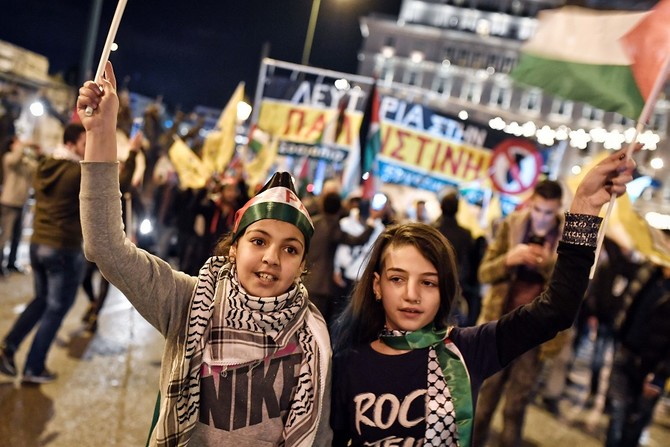
Third-generation Palestinians look to their roots
- Now, 70 years after more than 700,000 Palestinians were forced to flee from their homes and villages, the third generation still struggles with national identity and where to call home
- While most third generation Palestinians have never lived in Palestine, some still feel a strong sense of belonging to the land that was stripped away from their parents and grandparents


Latest updates


Recommended


© 2026 SAUDI RESEARCH & PUBLISHING COMPANY, All Rights Reserved And subject to Terms of Use Agreement.