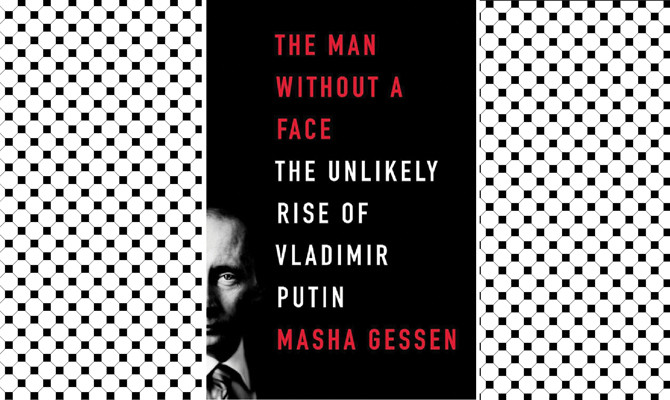
What We Are Reading Today: The Man Without a Face: The Unlikely Rise of Vladimir Putin

Updated 08 May 2018
Follow

What We Are Reading Today: The Man Without a Face: The Unlikely Rise of Vladimir Putin

The swearing-in of Vladimir Putin for his fourth term as president of Russia was not a scenario envisaged in 1999 when his only administrative experience was as deputy mayor of St. Petersburg.

But for the oligarchy bent on molding Russia’s political figure to its own designs, he was perfect. Suddenly the boy who had scrapped his way through post-war Leningrad schoolyards, dreaming of ruling the world, was a public figure, and his popularity soared.

But he was not the progressive Russia an infatuated West thought they were getting. With ruthless efficiency Putin dismantled the country’s media, wrested control and wealth from the country’s burgeoning business class, and decimated the fragile mechanisms of democracy.

Within a few brief years, virtually every obstacle to his unbridled control was removed and every opposing voice silenced, with political rivals and critics driven into exile or the grave.

As a journalist living in Moscow, Masha Gessen experienced this history firsthand. 

Drawing on previously untapped information and sources, her horrifying and spellbinding account of how this “faceless” man maneuvered his way into absolute — and absolutely corrupt — power will stand as a classic of narrative non-fiction.


What We Are Reading Today: Shame: The Politics and Power of an Emotion

Updated 23 December 2025
Follow

What We Are Reading Today: Shame: The Politics and Power of an Emotion

Author: David Keen

Today, we are caught in a shame spiral—a vortex of mutual shaming that pervades everything from politics to social media. We are shamed for our looks, our culture, our ethnicity, our sexuality, our poverty, our wrongdoings, our politics. But what is the point of all this shaming and countershaming? Does it work? And if so, for whom?

In Shame, David Keen explores the function of modern shaming, paying particular attention to how shame is instrumentalized and weaponized. Keen points out that there is usually someone who offers an escape from shame—and that many of those who make this offer have been piling on shame in the first place. Self-interested manipulations of shame, Keen argues, are central to understanding phenomena as wide-ranging as consumerism, violent crime, populist politics, and even war and genocide. Shame is political as well as personal. To break out of our current cycle of shame and shaming, and to understand the harm that shame can do, we must recognize the ways that shame is being made to serve political and economic purposes.

Keen also traces the rise of leaders on both sides of the Atlantic who possess a dangerous shamelessness, and he asks how shame and shamelessness can both be damaging.