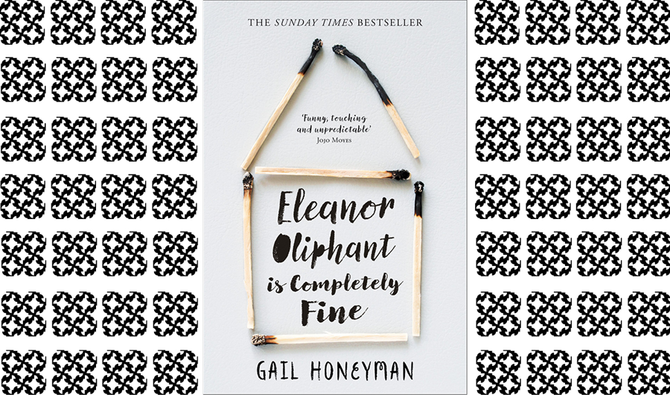
What We Are Reading Today: Eleanor Oliphant is Completely Fine

Updated 04 May 2018
Follow

What We Are Reading Today: Eleanor Oliphant is Completely Fine

Soon to be a major motion picture produced by US actress Reese Witherspoon, this novel tells the story of a hard-working, if rather eccentric, office manager who has always lived her life being just “fine.”

The novel’s protagonist, Eleanor Oliphant, thinks there is nothing amiss in her carefully timetabled life of avoiding social interactions, where weekends are punctuated by frozen pizza, vodka, and phone chats with “Mummy.”

In this charming debut novel, Gail Honeyman draws us into Eleanor’s meticulously structured world until we see that it is the protagonist’s difficult childhood that is driving her clockwork routines. 

But everything changes when Eleanor meets Raymond, a geeky IT guy from her office. When she and Raymond save an elderly gentleman who has fallen on the sidewalk, the three become the kind of friends who rescue one another from the lives of isolation they have each been living.

This is an uplifting story about a quirky heroine whose deadpan weirdness and lovability make for an entertaining journey, as Eleanor realizes the only way to really live is to connect — with herself and others.



What We Are Reading Today: Long Problems

Photo/Supplied
Updated 06 March 2026
Follow

What We Are Reading Today: Long Problems

  • In this pathbreaking book, Thomas Hale examines the politics of climate change and other “long problems”

Author: Thomas Hale

Climate change and its consequences unfold over many generations. Past emissions affect our climate today, just as our actions shape the climate of tomorrow, while the effects of global warming will last thousands of years.

Yet the priorities of the present dominate our climate policy and the politics surrounding it. Even the social science that attempts to frame the problem does not theorize time effectively. In this pathbreaking book, Thomas Hale examines the politics of climate change and other “long problems.”

He shows why we find it hard to act before a problem’s effects are felt, why our future interests carry little weight in current debates, and why our institutions struggle to balance durability and adaptability.