

Vote-rigging claims mar Hezbollah win in Lebanese election

1 / 2
2 / 2
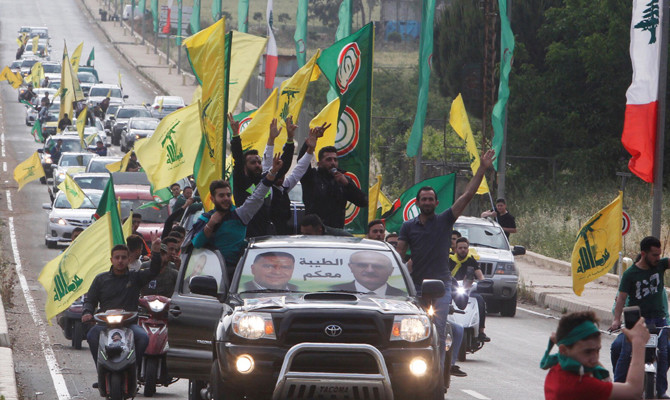
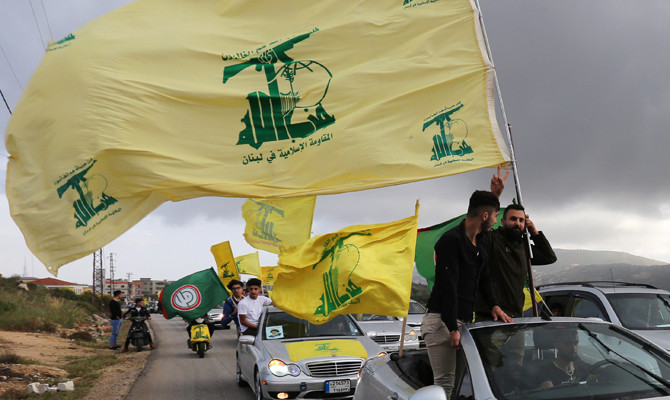
Hezbollah partisans celebrate in Marjayoun, Lebanon, on May 7, 2018 after performing well in the nation’s elections. (REUTERS/Aziz Taher)
Updated 26 June 2018
Follow

Vote-rigging claims mar Hezbollah win in Lebanese election

  • Hezbollah and its allies won more than half the seats in Parliament in a result that the the Iran-backed militant group’s leader Hassan Nasrallah called a “political and moral victory.”
  • The Future Movement of Prime Minister Saad Hariri lost a third of its seats, the outcome of years of erosion to his March 14 coalition.

BEIRUT: Claims on Monday of vote-rigging tarnished a powerful showing by Hezbollah in Lebanon’s first election in nine years. 

Protesters gathered outside the Interior Ministry in Beirut alleging that Joumana Haddad, a novelist and candidate with the independent Kulna Watani list, had been robbed of a seat.

“The people in power didn’t like this result, so they proceeded with rigging the result at the last minute,” said Lucian Bourjeily, another Watani candidate.

Nevertheless, Hezbollah and its allies won more than half the seats in Parliament in a result that the the Iran-backed militant group’s leader Hassan Nasrallah called a “political and moral victory.” After his speech his supporters rampaged through parts of Beirut, flying their yellow flags.

The Future Movement of Prime Minister Saad Hariri lost a third of its seats, the outcome of years of erosion to his March 14 coalition.

The election also saw a return to Parliament of figures linked to the Syrian regime of Bashar Assad. Syrian forces occupied Lebanon for decades but retreated amid a backlash after the assassination of Hariri’s father, Rafiq, in 2005.

Syria’s political influence in Lebanon had waned but with Assad’s position now more secure, many fear the results now show Damascus’ influence rising again. 


An image showing a Hezbollah flag attached to the statue of Rafiq Hariri sparked outrage on social media. Turnout was poor. Interior Minister Nouhad Machnouk put the national vote at 49 percent, compared with 54 percent in 2009. In Beirut, the turnout was between 32 percent and 42 percent.

Hariri blamed the new electoral system based on proportional representation and a performance “that wasn’t up to the standard.” 

He will still have the largest Sunni bloc in Parliament, meaning he should return as prime minister. 

“My hand is extended to every Lebanese person who participated in the elections to preserve stability and create jobs,” Hariri said.

He said he would continue to work closely with President Michel Aoun, who is allied with the rival, Hezbollah-led bloc.


Iran offers concessions on nuclear program

Updated 10 February 2026
Follow

Iran offers concessions on nuclear program

  • Atomic energy chief says it will dilute enriched uranium if US eases sanctions

TEHRAN: Iran offered on Monday to dilute its highly enriched uranium if the US lifts sanctions.

Mohammad Eslami, head of the country’s Atomic Energy Organization, did not specify whether this included all sanctions on Iran or only those imposed by the US.

The new move follows talks on the issue in Oman last week that both sides described as positive and constructive.

Diluting uranium means mixing it with blend material to reduce the enrichment level, so that the final product does not exceed a given enrichment threshold.
Before US and Israeli strikes on its nuclear facilities in June last year, Iran had been enriching uranium to 60 percent, far exceeding the 3.67 percent limit allowed under the now-defunct nuclear agreement with world powers in 2015.
According to the UN’s nuclear watchdog, Iran is the only state without nuclear weapons that is enriching uranium to 60 percent.
The whereabouts of more than 400 kg of highly enriched uranium that Iran possessed before the war is also unknown. UN inspectors last recorded its location on June 10. Such a stockpile could allow Iran to build more than nine nuclear bombs if enrichment reached 90 percent.
Supreme leader Ayatollah Ali Khamenei urged Iranians on Monday to resist foreign pressure.
“National power is less about missiles and aircraft and more about the will and resolve of the people,” Khamenei said. “Show it again and frustrate the enemy.”
Nevertheless, despite this defiance, Iran has signaled it could come to some kind of deal to dial back its nuclear program and avoid further conflict with Washington.