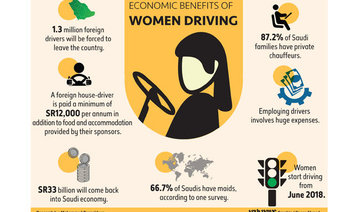
JEDDAH: No sooner had the announcement been made in September 2017 that Saudi women would be free to drive in Saudi Arabia from June 2018 than many of world’s largest car manufacturers began to target them with advertisements.
In addition, driving schools for women were set up in the Kingdom for the first time, while motor insurance companies made plans to target the new female market, and ca maintenance workshops for women are being offered.
 Five Saudi universities have launched driving schools for women: Princess Nourah Bint Abdulrahman University in Riyadh, King Abdul Aziz University in Jeddah, Tabuk University, Taif University and Imam Muhammad ibn Saud Islamic University.
The Saudi Driving School, at Princess Nourah University, the first for women in the capital, was launched in partnership with the Emirates Driving Institute in Dubai, an established driving school in the region.
The first motor insurance center for women in the Kingdom officially opened for business on May 1, 2018. The Salama Insurance office, at Salama Tower in Jeddah, is run by an all-female staff.
“The company has many initiatives in employing females, where we have integrated departments managed 100 percent by Saudi female employees, such as the contact center management in the men’s section,” said Salama CEO Omar Al-Ajlani at the grand opening. “Today’s initiative adds a lot to the business as we became the first company to open a specialized women’s center to take into account the privacy of women in Saudi Arabia.
“When a claim is received by the company, we will automatically get the client’s information from Najm insurance services or from the General Department of Traffic, then adjustments will be made until compensation is transferred.”
Al-Ajlani added that “having a female center will allow women freedom and comfort to deal with employees who understand that women are new to this process. Banks and telecoms companies have had female branches for many years but this is the first time an insurance company has opened a female branch.”
Mirfat Halawani, a section manager in the new office, said: “After receiving the accident report from the client, it will take five days to cover the damage caused by the insured vehicle.”
Sultan Al-Ghamdi, a claims manager, said: “This initiative will allow women to manage their car claims in a safe and facilitating environment.”