

‘Mini-Me’ actor Verne Troyer dies at 49

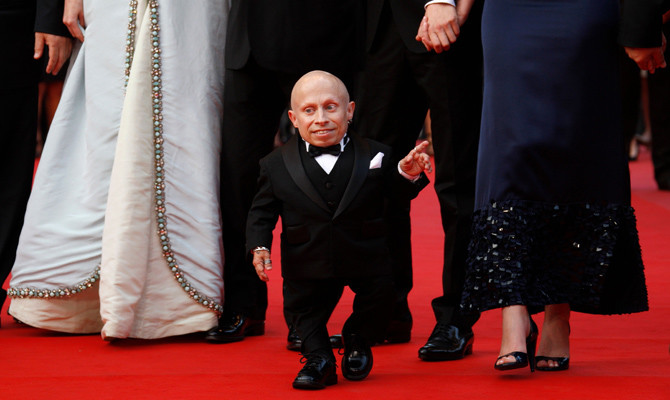
In this file photo taken on May 22, 2009 US actor Verne Troyer arrives for the screening of the movie "The Imaginarium of Doctor Parnassus" presented out of competition at the 62nd Cannes Film Festival. (AFP)
Updated 23 April 2018
Follow

‘Mini-Me’ actor Verne Troyer dies at 49

LOS ANGELES: Verne Troyer, best known for his role as Mini-Me in the “Austin Powers” movies, died Saturday. He was 49.

While no cause of death was given, a statement on the actor’s social media accounts said he had gone through a “recent time of adversity” and alluded to suicide and depression as “serious issues.”

“Over the years he’s struggled and won, struggled and won, struggled and fought some more, but unfortunately this time was too much,” it added.

Troyer, who lived in Los Angeles, was taken to hospital early this month for unspecified treatment. The actor spoke about his alcohol addiction during another hospital stay a year ago.

One of the world’s shortest men at just two feet eight inches (81 centimeters) due to achondroplasia dwarfism, according to reports, Troyer was born in 1969 in Sturgis, Michigan.


Makkah museum displays world’s largest Qur’an

Updated 04 February 2026
Follow

Makkah museum displays world’s largest Qur’an

MAKKAH: The Holy Qur’an Museum at the Hira Cultural District in Makkah is showcasing a monumental handwritten copy of the Holy Qur’an, recognized as the largest Qur’an of its kind in the world.

The manuscript measures 312 cm by 220 cm and comprises 700 pages, earning the museum recognition from Guinness World Records for displaying the world’s largest Qur’an, the Saudi Press Agency reported.

The manuscript is a magnified reproduction of a historic Qur’an dating back to the 16th century, the SPA stated.

The original copy measures 45 cm by 30 cm, with the chapters written primarily in Thuluth script, while Surah Al-Fatiha was penned in Naskh, reflecting the refined artistic choices and calligraphic diversity of the era.

The Qur’an is a unique example of Arabic calligraphy, gilding and bookbinding, showcasing Islamic art through intricate decorations, sun-shaped motifs on the opening folio, and elaborately designed frontispiece and title pages that reflect a high level of artistic mastery.

The manuscript was endowed as a waqf in 1883. Its original version is currently preserved at the King Abdulaziz Complex for Endowment Libraries, serving as a lasting testament to Muslims’ enduring reverence for the Qur’an and the richness of Islamic arts across the centuries.