Egyptian photojournalist wins World Press Photo Award

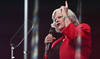
Heba Khamis with one of her award-winning photographs from the ‘Banned Beauty’ project. (Courtesy @Heba_Khamis)
Updated 16 April 2018
Follow

Egyptian photojournalist wins World Press Photo Award

  • Heba Khamis was granted the award for “Banned Beauty;” a photo series highlighting the practice of breast ironing in Cameron.
  • Photojournalist’s work concentrates on social issues that are often ignored.

Cairo: Heba Khamis became the first Egyptian photojournalist to win the World Press Photo Award.

The 29-year-old woman was granted the award for “Banned Beauty;” a photo series highlighting the practice of breast ironing in Cameroon. Her story won first prize in the contemporary issues category.

Her photos shed light on the Cameroonian practice of flattening the breasts of girls, aged eight to 12, using heated objects, in the belief that it will stop them from maturing, deter rape and delay sexual encounter.

From Amsterdam, Khamis took to Instagram to share a picture of herself with one of her award-winning photos.

She expressed her gratitude for receiving it, and dedicated it to her father, whom she said had passed away last year.

“It’s a dream for many photographers all over the world, but unfortunately each story has a dark side, on the same day last year exactly six hours from now I lost my father...” Khamis said in her speech for the World Press Photo Award.

“While I was traveling, and my passport was in another embassy preparing for another trip, I missed my chance to say goodbye to my father, to say I forgive you, please forgive me.”

“We live so much in other people’s moments, that we sometimes miss our own ...” she said.

Khamis graduated with a bachelors in painting before opting to pursue a career in photojournalism. Her work concentrates on social issues that are often ignored.


Berlinale responds to backlash over Gaza-related comments

Updated 16 February 2026
Follow

Berlinale responds to backlash over Gaza-related comments

The Berlin International Film Festival has issued a statement after what organisers described as a growing “media storm” linked to comments about the war in Gaza and the broader role of politics in cinema.

Festival director Tricia Tuttle released a lengthy note late Saturday following criticism directed at several high-profile guests. The controversy began during the opening day press conference when jury president Wim Wenders was asked about the conflict in Gaza. He responded: “We have to stay out of politics because if we make movies that are dedicatedly political, we enter the field of politics,” a remark that sparked swift backlash online.

Indian author Arundhati Roy later withdrew from the festival, reportedly angered by the remarks.

Other prominent figures, including Michelle Yeoh and Neil Patrick Harris, also faced online criticism after responding cautiously to questions about politics. Harris stated that he was interested in “doing things that were ‘apolitical,’” a comment that further fuelled debate.

In her statement, Tuttle defended the festival and its participants, stressing the importance of artistic freedom. “People have called for free speech at the Berlinale. Free speech is happening at the Berlinale. But increasingly, filmmakers are expected to answer any question put to them. They are criticised if they do not answer. They are criticised if they answer and we do not like what they say. They are criticised if they cannot compress complex thoughts into a brief sound bite when a microphone is placed in front of them when they thought they were speaking about something else,” she said.

She added: “It is hard to see the Berlinale and so many hundreds of filmmakers and people who work on this festival distilled into something we do not always recognise in the online and media discourse… It is a large, complex festival.”

“Artists are free to exercise their right of free speech in whatever way they choose… nor should they be expected to speak on every political issue raised to them unless they want to,” Tuttle said.