Dubai: As a son of Madinah and the Hijjaz, Rayan Qutub is acutely aware that his homeland’s time has come.
“I spent a lot of my childhood in the US, where my father worked. But I was always dreaming of a great Saudi Arabia, so this is music to my ears,” he said in an interview in the King Abdullah Economic City, outside Jeddah.
He was referring to the Vision 2030 strategy, and, two years into the plan to transform the economy of Saudi Arabia, one aspect is striking: The Kingdom’s Red Sea coast and the Hijjaz region appear to be the focus of many of the enormous infrastructure plans.
The whole country will benefit, and there are big projects elsewhere, notably the plan to build a 334 square kilometer leisure park outside the capital Riyadh, as well as the big infrastructure investments underway and planned on the east coast by Aramco and other industrial groups.
But the west coast, which was already in the middle of a regeneration plan before the Vision was announced, will be home to two other “giga projects”: Neom, the $500 billion project to create a futuristic urban hub in the north of the region, and the Red Sea Resort, the tourism and leisure development further south along the coast.
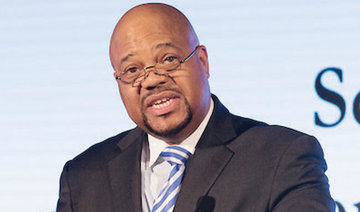
Qutub, the 45-year-old chief executive of King Abdullah Port, knows what this orientation means for his part of the world. The port — just four years in operation — is the commercial hub of KAEC and is set to become a major staging post for the transformation of the west coast.
“The port is the key economic driver for KAEC, set in the middle of a growing trade region and that connects the big populations of the Middle East and Africa. And it has a big part to play in the Vision 2030 plan, too. The focus of the Vision is to give the Kingdom an outward focus, and that is all adding to the gravity and momentum for the port,” he said.
The port, known by the acronym KAP, is a first in several respects: The first new port along the Red Sea coast, the first in Saudi Arabia funded entirely by private capital, and the first to be planned as the commercial engine of an entire new urban development — the KAEC project that surrounds it.
KAEC is listed on the Riyadh stock exchange as Emaar the Economic City to reflect the fact the UAE company is master developer and major investor, and KAP also looked to the private sector for seed capital. It is owned by a joint venture, the Ports Development Company, comprised of KAEC itself and the Huta Marine conglomerate of Jeddah.
“The banks and other private sector investors were keen to be involved when they saw the potential,” said Qutub.
That potential is significant. Saudi business strategists, notably Fahd Al-Rasheed, the chief executive of KAEC who appointed Qutub to the CEO job at KAP late last year, have been arguing the case for the Kingdom’s west coast for many years.
Before the discovery of oil in the Eastern Province about 80 years ago, the ports along the west coast were the main commercial gateways to Saudi Arabia. Not only did they serve the two holy cities of Makkah and Madinah, but they were also the economic link with the Suez Canal, then the world’s principal trade nexus.
Al-Rasheed, CEO of the 13-year-old KAEC project since the beginning, launched the Red Sea Foundation to advance the region’s cause in 2016, putting KAEC at the center of a geographical area linking the Middle East, Africa and south Asia with a population of 1.3 billion and projected trade of $4.7 trillion by 2050.
He called it the “fastest-growing emerging market in the world.”
Qutub, who headed KAEC’s industrial operations for 10 years before he got the KAP job, has a similar view of the strategic potential. “I feel like a soldier in this project, and strongly believe in it,” he said.
The Arabian Gulf ports are “cluttered,” he said, and while KAP faces competition from the Kingdom’s biggest port an hour’s drive away in Jeddah, he believes KAP has many advantages.
The port was recently named eighth fastest-growing in the world by maritime experts, taking its place in the top 100 global ports for the first time. Aides say that KAP in its four years has become bigger than established world hubs as Gdansk, Poland, and Southampton in Britain.
Qutub believes it has other advantages over Jeddah and the Gulf coast ports: The latest technology gives it a very short “dwell time,” which means it can handle perishable goods, such as foodstuffs and pharmaceutical products, more efficiently.
KAP has also invested heavily in roll-on, roll-off (RoRo) capability, making it one of the largest vehicle ports in the region. With the Saudi car market set for a boom when women can legally drive later this year, that is a big impetus.
But the future commercial core of KAP will continue to be the container traffic that will provide the essentials for the Red Sea coast “giga projects.”
Qutub recognized that there will have to be further improvements to the road and rail systems to speed these good northwards, and hinted that such plans are under consideration. “There will need to be greater connectivity with the north of Saudi Arabia, and there are plans to do this. They are in the final stages of consideration, and I don’t want to talk about those before the time is right,” he said.
It is not all about heavy industry, however. KAEC was planned as a complete urban environment, with residential, leisure and retail developments. Qutub does not feel that his commercial and industrial hub has been downgraded. “KAP was designed as and remains the core of KAEC. But a community like KAEC has to be more than just a port. It’s designed as a ‘live, work, play’ environment.”
That scope at the moment does not include leisure cruises, but with the prospect of the Red Sea becoming an international tourist destination, he is not closed to the possibility. “In principle, it would make a lot of sense for Saudi to have more leisure cruising facilities on the Red Sea — all those fantastic coral reefs were given by God and deserve to be seen.”
The ports business, in many ways, is subject to global geopolitical strains more than most other industrial sectors. They depend on world trade growth, which these days is threatened by a possible trade war between the US and China; and they are at risk from the security threats that always complicate commercial prospects in the Middle East.
Qutub was cautious on these sensitive subjects. “I don’t want to talk about political issues, but I would say that the overall global trend is for trade to go eastwards, and we are ideally placed to take advantage of that,” he said.
Qutub, whose career background is firmly in the private sector, with stints at food group Savola and consumer products giant Unilever, was the driving force behind the establishment of the CEO Think Tank, a “virtual platform” aimed at providing advice and analysis from the private sector for policymakers implementing the Vision 2030 strategy.
“We have 70 members who are interactive with government as thinkers and executers. As the Vision evolves, more private sector effort is required, and we see it as our role to give that kind of advice,” he said.
However, Qutub does not see himself as being in competition with the big global consulting firms and strategic advisers. “We are trying to contribute, along with everybody else. Contributions from all are required,” he said.