

The horse whisperer: Meet Ibrar Al-Oubeissy, first female Saudi trainer

1 / 5
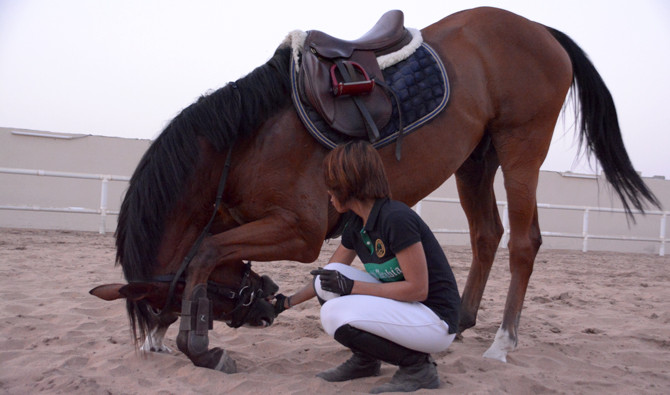
Ibrar Al-Oubeissy had nine horses in nine years. (AN photo by Huda Bashatah)
2 / 5
Ibrar Al-Oubeissy had nine horses in nine years. (AN photo by Huda Bashatah)
3 / 5
Ibrar Al-Oubeissy had nine horses in nine years. (AN photo by Huda Bashatah)
4 / 5
Ibrar Al-Oubeissy had nine horses in nine years. (AN photo by Huda Bashatah)
5 / 5
Ibrar Al-Oubeissy had nine horses in nine years. (AN photo by Huda Bashatah)
Updated 16 April 2018
Follow

The horse whisperer: Meet Ibrar Al-Oubeissy, first female Saudi trainer

  • But perseverance and hard work allowed me to reach this level: Al-Oubeissy

Saudi Arabia’s first female horse trainer has a special interest in showjumping — no surprise given the hurdles she has faced on her path to success.

Ibrar Yassin Al-Oubeissy’s passion for animals, especially horses, led her to become the Kingdom’s first trainer.

“I had to overcome many obstacles, as I didn’t receive any encouragement. But perseverance and hard work allowed me to reach this level,” she told Arab News.

She decided to become a trainer after being angered by the cruel treatment of horses by some handlers, who were only interested in financial gain. “Horses became a big part of my life — I had nine horses in nine years, and took part in many championships,” she said. 

Al-Oubeissy’s qualifications allow her to train male and female jockeys for international championships.

She remembers every horses she owned, and each taught her a different lesson. The saddest was a few years ago when she lost a horse at a championship, just two months after buying it. “I will never forget that moment when it fell in front of me. It really affected me,” she said.

Al-Oubeissy has nurtured a strong bond with the equestrian world. “I will never abandon this — this is my life.”

Riyadh exhibition to trace the origins of Saudi modern art

Updated 07 January 2026
Follow

Riyadh exhibition to trace the origins of Saudi modern art

  • Features painting, sculpture and archival documents
  • Open from Jan. 27-April 11 at Saudi national museum

DUBAI: A new exhibition in Riyadh is focusing on the origins of Saudi Arabia’s modern art scene, examining how a generation of artists helped shape the Kingdom’s visual culture during a period of rapid change.

The “Bedayat: Beginnings of Saudi Art Movement” show reportedly traces the emergence of creative practices in Saudi Arabia from the 1960s to the 1980s, an era that laid the groundwork for today’s art ecosystem.

On view from Jan. 27 until April 11 at the National Museum of Saudi Arabia, it includes works and archival material that document the early years of modern and abstract art in the Kingdom, according to the organizers.

It will examine how artists responded to shifting social, cultural and economic realities, often working with limited infrastructure but a strong sense of purpose and experimentation.

The exhibition is the result of extensive research led by the Visual Arts Commission, which included dozens of site visits and interviews with artists and figures active during the period.

These firsthand accounts have helped to reconstruct a time when formal exhibition spaces were scarce, art education was still developing, and artists relied heavily on personal initiative to build communities and platforms for their work.

Curated by Qaswra Hafez, “Bedayat” will feature painting, sculpture, works on paper and archival documents, many of which will be shown publicly for the first time.

The works will reveal how Saudi artists engaged with international modernist movements while grounding their practice in local heritage, developing visual languages that spoke to both global influences and lived experience.

The exhibition will have three sections, beginning with the foundations of the modern art movement, and followed by a broader look at the artistic concerns of the time.

It will conclude with a focus on four key figures: Mohammed Al-Saleem, Safeya Binzagr, Mounirah Mosly and Abdulhalim Radwi.

A publication, documentary film and public program of talks and workshops will accompany the exhibition, offering further insight into a pivotal chapter of Saudi art history and the artists who helped define it.